Seamless Transitions: Leveraging Port Interchange for Freight Forwarding
When your cargo sits idle at the port, your entire operation stalls, turning a routine shipment into a costly logistical nightmare. Effective freight forwarding is the bridge that keeps your business moving by ensuring a seamless handover between ocean carriers and local transport. For companies in Hawaii, navigating the complexities of port interchange is not just an administrative task, it is a critical requirement for maintaining a reliable supply chain. Whether you are managing time-sensitive retail stock or essential construction materials, understanding what freight forwarding service providers do can mean the difference between on-time delivery and project-wide delays. In this guide, you will learn how strategic partnerships with locally rooted experts simplify your shipping process. By mastering the fundamentals of logistics and freight forwarding, you can make smarter decisions that protect your bottom line and ensure your goods reach their final destination without disruption.
Understanding the Strategic Role of Freight Forwarding
At its simplest, freight forwarding is the professional management of the complex journey your goods take from a supplier to their final destination. Rather than just moving items from point A to point B, a forwarder acts as an expert coordinator who negotiates logistics, handles documentation, and ensures a smooth handoff between ocean vessels and land transport. For businesses operating on Oahu, logistics and freight forwarding are the mechanisms that keep the local economy powered, ensuring that everything from retail goods to industrial machinery clears the port and reaches the job site or store shelf efficiently.
This matters in real life because your operational success depends on reliability. When goods are delayed at the port, property owners face stalled construction projects, retailers deal with empty stockrooms, and families wait longer for essential deliveries. Effective management of these logistics prevents the "ripple effect" of shipping delays. A common misconception is that standard shipping is enough, but without a dedicated forwarder to navigate the intricacies of port interchange agreements, cargo often sits waiting while costs accrue.
The primary advantage of partnering with an expert is gaining a buffer against the unpredictability of the supply chain. By utilizing services like daily container drayage, you ensure that your cargo is picked up and transported the moment it is released by the carrier. This level of synchronization isn't just about moving freight; it is about providing the stability and visibility that modern businesses need to thrive. Proper coordination ensures that you are never left guessing about the status of your shipment, allowing you to make proactive decisions instead of reacting to preventable logistical failures.
How Freight Forwarding Orchestrates Your Supply Chain
Navigating the complexities of modern shipping requires more than just booking space on a vessel; it demands a deep understanding of freight forwarding as a mechanism for operational control. By managing the vital handoff between maritime carriers and local ground transport, an expert partner ensures your supply chain remains resilient. When you understand what freight forwarding service providers actually accomplish, you gain the ability to anticipate delays, optimize delivery windows, and ultimately reduce the overhead costs associated with stalled cargo.
The Core Responsibilities of Your Logistics Partner
Many businesses wonder, what do freight forwarders do to justify their role in the supply chain? Their value lies in their ability to act as the "boots on the ground" coordinator. Here is how they streamline your logistical path:
- Port-to-Door Synchronization: A primary role of freight forwarder specialists is the management of port interchange. This involves coordinating with major ocean carriers to ensure your container is pulled from the terminal the moment it is available. This reduces time spent in port storage and keeps your project schedule intact.
- Regulatory and Documentation Oversight: Shipping, especially across international or oceanic borders, involves dense paperwork. A forwarder handles the declarations and compliance requirements, preventing your shipment from being flagged or held up due to clerical errors.
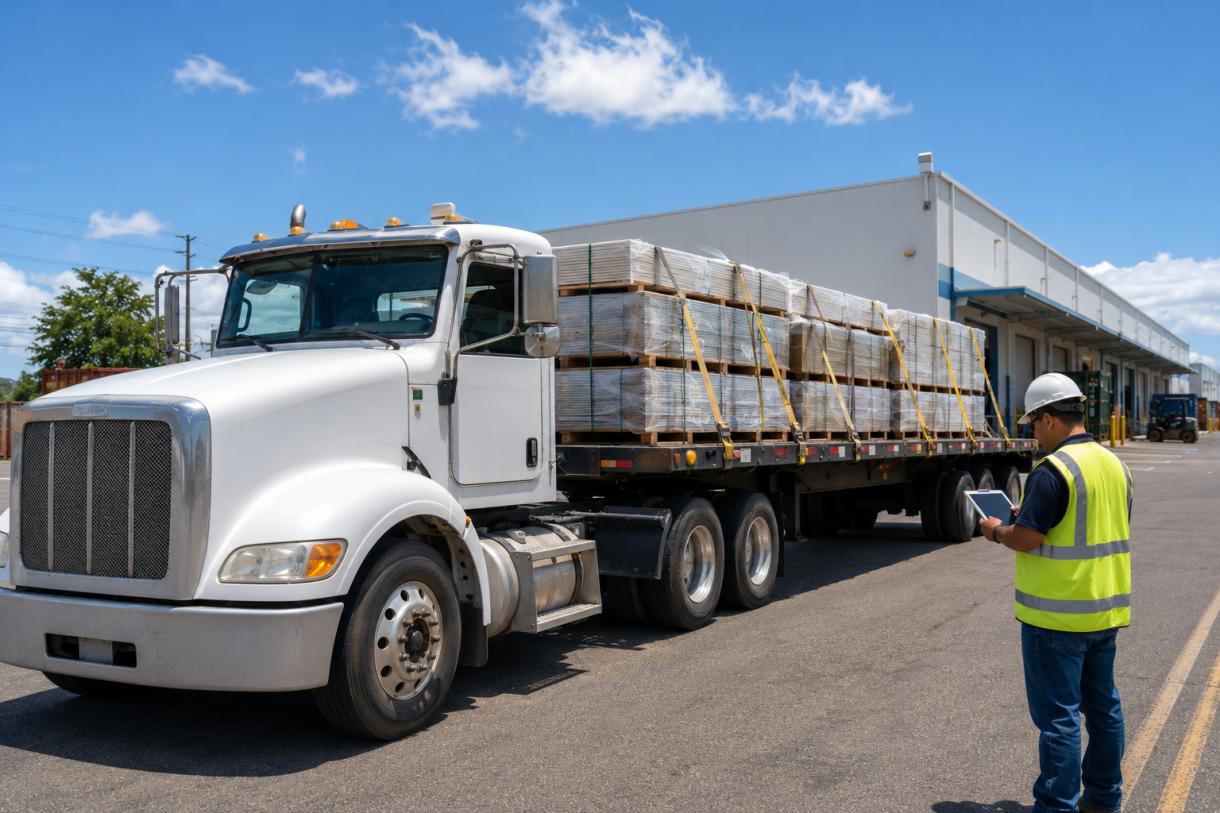
- Flexible Local Distribution: Once your goods are cleared, the final mile is often the most challenging. Utilizing a partner with a versatile fleet—such as flatbed trucks for heavy materials or reefer trucks for perishables, ensures your cargo is moved with equipment tailored to its specific needs.
Understanding the Forwarding Workflow
To grasp how does freight forwarding work in a practical sense, it helps to view the process as a series of connected milestones. The objective is to remove friction between arrival and delivery.
- Arrival and Clearing: The process begins with the arrival of the vessel. Your logistics partner monitors the shipment status, ensuring that all necessary interchange agreements are in place so the container can be legally and efficiently moved off the dock.
- Staging and Buffering: Often, the final destination is not ready to receive goods. A high-quality forwarding strategy incorporates short-term storage to bridge the gap between container availability and project demand, protecting you from rush-order fees.
- Final-Mile Execution: This is the most visible part of the operation. Whether it requires lift-gate delivery to a site without a loading dock or precise scheduling for a retail replenishment, the forwarder ensures the final delivery happens exactly as planned.
Common Misconceptions
One major misconception is that what is international freight forwarding is only for massive, global shipments. In reality, these services are just as critical for local businesses moving goods within the state. Whether you are dealing with freight forwarding and supply chain management for a large construction firm or a small retail boutique, the principles remain the same: coordination, timing, and local expertise.
By focusing on these core pillars, you transform your logistics from a source of stress into a streamlined asset. When your forwarding strategy is aligned with local expertise, you stop reacting to shipping irregularities and start dictating the pace of your business’s growth.
Real-World Applications of Expert Freight Forwarding
Seeing how freight forwarding translates into daily operations highlights why coordination is the key to business success. By applying professional oversight to specific logistical hurdles, companies turn potential delays into predictable, on-time arrivals.
1. Managing Construction Supply Chains: A commercial developer needed to transport massive, pre-cast concrete beams to a busy job site in Kapolei. They faced the risk of port delays, which would have stalled their crew for days. By partnering with a local logistics expert, they utilized flatbed drop-deck trailers and perfectly synchronized drayage to pull the beams as soon as the vessel docked. The outcome was a perfectly timed delivery that allowed the construction crew to begin installation immediately, avoiding costly downtime.
2. Supporting Retail Inventory Flow: A national retailer struggled to maintain stock levels for their Honolulu locations due to inefficient port-to-door transitions. They implemented a strategy centered on local cartage and warehouse staging to smooth out their arrival schedule. By having their freight managed by an Oahu-based team, they significantly reduced stock-outs and ensured that seasonal inventory reached the floor during the high-demand periods.
3. Streamlining Military Deliveries: A contractor required sensitive, high-security equipment to be delivered to a military base. Through precise coordination and strict adherence to security access protocols, the delivery was completed without the typical entry delays.
These practical examples prove that professional freight forwarding is not just about moving cargo—it is about achieving operational certainty in every scenario. When you apply these strategies to your own logistics needs, you gain the control necessary to keep your projects and businesses moving forward.
Expert Best Practices for Mastering Freight Forwarding
Transitioning from understanding the mechanics of logistics to actively optimizing your supply chain requires a proactive approach. Applying these proven insights will help you leverage freight forwarding more effectively, ensuring your operations remain resilient even during peak shipping seasons or unexpected supply chain shifts.
- Audit Your Delivery Access Requirements: Before your shipment arrives, clearly identify the specific logistical needs of your drop-off site. Does your destination require specialized equipment like lift-gate delivery for sites without loading docks, or are there strict security protocols for base entry? Anticipating these needs early prevents failed delivery attempts and unnecessary storage fees, keeping your timeline secure.
- Prioritize Real-Time Communication: The most successful freight forwarding business partnerships are built on transparency. Insist on clear communication regarding your freight’s status, from port arrival to final dispatch. When you have eyes on your cargo at every stage, you can pivot quickly if schedules change, turning potential logistical bottlenecks into manageable operational adjustments that protect your project's integrity.
- Standardize Your Documentation: Cluttered or incorrect paperwork is the fastest way to stall your supply chain. Ensure all declarations, permits, and delivery instructions are organized and accessible to your logistics partner well in advance. This preparation speeds up the interchange process at the port, ensuring your goods move out of the terminal and onto the road without administrative delays.
Consistently applying these professional best practices will significantly reduce your risk exposure and improve the overall efficiency and reliability of your entire distribution network.
Achieving Operational Excellence Through Strategic Freight Forwarding
Navigating the complexities of shipping requires more than just transport; it demands a comprehensive strategy that connects every link in your supply chain. By mastering the fundamentals of freight forwarding, you have gained the clarity needed to streamline your port-to-door transitions and reduce the risk of costly operational delays. You are now better equipped to choose a partner that offers the local expertise and specialized equipment necessary to keep your projects on schedule and your inventory flowing smoothly.
Taking action to optimize your logistics now ensures that your business remains resilient against the volatility of island shipping. By choosing a dedicated, locally rooted team, you secure the reliability and peace of mind required to compete and grow in Hawaii’s unique commercial landscape.
If you are ready to secure a partner who understands the nuances of the local supply chain and provides transparent, asset-heavy solutions, we are here to support your goals. Learn more about how we can enhance your logistics and start optimizing your freight forwarding strategy today.
Frequently Asked Questions About Freight Forwarding
What is the primary role of freight forwarder specialists?
A freight forwarder acts as a strategic coordinator who manages the entire logistical journey of your cargo. Their role is to ensure a seamless transition between ocean carriers and local transport, handling necessary documentation and port interchange agreements. By leveraging expert freight forwarding knowledge, they prevent bottlenecks at the port and ensure that your goods are delivered on time, regardless of whether you are managing logistics and freight forwarding for a major construction project or a local retail business.
How does freight forwarding work to reduce shipping costs?
Effective freight forwarding reduces costs by minimizing time spent in expensive port storage and avoiding administrative errors that lead to fines or delays. By synchronizing the arrival of your vessel with the immediate dispatch of your freight, a partner ensures your assets don't sit idle. When you utilize services like break-bulk distribution, you further optimize your supply chain, preventing the high fees associated with disorganized inventory and inefficient, fragmented delivery attempts.
Can a freight forwarder assist with specialized heavy equipment?
Yes, a professional forwarder with access to a diverse fleet can handle complex, oversized cargo that standard carriers refuse. They identify the exact equipment, such as flatbeds or specialized trailers, needed to transport your freight safely. This expertise is vital for construction and industrial firms that require precision handling for heavy machinery. By using the right equipment for every move, you eliminate the risk of cargo damage and ensure successful delivery to even the most challenging sites.