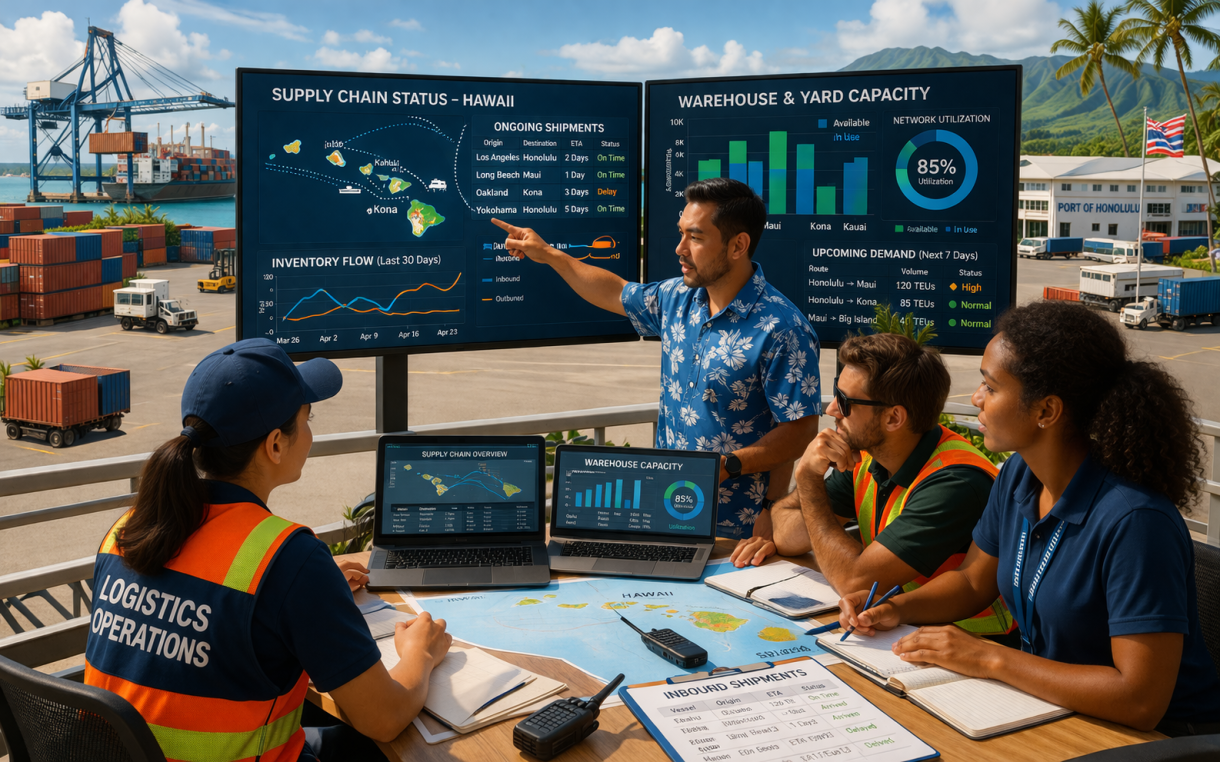
Supply Chain Capacity Planning: How to Balance Demand and Resources in Hawaii
Hawaii’s supply chain operates under unique conditions. As an island state dependent on imports, businesses must carefully manage shipping schedules, warehouse space, and transportation resources. Even small disruptions can quickly impact inventory, delivery timelines, and operational costs.
That is why supply chain capacity planning is critical. It ensures that available resources, such as storage, labor, and transportation, are aligned with demand.
Without proper capacity planning in supply chain management, businesses risk:
- Shipment delays
- Warehouse congestion
- Stock shortages
- Increased operating costs
- Inefficient resource use
This guide explains how capacity planning in supply chain works, why it matters in Hawaii, and how to implement it effectively.
What Is Supply Chain Capacity Planning
Supply chain capacity planning is the process of matching resources with expected demand.
It involves coordinating:
- Warehouse space
- Labor availability
- Transportation capacity
- Equipment and infrastructure
- Inventory levels
The goal is to ensure that operations can meet demand without overloading or underutilizing resources.
This process is closely tied to demand and capacity planning, where forecasting plays a key role in decision-making.
Why Capacity Planning Is Critical in Hawaii
Hawaii’s logistics environment presents unique challenges.
Limited Space and Infrastructure
Industrial land is limited, making warehouse capacity planning essential for efficient operations.
Businesses can leverage flexible solutions such as:
Heavy Dependence on Imports
Most goods arrive by sea, making timing and coordination critical.
Services like daily container drayage help maintain consistent flow from ports to warehouses.
Demand Volatility
Tourism and seasonal trends can cause sudden demand changes, requiring strong business capacity planning strategies.
Transportation Constraints
Efficient movement of goods requires flexible transportation options such as:
How Supply Chain Capacity Planning Works
Step 1: Analyze Historical Demand
Understanding past trends is the foundation of long term capacity planning.
Businesses should review:
- Sales data
- Shipment volumes
- Seasonal patterns
This helps establish a baseline for forecasting.
Step 2: Assess Current Capacity
Evaluate existing resources, including:
- Storage space
- Workforce
- Fleet size
- Equipment
This step defines operational limits and identifies gaps.
Step 3: Forecast Future Demand
Forecasting combines historical data with market trends.
In Hawaii, factors include:
- Tourism cycles
- Infrastructure projects
- Economic growth
Accurate forecasting supports effective product capacity planning.
Step 4: Align Capacity with Demand
Once demand is forecasted, businesses adjust resources.
Strategies may include:
- Expanding storage capacity
- Increasing workforce
- Adding transportation services
- Partnering with logistics providers
For example, companies can use break bulk distribution to improve handling efficiency.
Step 5: Monitor and Adjust
Supply chains are dynamic. Continuous monitoring ensures alignment.
Track key metrics such as:
- Inventory turnover
- Order fulfillment rates
- Storage utilization
This supports ongoing capacity management in supply chain operations.
Key Areas of Capacity Planning in Supply Chains
Logistics Capacity Planning
Efficient transportation is essential.
Businesses can optimize logistics using:
Warehouse Capacity Planning
Storage must match inventory levels.
Flexible storage solutions help prevent overflow and underutilization.
Labor Capacity Planning
Staffing levels should align with demand.
Seasonal hiring helps manage peak periods.
Equipment and Fleet Planning
Proper equipment ensures smooth operations.
Specialized services like forklift delivery improve efficiency for heavy or complex shipments.
Real World Applications in Hawaii
Retail Distributor
A retailer secured additional storage space before peak season, preventing congestion and delays.
Construction Supplier
A supplier expanded transportation capacity to support infrastructure projects.
Food Distribution Company
A distributor adjusted staffing levels based on seasonal demand, improving efficiency.
Military and Residential Deliveries
Specialized services like military base and residential delivery ensure timely delivery in restricted or remote areas.
Common Challenges in Capacity Planning
Limited Warehouse Space
High demand for industrial space makes expansion difficult.
Shipping Delays
Port congestion and mainland disruptions can impact supply chains.
Demand Fluctuations
Tourism and seasonal changes create unpredictable demand patterns.
Rising Costs
Fuel, labor, and real estate costs affect planning decisions.
Best Practices for Effective Capacity Planning
Use Data Driven Forecasting
Accurate data improves decision-making and reduces risk.
Build Flexible Partnerships
Third-party logistics providers offer scalable solutions.
Diversify Transportation Options
Multiple transport methods reduce dependency on a single channel.
Implement Technology
Warehouse and inventory systems improve visibility.
Conduct Regular Reviews
Frequent audits ensure alignment between capacity and demand.
Benefits of Supply Chain Capacity Planning
Implementing effective supply chain capacity planning provides:
- Improved efficiency
- Reduced operational costs
- Better resource utilization
- Increased flexibility
- Stronger supply chain resilience
Conclusion: Strengthen Your Supply Chain with Smart Planning
In Hawaii’s complex logistics environment, supply chain capacity planning is essential for maintaining efficiency and reliability.
Key takeaways:
- Align resources with demand
- Use data to forecast accurately
- Optimize storage and transportation
- Build flexible logistics partnerships
- Continuously monitor and adjust operations
Businesses that invest in strategic capacity planning gain a competitive advantage through improved performance and long-term stability.
Frequently Asked Questions
What is supply chain capacity planning?
It is the process of aligning resources like storage, labor, and transportation with expected demand.
Why is capacity planning important in Hawaii?
Hawaii’s reliance on imports and limited space makes efficient resource management essential.
What is included in capacity planning?
It includes warehouse space, workforce, transportation, equipment, and inventory.
How often should capacity planning be reviewed?
Most businesses review capacity plans quarterly or whenever demand changes significantly.
Can capacity planning reduce costs?
Yes. It improves efficiency, reduces waste, and prevents expensive disruptions.