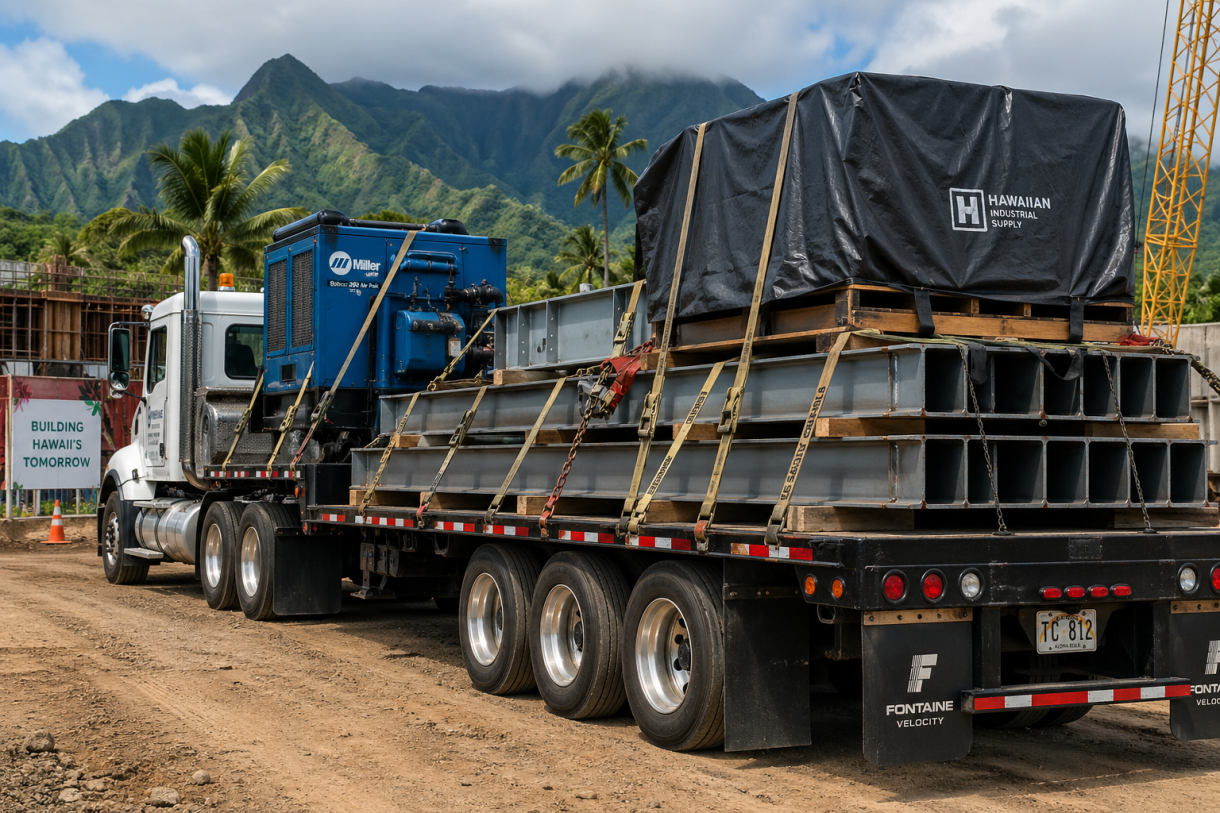
When Should I Use Flatbed Trucking Instead of Standard Freight Shipping?
Ever tried to fit a square peg in a round hole? It’s a frustrating exercise, but it’s nothing compared to the headache of trying to force oversized, heavy, or oddly shaped cargo into a standard dry van.
In the world of logistics, choosing the wrong equipment doesn't just cause delays—it can lead to damaged goods, failed inspections, and skyrocketing costs. Many businesses default to standard shipping because it feels familiar, only to realize too late that their specialized freight requires a more flexible approach.
Flatbed trucking is often the missing piece of the puzzle, yet knowing exactly when to make that switch can be the difference between a seamless delivery and a logistical nightmare.
In this guide, we’ll break down exactly when you should opt for flatbed transport services to ensure your cargo arrives safely and efficiently. We’ll cover the specific benefits of open-deck hauling and how it can streamline your Hawaii-based operations.
Let’s dive into the scenarios where a flatbed is your best move.
Understanding Flatbed Trucking: The Key to Versatile Logistics
At its core, flatbed trucking refers to the use of a specialized trailer that lacks a roof or side walls. Unlike a standard dry van, which is essentially a locked box on wheels, a flatbed freight truck offers an entirely open platform.
This design is specifically engineered to accommodate cargo that is too wide, too tall, or too heavy to be loaded through the rear doors of a conventional trailer. In the context of flatbed transport, the "walls" are replaced by heavy-duty straps, chains, and tarps, allowing for maximum flexibility in how goods are secured and protected.
Understanding this method of shipping is vital because not all freight is created equal. Relying on standard shipping for specialized loads can lead to logistical bottlenecks or even safety violations. By utilizing flatbed hauling, businesses can bypass the physical constraints of a standard trailer, ensuring that large-scale equipment or raw materials move from point A to point B without compromise.
Choosing flatbed truck services offers several distinct advantages for your supply chain:
- Ease of Loading: Access from the top, sides, or rear allows for quick loading via cranes or forklift delivery.
- Dimensional Freedom: Easily accommodates "over-dimensional" loads that exceed standard width or height limits.
- Site Accessibility: Ideal for delivery to construction sites or locations without a traditional loading dock.
- Versatility: Capable of carrying everything from structural steel and machinery to military base supplies.
A common misconception is that flatbed delivery logistics are only for massive industrial projects. In reality, any shipment that requires side-loading—like crated machinery or long piping—can benefit from this setup. This flexibility is what makes it a cornerstone of efficient break-bulk distribution.
Now that we’ve established what it is, let’s look at the specific scenarios where a flatbed becomes a necessity rather than an option.
5 Scenarios Where Flatbed Trucking is the Best Choice for Your Cargo
When it comes to shipping, a standard enclosed trailer is often the "default" setting. However, standard freight shipping has rigid physical limits that can't be bypassed. To determine if you need flatbed trucking, you have to look at the physical characteristics of your load and the specific requirements of your delivery site.
If your cargo requires specialized handling, choosing flatbed transport services isn't just a matter of convenience—it’s a matter of safety and regulatory compliance. Here are the five primary scenarios where you should choose a flatbed over a standard dry van.
1. Your Cargo is Over-Dimensional or Oversized
The most obvious reason to utilize flatbed freight is when your shipment simply won't fit inside a standard box. Standard trailers have fixed heights (usually around 110 inches) and widths (about 102 inches).
If you are hauling construction beams, large industrial tanks, or pre-fabricated housing components, a standard trailer is physically incapable of doing the job.
Flatbed hauling provides the "open-air" flexibility needed to accommodate loads that hang over the sides or extend past the rear of the trailer. This is common for:
- Large-scale infrastructure components.
- Agricultural equipment like harvesters or tractors.
- Industrial boilers and HVAC units.
Pro Tip: When shipping over-dimensional loads, always verify if your flatbed trucking companies handle the necessary permits and "Oversize Load" signage required by Hawaii state law.
2. Loading and Unloading Requires Side or Top Access
Not every warehouse has a raised loading dock. If your shipment needs to be loaded from the side using a forklift or lowered from above via a crane, a standard dry van is out of the question. Because flatbed truck services offer 360-degree access, they are the gold standard for job sites where traditional infrastructure is missing.
For example, when delivering heavy materials to a remote construction site, a crane may be used to pick the items directly off the deck. Similarly, our forklift delivery services pair perfectly with flatbeds for quick, efficient side-loading of crated goods or palletized stone.
3. You are Transporting Heavy Machinery or Vehicles
Weight distribution is a critical factor in flatbed delivery logistics. Heavy machinery, such as excavators, bulldozers, or specialized military equipment, often requires a flatbed or drop-deck trailer to maintain a low center of gravity.
Standard trailers have flooring designed for evenly distributed pallet weight, but concentrated "point loads" from heavy machinery can actually damage the floor of a dry van.
Flatbed trucks are built with reinforced steel or aluminum decks specifically designed to handle these high-density weights safely. This makes them the go-to choice for military base deliveries where heavy-duty equipment is the norm.
4. The Cargo is Resilient to Weather or Requires Specialized Tarping
Flatbeds are open to the elements, which makes them ideal for materials that don't require the climate-controlled environment of dry or refrigerated box trucks. Items like lumber, steel pipes, and concrete blocks are perfectly suited for flatbed truck hauling.
However, even if your cargo can handle the wind, it might still need protection from rain or road debris. Professional flatbed transport includes specialized tarping systems.
Whether it’s a "smoke tarp" to protect the front of the load or heavy-duty "lumber tarps" for full coverage, you get the benefit of an open deck with the protection your specific cargo requires.
5. You Need to Minimize "Last Mile" Handling
In logistics, every time a piece of freight is moved, the risk of damage increases. Flatbed trucking is often the most direct route for break-bulk distribution. Instead of unloading a container at a port, moving it to a warehouse, and then reloading it into a van, a flatbed allows for "one-and-done" transport.
By loading your oversized or heavy items directly onto a flatbed at the point of origin—such as during daily container drayage operations—you reduce the touches and streamline the entire logistics chain. This is especially valuable for retail deliveries of large outdoor equipment or bulk construction materials where time is of the essence.
Deciding between standard shipping and flatbed trucking comes down to one question: Does the equipment fit the cargo, or are you trying to force the cargo to fit the equipment? By choosing the right tool for the job, you ensure a safer, faster, and more cost-effective delivery.
Flatbed Transport in Action: Real-World Logistics Success
Theory is important, but seeing how flatbed transport services solve actual logistics hurdles proves their true value. In the unique landscape of Hawaii, where infrastructure and terrain vary wildly, the right equipment makes all the difference in keeping a project on schedule.
- Large-Scale Infrastructure: A local construction firm recently utilized our flatbed hauling for a major bridge repair project. They needed to move several 60-foot steel girders that were physically impossible to fit into a standard container or box truck.
By using specialized flatbed trucks, they were able to load directly at the harbor via crane and deliver straight to the job site, reducing their total transit time by two full days.
- Agricultural & Industrial Support: Heavy equipment dealerships often rely on flatbed freight truck solutions to move oversized harvesters and tractors between islands or to remote farms.
Because these vehicles require a wide berth and side-access unloading, flatbeds allow for a safe, secure transport that standard shipping simply can't offer. This approach has helped our partners reduce loading-related damage claims to nearly zero.
Whether you are coordinating military base deliveries or managing a specialized retail rollout, these examples demonstrate that flatbed trucking is the most adaptable tool in your logistics toolkit. When your cargo doesn't fit the "standard" mold, a flatbed ensures your operations never miss a beat.
Pro Tips for Optimizing Your Flatbed Freight Strategy
Choosing the right equipment is only half the battle; maximizing the efficiency of your flatbed trucking requires a strategic approach to safety and planning. Once you’ve committed to an open-deck solution, these expert best practices will help you ensure a smooth, cost-effective delivery process.
- Prioritize Precise Measurements: Always provide exact dimensions (length, width, height, and weight) rather than estimates. Because flatbed hauling involves strict legal limits for "oversize" loads, even a few inches of error can lead to costly fines or the need for a different trailer type, such as a drop-deck.
- Verify Site Accessibility Early: Confirm that your delivery location has enough "swing room" for a large truck and a solid surface for unloading. For example, when coordinating residential deliveries, ensure overhead wires or narrow gates won't obstruct the crane or forklift during the offloading process.
- Select the Right Tarping for the Job: Don't assume all tarps are equal. Specify if your cargo is moisture-sensitive or just needs protection from road debris. For high-end machinery, requesting a "full tarp" service ensures your equipment stays pristine, which is especially important for retail deliveries of showroom-ready products.
- Plan for Specialized Unloading Equipment: Flatbeds offer the benefit of side-loading, but you must ensure the right machinery is waiting at the destination. If the site lacks a dock, pre-arranging forklift delivery services alongside your truck prevents expensive "detention" fees caused by a driver waiting to be unloaded.
By applying these proactive measures, you’ll not only protect your cargo but also eliminate the hidden delays that often plague unoptimized logistics plans.
Elevate Your Logistics Strategy with Professional Flatbed Trucking
Whether you are navigating the complexities of over-dimensional cargo or simply need the versatile loading capabilities that only an open deck can provide, flatbed trucking is an essential asset for any robust supply chain.
You now understand that when cargo exceeds the physical limits of a standard van or requires specialized site access, choosing a flatbed freight truck is the most efficient way to ensure a safe and timely delivery.
By matching your freight to the right equipment, you eliminate unnecessary handling risks and streamline your operations across the islands. Start reviewing your upcoming shipments today—identifying just one or two loads that would benefit from flatbed transport can lead to immediate improvements in your delivery timelines and overall costs.
Ready to simplify your Hawaii-based shipping? Explore our full range of flatbed truck services or contact our team to discuss how our flatbed and drop-deck trailers can handle your most challenging freight.
FAQ: Common Questions About Flatbed Trucking
What is the difference between a flatbed and a step-deck trailer?
While both are used for flatbed trucking, a standard flatbed is a level platform from front to back. A step-deck (or drop-deck) trailer features a lower deck height designed to accommodate taller freight that would otherwise exceed legal height limits on a standard trailer. Choosing flatbed and drop-deck trailers depends entirely on the vertical clearance required for your specific load.
How do flatbed trucking companies protect cargo from rain?
To protect sensitive items during flatbed transport, drivers use heavy-duty, water-resistant tarps made of vinyl or canvas. These are securely strapped over the freight to shield it from rain, wind, and road debris. For high-value machinery or materials that must stay dry, specialized "lumber tarps" or "steel tarps" provide full coverage, ensuring your cargo arrives in the same condition it was loaded.
Can flatbed trucks deliver to residential areas?
Yes, flatbed delivery logistics are highly effective for residential deliveries, especially for large items like construction materials or oversized outdoor equipment. Because flatbeds can be unloaded from the side, they are often easier to manage in residential settings than a standard box truck that requires a loading dock. We often pair these deliveries with lift-gate or forklift services for maximum efficiency.
Is flatbed transport more expensive than standard shipping?
The cost of flatbed hauling can be higher than standard dry van shipping due to the specialized equipment, the labor required for securing and tarping loads, and the potential need for oversize permits. However, it often saves money in the long run by reducing the need for specialized crating, preventing damage to oversized goods, and allowing for faster loading and unloading at challenging job sites.