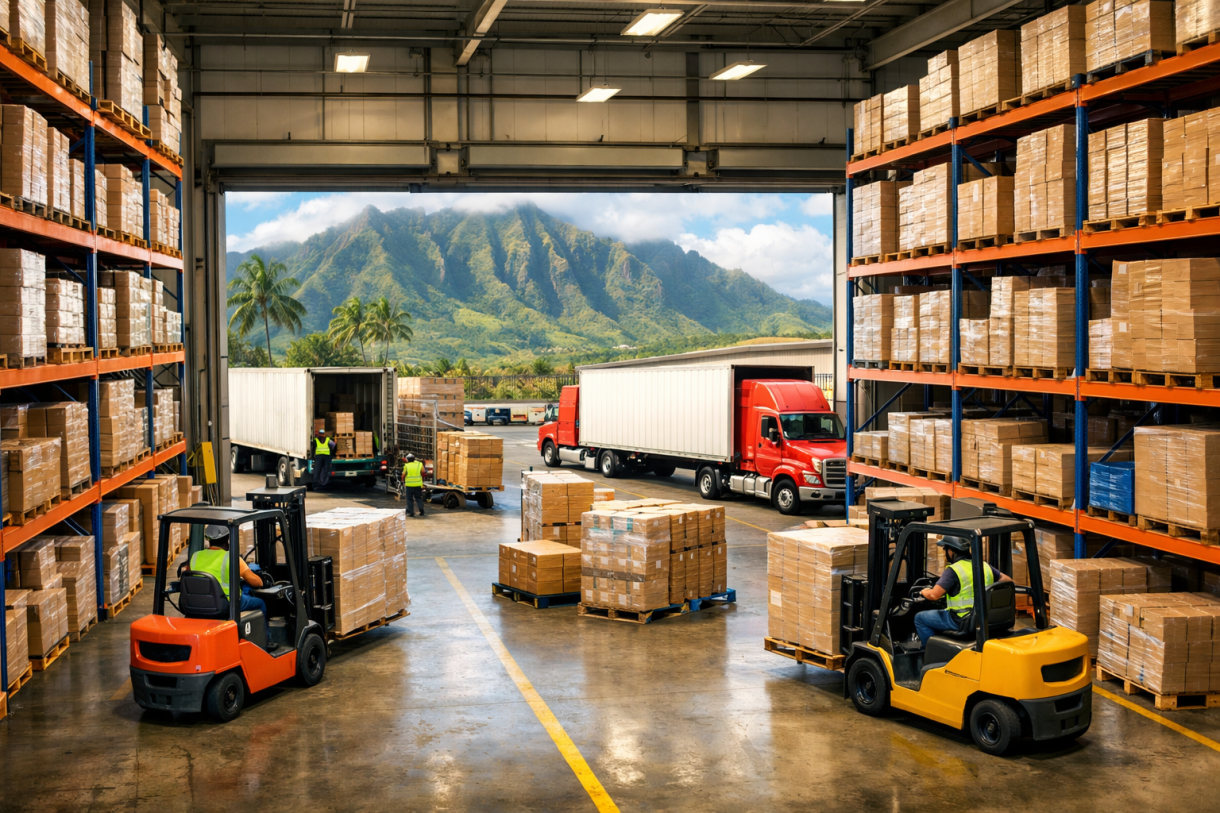
Warehouse Cost: What It Really Costs to Build, Operate, and Manage a Warehouse
Warehousing is essential for modern supply chains, but understanding the true warehouse cost is critical before making any investment. Many businesses focus only on construction or rent, but the total cost of a warehouse includes land, labor, equipment, and long-term operational expenses.
For businesses in Hawaii, these costs can be even higher due to limited land, elevated construction prices, and complex logistics tied to port operations.
Whether you are planning to build, lease, or outsource, this guide breaks down:
- Warehouse construction cost and price per square foot
- Ongoing operational expenses
- Hidden costs most businesses overlook
- Strategies to reduce total warehouse costs
How Much Does a Warehouse Cost to Build
One of the most common questions businesses ask is: how much does a warehouse cost?
The answer depends on size, location, materials, and features.
Average Warehouse Construction Cost
Typical warehouse construction cost per square foot in the U.S. ranges from:
- $80 to $200 per square foot for standard warehouses
- $150 to $350+ per square foot for advanced facilities
In Hawaii, costs can be significantly higher due to labor, materials, and logistics.
Example Warehouse Build Cost
For a 20,000 sq ft warehouse:
- Low range: $1.6 million
- Mid range: $3 million
- High range: $7 million+
This gives a clear picture of cost to build a warehouse depending on complexity.
Factors That Affect Warehouse Construction Cost
Several variables influence the warehouse building cost:
- Land acquisition and site preparation
- Building materials (steel vs concrete)
- Ceiling height and storage capacity
- Climate control systems
- Loading docks and infrastructure
- Electrical and safety systems
Businesses using a warehouse construction cost calculator often find that site-specific factors can significantly increase estimates.
Ongoing Warehouse Operating Costs
Building a warehouse is only part of the total expense. Operating a warehouse often costs more over time.
Facility and Real Estate Costs
Even after construction, you must account for:
- Property taxes
- Insurance
- Maintenance and repairs
- Security systems
These costs continue throughout the life of the facility.
Labor and Staffing Costs
Warehouse operations require trained personnel, including:
- Warehouse managers
- Forklift operators
- Inventory specialists
- Logistics coordinators
Labor is one of the largest ongoing components of warehouse cost.
Equipment and Technology
Running a warehouse requires significant investment in equipment.
Examples include:
- Forklifts and pallet jacks
- Conveyor systems
- Inventory management software
- Barcode tracking systems
Businesses often rely on services like forklift delivery to support material handling operations.
Utilities and Operational Overhead
Monthly costs include:
- Electricity and lighting
- Climate control systems
- Water usage
- IT infrastructure
These expenses add up quickly, especially in large facilities.
Hidden Costs of Warehouse Ownership
Many businesses underestimate the full cost of a warehouse.
Hidden expenses include:
- Equipment maintenance and repairs
- Downtime due to staffing shortages
- Inventory shrinkage or damage
- Compliance and safety costs
- Technology upgrades
These factors increase the total warehouse build cost beyond initial projections.
Cost to Build Warehouse vs Outsourcing Logistics
Due to rising costs, many businesses are rethinking whether they should own a warehouse at all.
Outsourcing logistics to a third-party provider can reduce overhead significantly.
Benefits of Outsourcing Warehouse Operations
Partnering with a logistics provider eliminates many fixed costs:
- No construction or leasing expenses
- Reduced labor requirements
- Access to professional equipment
- Scalable storage options
Services like short term storage and long term storage allow businesses to pay only for the space they need.
Transportation and Distribution Support
Logistics providers offer integrated transportation services that reduce operational complexity.
Examples include:
These services help businesses move goods efficiently without maintaining their own fleet.
Last Mile and Specialized Delivery
Outsourcing also improves delivery flexibility.
Businesses can use services such as:
This reduces the need for internal logistics management.
Distribution and Inventory Handling
Third-party providers also offer distribution services such as:
These services streamline inventory handling and improve efficiency.
Real World Warehouse Cost Scenarios
Retail Business Example
A retailer initially planned to build a warehouse but faced high warehouse construction cost per square foot.
By outsourcing storage and delivery, the company reduced overhead and improved efficiency.
Construction Supplier Example
A supplier needed storage for materials but did not want to invest in a large facility.
Using logistics services allowed them to avoid the high cost to build warehouse per square foot.
eCommerce Business Example
An online retailer outsourced warehousing and fulfillment.
This eliminated the need for internal staffing and reduced total warehouse cost significantly.
How to Reduce Warehouse Costs
Businesses can lower expenses by following these strategies.
Evaluate Total Cost of Ownership
Look beyond construction costs and consider long-term operational expenses.
Use Scalable Storage Solutions
Outsourcing allows businesses to scale storage based on demand.
Optimize Transportation and Logistics
Efficient delivery systems reduce handling costs and improve turnaround time.
Leverage Technology
Inventory tracking and automation improve efficiency and reduce errors.
Learn more about optimizing logistics in this guide on supply chain capacity planning in Hawaii.
Conclusion: Understanding Warehouse Cost Before You Invest
The true warehouse cost goes far beyond construction. It includes ongoing expenses such as labor, equipment, utilities, and logistics.
Key takeaways:
- Warehouse construction cost varies widely based on location and features
- Operating costs often exceed initial build expenses
- Outsourcing logistics can significantly reduce total costs
- Scalable solutions provide flexibility and efficiency
For many businesses, partnering with a logistics provider offers a more cost-effective alternative to building and managing a warehouse.
Understanding your options allows you to make smarter decisions and build a more efficient supply chain.
Frequently Asked Questions
How much does a warehouse cost to build?
Warehouse construction typically costs between $80 and $200 per square foot, with higher costs for advanced facilities or locations like Hawaii.
What is the average warehouse construction cost per square foot?
The average cost ranges from $80 to $200 per square foot, depending on materials, location, and design.
What are the biggest warehouse expenses?
Major expenses include real estate, labor, equipment, utilities, and maintenance.
Is it cheaper to build or outsource a warehouse?
Outsourcing is often more cost-effective because it eliminates construction, labor, and operational overhead.
How can businesses reduce warehouse costs?
Businesses can reduce costs by outsourcing logistics, optimizing operations, and using scalable storage solutions.