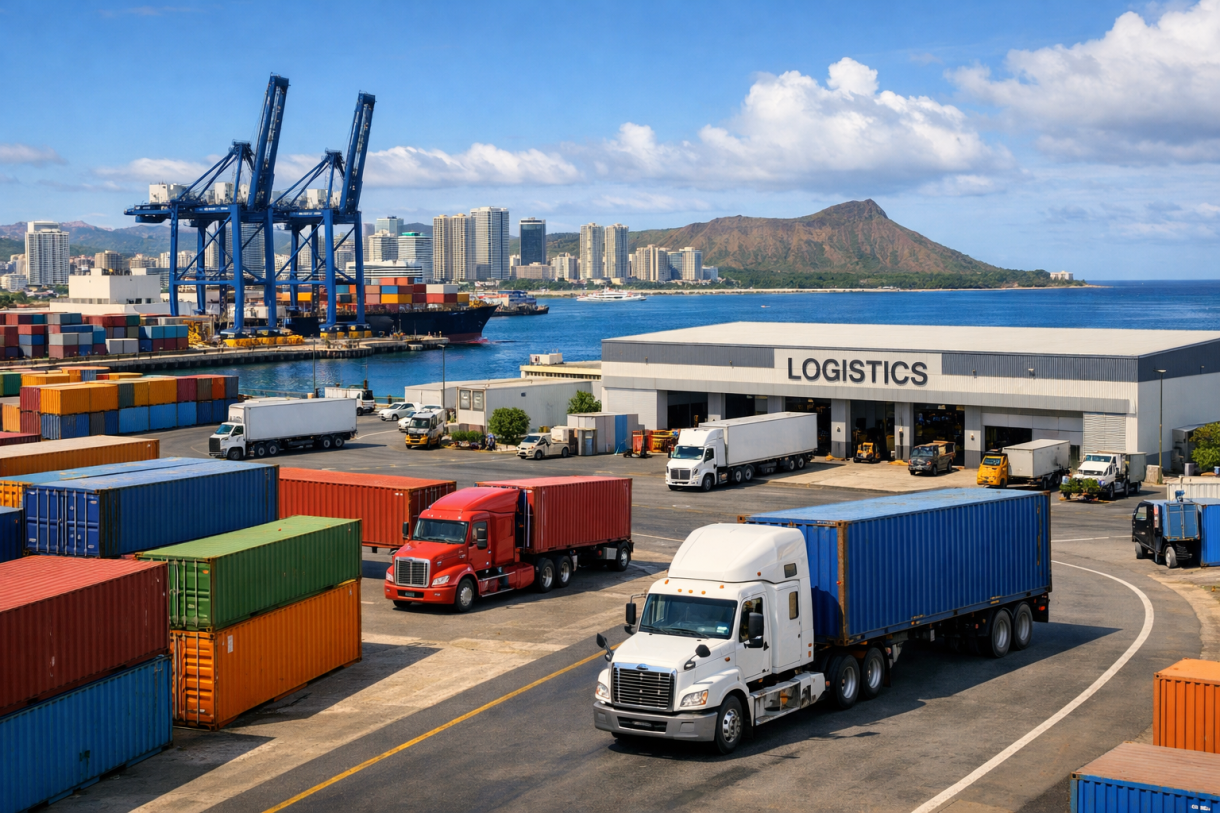
3PL Trends: How Third-Party Logistics Is Evolving in 2026
Why 3PL Trends Matter for Modern Supply Chains
The logistics industry continues to evolve as global supply chains adapt to new technologies, shifting consumer expectations, and economic changes. Understanding emerging 3PL trends helps businesses stay competitive while improving operational efficiency.
Third-party logistics providers now do far more than transport freight. Modern 3PL companies manage:
- Warehousing and inventory storage
- Distribution and freight transportation
- ecommerce fulfillment operations
- last-mile delivery coordination
- supply chain visibility and analytics
For businesses operating in geographically unique regions like Hawaii, these services are especially important. Logistics providers must coordinate ocean freight arrivals, warehouse staging, and final delivery across the islands.
Companies that follow the latest 3PL industry trends benefit from:
- Faster freight movement
- Reduced logistics costs
- Better inventory visibility
- Improved delivery performance
- Greater supply chain resilience
Understanding how the industry is evolving helps businesses select the right logistics partners for long-term growth.
Why Third-Party Logistics Is Critical in Hawaii
Hawaii’s supply chain environment differs significantly from mainland logistics operations.
Key challenges include:
- Heavy reliance on ocean freight shipments
- Limited land transportation routes
- Higher transportation costs
- Strict port scheduling timelines
Because of these factors, businesses often rely on experienced 3PL providers to coordinate freight movement efficiently.
Services such as daily container drayage and break bulk distribution help move inbound cargo quickly from port facilities to distribution centers.
As supply chains grow more complex, keeping up with recent trends in 3PL becomes essential for maintaining efficiency across island logistics networks.
Major 3PL Trends Shaping Logistics in 2026
Real-Time Visibility and Tracking Technology
One of the most important 3PL trends is the rapid expansion of real-time shipment tracking.
Businesses increasingly expect visibility across the entire supply chain, including:
- container arrival status
- warehouse intake updates
- delivery route progress
- estimated arrival times
Advanced tracking tools allow logistics teams to respond quickly to disruptions.
In regions where freight schedules depend heavily on port operations, real-time visibility reduces uncertainty and improves delivery coordination.
Growth of 3PL Ecommerce Fulfillment
The continued rise of online shopping is driving demand for 3PL ecommerce fulfillment services.
Many brands now outsource warehousing, inventory management, and shipping to specialized 3PL providers.
This shift allows companies to:
- scale operations quickly
- reduce fulfillment costs
- improve shipping speed
- focus on product development and marketing
In 2026, many businesses will search for the best 3PL for direct-to-consumer brands, particularly those offering fast fulfillment and strong inventory visibility.
Technology-Driven Warehouse Operations
Warehouse automation and digital inventory systems are transforming logistics operations.
Modern 3PL solutions with advanced technology often include:
- warehouse management systems (WMS)
- barcode scanning and inventory tracking
- digital inventory dashboards
- automated order processing
These technologies improve storage efficiency and reduce fulfillment errors.
Warehousing services such as short-term storage and long-term storage benefit significantly from improved inventory management systems.
Last-Mile Delivery Optimization
The final stage of the supply chain is often the most expensive and complex.
As a result, one of the most important recent trends in 3PL involves improving last-mile delivery performance.
Logistics providers are investing in:
- route optimization software
- delivery density planning
- real-time driver tracking
- flexible scheduling
Specialized transportation equipment such as dry and refrigerated box trucks and lift gate delivery allows providers to handle diverse delivery requirements efficiently.
Improving final delivery performance reduces costs while increasing customer satisfaction.
Flexible Logistics and Scalable Distribution
Businesses increasingly require logistics solutions that can scale quickly during peak demand.
Seasonal industries such as retail, hospitality, and construction often experience fluctuating inventory levels.
Modern 3PL providers now offer flexible services including:
- scalable warehousing capacity
- adjustable delivery schedules
- rapid distribution expansion
Transportation resources such as flatbed trucks and flatbed drop deck trailers allow logistics companies to support different types of cargo.
Scalable logistics services help businesses maintain supply chain stability during high-demand periods.
Sustainability and Fuel Efficiency Initiatives
Environmental responsibility is becoming a major focus in the logistics industry.
Many companies are seeking 3PL providers that prioritize sustainability through:
- fuel-efficient fleet management
- route optimization to reduce emissions
- load consolidation to reduce empty miles
- packaging efficiency improvements
Efficient logistics operations reduce environmental impact while also lowering operational costs.
Businesses interested in packaging efficiency may also explore resources like ecommerce packaging optimization.
The Role of Transportation Services in Modern 3PL Operations
Transportation remains a core component of third-party logistics.
Services such as:
allow logistics providers to support diverse industries and delivery requirements.
As 3PL industry trends continue to evolve, transportation flexibility remains essential for maintaining reliable supply chain performance.
Real-World Impact of 3PL Trends
Retail Inventory Acceleration
A retail company partners with a 3PL provider that implements real-time tracking and route optimization.
As a result, inbound shipments move from port to store locations more quickly, reducing out-of-stock situations and improving customer satisfaction.
Construction Supply Chain Stability
A construction contractor uses flexible warehousing and scheduled deliveries to coordinate building materials across multiple job sites.
By adapting to modern 3PL trends, the contractor reduces project delays and improves inventory availability.
How Businesses Can Adapt to Emerging 3PL Trends
To remain competitive, businesses should consider several strategies.
Evaluate logistics technology capabilities
Choose providers that offer shipment tracking, inventory dashboards, and reporting tools.
Partner with providers that understand local logistics challenges
Regional expertise improves route planning and freight coordination.
Focus on scalability
Ensure logistics partners can adjust storage and delivery capacity as demand fluctuates.
Monitor logistics performance metrics
Tracking delivery times, freight costs, and inventory turnover helps optimize supply chain operations.
Companies that follow these strategies are better positioned to take advantage of the latest 3PL trends.
Final Thoughts on 3PL Trends in 2026
The logistics industry continues to evolve rapidly as technology, ecommerce growth, and supply chain complexity reshape operations.
The most significant 3PL trends in 2026 focus on:
- real-time visibility and tracking
- technology-driven warehouse management
- ecommerce fulfillment expansion
- optimized last-mile delivery
- flexible and scalable logistics services
Businesses that stay informed about these developments can improve efficiency, reduce costs, and build more resilient supply chains.
By partnering with experienced logistics providers and adopting modern logistics strategies, companies can successfully navigate the evolving world of third-party logistics.
Frequently Asked Questions About 3PL Trends
What are the most important 3PL trends in 2026?
Major trends include real-time shipment tracking, warehouse automation, ecommerce fulfillment growth, last-mile delivery optimization, and sustainability initiatives.
Why are 3PL services growing in popularity?
Businesses increasingly outsource logistics to reduce operational costs, improve delivery performance, and focus on core business activities.
What industries benefit most from 3PL providers?
Retail, ecommerce, manufacturing, healthcare, and construction industries often rely heavily on third-party logistics services.
How does technology affect 3PL operations?
Technology improves supply chain visibility, automates warehouse processes, and helps optimize transportation routes.
Can small businesses benefit from 3PL services?
Yes. Small businesses often use 3PL providers to scale operations, reduce logistics complexity, and improve shipping performance without building their own logistics infrastructure.