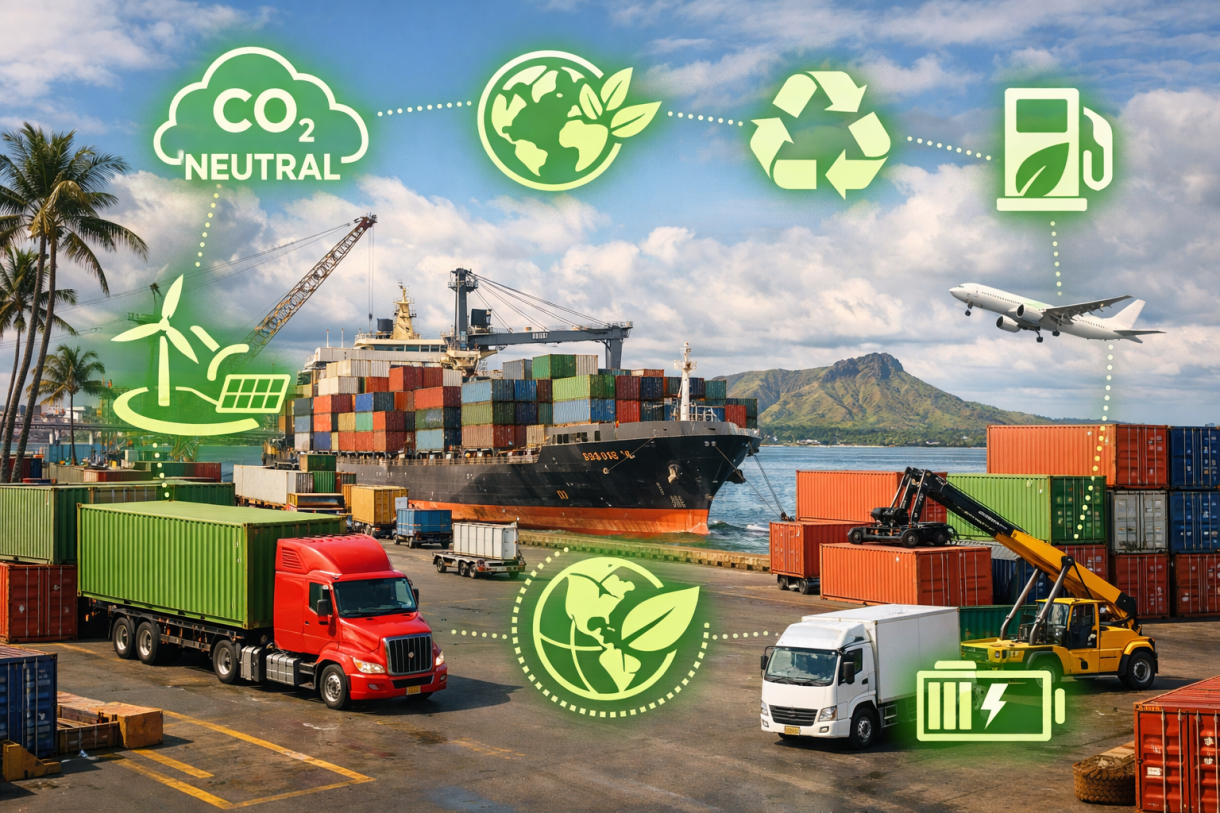
Carbon Neutral Freight Programs
Why Carbon Neutral Freight Is Becoming a Logistics Priority
Freight transportation keeps Hawaii supplied with everything from food and retail goods to construction materials and military cargo. At the same time, long shipping distances, reliance on ocean and air transport, and limited routing flexibility make logistics a significant source of emissions. For this reason, carbon neutral freight is rapidly shifting from a niche concept to a core logistics priority.
Businesses today face growing pressure from customers, partners, and regulators to reduce environmental impact. Sustainability is no longer just a branding exercise. In Hawaii, it is directly tied to protecting fragile island ecosystems, preserving air and ocean quality, and supporting long-term economic stability.
Carbon neutral freight programs offer a practical way forward. They allow companies to move goods reliably while measuring emissions, reducing them where possible, and offsetting what cannot be eliminated. This article explains what carbon neutral freight really means, how these programs work, and why they matter so much for Hawaii-based supply chains.
What Carbon Neutral Freight Really Means
Carbon neutral freight refers to transportation operations where total greenhouse gas emissions are balanced to achieve a net-zero impact. This is accomplished through a combination of emissions reduction strategies and verified carbon offsets.
A common question businesses ask is what is carbon neutral shipping. At its core, it means the carbon produced by shipping activities is accounted for and neutralized, rather than ignored.
A legitimate carbon neutral freight program typically includes:
- Measuring emissions across ocean, air, and ground transport
- Reducing fuel consumption through efficiency improvements
- Selecting lower-emission transportation options when available
- Using verified carbon offset shipping programs to balance remaining emissions
This approach goes beyond marketing claims. It creates accountability and transparency throughout the logistics process.
Carbon Neutral Shipping vs Traditional Freight
Traditional freight focuses on cost, speed, and reliability. Environmental impact is often a secondary consideration. Carbon neutral shipping adds sustainability as a measurable performance metric alongside efficiency.
Key differences include:
- Emissions are tracked rather than estimated
- Routes and loads are optimized to reduce fuel use
- Carriers and equipment are evaluated for efficiency
- Offsets are applied only after reduction efforts
Many global carriers now offer programs similar to UPS carbon neutral shipping, reflecting how mainstream this approach has become. However, carbon neutrality is most effective when applied across the entire logistics chain, not just one segment.
How Carbon Neutral Freight Programs Work in Practice
Emissions Measurement and Tracking
The first step is data. Emissions are calculated based on shipment weight, distance, mode of transport, and fuel type. Accurate tracking creates the foundation for meaningful reduction.
Without measurement, sustainability efforts lack credibility.
Route and Load Optimization
Reducing emissions often starts with smarter planning. Consolidated shipments, optimized routes, and reduced empty miles all lower fuel consumption. In Hawaii, this can involve coordinated port drayage and island-wide distribution planning.
Services such as daily container drayage and break bulk distribution play an important role in improving efficiency.
Lower-Emission Transportation Options
Where possible, carbon neutral freight programs prioritize fuel-efficient vehicles, modern engines, and optimized equipment. This may include specialized assets such as dry refrigerated box trucks or right-sized vehicles that avoid unnecessary fuel use.
Businesses sometimes ask what does lower carbon option mean. In logistics, it refers to choosing transport methods or equipment that produce fewer emissions per shipment.
Carbon Offsets and Neutralization
After reduction strategies are applied, remaining emissions are balanced through verified carbon offsets. These may support renewable energy, conservation, or reforestation projects.
This step is often referred to as carbon offset shipping. Offsets do not replace reduction efforts, they complement them.
Ongoing Reporting and Improvement
Carbon neutral freight is not a one-time certification. Programs include ongoing monitoring, reporting, and refinement to improve sustainability performance over time.
Why Carbon Neutral Freight Matters in Hawaii
Environmental Protection
Lower emissions help protect Hawaii’s air quality, marine ecosystems, and natural resources. Sustainable freight directly supports the health of the islands.
Business Reputation and Trust
Companies that adopt carbon neutral services strengthen credibility with environmentally conscious customers, tourism partners, and global brands that prioritize sustainability.
Regulatory Readiness
As environmental regulations evolve, carbon neutral freight programs help businesses stay ahead of compliance requirements rather than reacting under pressure.
Supply Chain Efficiency
Many sustainability improvements also reduce waste and cost. Efficient routing, proper equipment selection, and optimized delivery planning often improve reliability.
For Hawaii businesses, sustainability and operational performance are closely connected.
Real-World Applications of Carbon Neutral Freight
Carbon neutral freight programs scale across industries.
Retail and E-Commerce
Frequent deliveries increase emissions. Carbon neutral delivery programs help offset this impact while maintaining service levels. Solutions such as retail deliveries and inside pick delivery support efficient last-mile logistics.
Food and Beverage Distribution
Temperature-controlled logistics rely on energy-intensive equipment. Using efficient refrigerated vehicles and optimized routes supports sustainability without risking product integrity.
Construction and Industrial Freight
Heavy loads benefit from proper equipment selection, including flatbed trucks and flatbed drop deck trailers that reduce unnecessary trips.
Military and Residential Logistics
Specialized services like military base and residential delivery benefit from coordinated scheduling and reduced emissions per delivery.
The Role of Packaging and Storage
Sustainability does not stop at transportation. Packaging and storage decisions affect overall emissions.
Using carbon neutral packaging, minimizing excess materials, and consolidating shipments all contribute to lower impact. Businesses can further reduce emissions through efficient warehousing and storage solutions such as short-term storage and long-term storage.
For deeper insight, explore this guide on eco-friendly packaging and sustainable logistics in Hawaii.
Common Misconceptions About Carbon Neutral Freight
Several myths often slow adoption:
- Offsets replace reduction efforts, they do not
- Carbon neutral freight is only for large corporations
- Sustainable shipping always costs more
- Reporting is overly complex
In reality, many programs scale for small and mid-sized businesses, and efficiency gains often offset costs.
Carbon Neutral Freight in a Global Context
Businesses sometimes compare regional programs with international standards, including carbon neutral shipping Australia initiatives. While regulatory frameworks differ, the underlying principles remain the same: measure, reduce, offset, and improve.
Hawaii’s geographic challenges make these principles even more important.
Sustainable Freight Is the Future of Hawaii Logistics
Carbon neutral freight represents a practical and responsible approach to modern logistics. By combining emissions reduction with verified offsets, businesses can move goods efficiently while supporting environmental stewardship.
Many Hawaii-based organizations partner with Preferred Hawaii to implement carbon neutral freight strategies that balance performance, transparency, and sustainability. As supply chains evolve, carbon neutrality is no longer optional, it is a competitive advantage.
Frequently Asked Questions About Carbon Neutral Freight
What is carbon neutral freight?
It is a logistics approach where freight emissions are measured, reduced, and offset to achieve net-zero impact.
Is carbon neutral shipping reliable?
Yes. Programs are designed to maintain efficiency and delivery standards.
Are carbon offsets trustworthy?
They are reliable when sourced from verified, third-party certified projects.
Is carbon neutral freight practical in Hawaii?
Absolutely. It is especially valuable where long shipping distances are unavoidable.
How can businesses get started?
Begin by measuring emissions, optimizing routes, and working with logistics providers that offer certified carbon neutral freight programs.