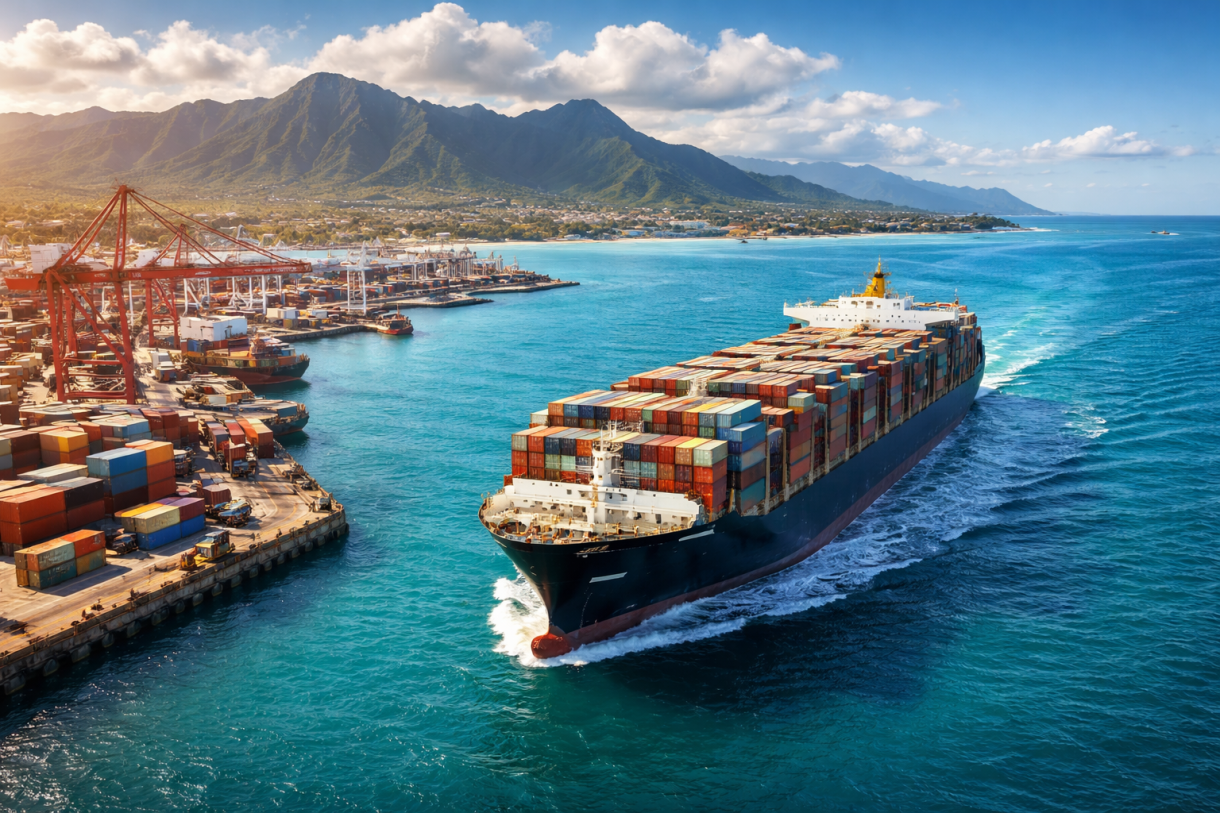
The Complete Freight Forwarding Process: From Booking to Final Delivery
Shipping cargo internationally or even from the U.S. mainland to Hawaii can feel confusing if you’re unfamiliar with how freight actually moves. Many shippers ask the same questions: How does a freight forwarding company work? What does “consignment received by overseas forwarder” mean? When does customs clearance happen?
The answer lies in understanding the freight forwarding process from start to finish.
Freight forwarding is not a single action. It is a coordinated sequence of logistics, documentation, customs clearance, transportation, and delivery activities that ensure cargo moves legally, efficiently, and on time. Whether you’re managing export cargo forwarding for a business or shipping personal goods to Hawaii, knowing each stage helps you avoid delays, extra costs, and compliance issues.
This guide walks you through the entire freight forwarding process, explains key terms you’ll see in tracking updates, and shows how logistics clearing and forwarding work in real-world scenarios, especially for Hawaii-bound shipments.
What Is the Freight Forwarding Process?
The freight forwarding process is the structured workflow used to move goods from a shipper’s location to a final destination using one or more transportation modes (ocean, air, truck). A freight forwarder coordinates this process on behalf of the shipper.
Unlike a carrier, a freight forwarder does not usually own ships, planes, or trucks. Instead, they manage:
- Carrier selection and booking
- Logistics documentation process
- Freight forwarding and customs clearance
- Cargo tracking and issue resolution
- Destination handling and final delivery
For Hawaii, this process is especially important because most cargo involves ocean freight, port operations, and local distribution once it arrives on the islands.
A well-managed freight forwarding process delivers four outcomes:
- Legal and customs-compliant shipping
- Predictable transit timelines
- Cost-efficient routing
- End-to-end visibility
Step-by-Step Breakdown of the Freight Forwarding Process
Below is a clear, practical walkthrough of how the freight forwarding process works in real life.
Step 1: Shipment Planning and Quotation
Purpose: Build the foundation for the entire shipment
Every shipment starts with planning. The freight forwarder collects critical details, including:
- Cargo description and value
- Weight and dimensions
- Origin and destination
- Required delivery date
- Special handling needs (oversized, refrigerated, fragile)
Using this information, the forwarder determines the best routing and shipping method. This may include:
- Ocean freight (most common for Hawaii)
- Air freight (for urgent cargo)
- Multimodal combinations
At this stage, the forwarder provides a quote covering transportation, documentation, customs coordination, and destination handling.
Early planning is one of the most important freight forwarding procedures. Inaccurate information here often leads to rebooking, delays, and unexpected charges later in the freight process.
Step 2: Booking and Carrier Coordination
Purpose: Secure transportation capacity
Once the quote is approved, the freight forwarder books space with the appropriate carrier. This may involve:
- Reserving container space on an ocean vessel
- Booking air cargo capacity
- Coordinating trucking to the port or airport
For Hawaii shipments, this step often includes scheduling sailings from West Coast ports and aligning cutoff times. Because sailing schedules can be limited, missing a booking window can delay cargo by a full week or more.
Carrier coordination is a core part of freight forwarding procedures and requires strong relationships with carriers to ensure reliability.
Step 3: Export Documentation Preparation
Purpose: Ensure legal compliance before departure
The logistics documentation process begins in earnest at this stage. Common documents include:
- Commercial invoice
- Packing list
- Bill of lading
- Export declarations (if required)
The freight forwarder reviews all documents for accuracy and consistency. Errors in product descriptions, values, or quantities can cause customs delays or fines.
This step is critical in freight forwarding and customs clearance, as documentation errors are one of the most common reasons shipments are held at port.
For international shipments, forwarders also ensure compliance with export regulations, with guidance often aligned with resources from export.gov.
Step 4: Cargo Pickup and Origin Handling
Purpose: Move cargo from the shipper to the port or airport
Once documentation is ready, the forwarder arranges cargo pickup. This may involve:
- Trucking from the shipper’s facility
- Warehouse consolidation
- Palletizing or crating
For mainland shipments heading to Hawaii, this often includes drayage to the port. Services such as daily container drayage play a key role in ensuring containers are delivered to the terminal on time.
Cargo is inspected, labeled, and prepared according to carrier requirements before export.
Step 5: Export Customs Clearance
Purpose: Obtain authorization to leave the origin country
Before cargo can depart, it must clear export customs. The freight forwarder submits all required documentation to customs authorities.
Once approved, the shipment is released for export. If customs has questions or requests additional information, the forwarder responds on the shipper’s behalf.
Efficient export clearance keeps the freight process moving without disruption.
Step 6: International Transportation
Purpose: Move cargo across borders or oceans
This is the main transit phase of the freight forwarding process. Cargo travels by:
- Ocean vessel (most Hawaii freight)
- Aircraft (urgent or high-value goods)
During transit, the freight forwarder monitors the shipment and provides status updates. If issues arise, such as weather delays or port congestion, the forwarder communicates with carriers and adjusts plans as needed.
At this stage, tracking updates may show messages like “consignment received by overseas forwarder”.
What Does “Consignment Received by Overseas Forwarder” Mean?
Many shippers ask about this status message.
Consignment received by overseas forwarder meaning:
It indicates that your cargo has arrived at the destination country (or a transit country) and has been received by the local partner forwarder who will handle the next steps, such as customs clearance and delivery.
For example:
- U.S. consignment received by overseas forwarder means cargo has arrived abroad and is now under the control of the destination agent.
- Consignment received by overseas forwarder does not mean final delivery; it means the next phase of the freight forwarding process is starting.
This status is a normal and important milestone in international shipping.
Step 7: Import Customs Clearance
Purpose: Legally enter the destination country
For shipments arriving in Hawaii from overseas, import customs clearance is handled by submitting documentation to U.S. Customs and Border Protection.
The freight forwarder (often working with a customs broker) manages:
- Entry filing
- Duty and tax calculation
- Inspections, if required
This step is central to freight forwarding and customs clearance. Delays here usually stem from missing documents or inaccurate declarations.
Step 8: Destination Handling and Local Distribution
Purpose: Move cargo from port to final destination
After customs clearance, cargo is released for delivery. This may involve:
- Port pickup
- Local trucking
- Warehousing or storage
In Hawaii, destination handling often includes specialized delivery services such as:
- flatbed trucks or flatbed drop deck trailers for oversized cargo
- forklift delivery for heavy equipment
- lift gate delivery where docks are unavailable
- inside pick delivery for retail or commercial locations
For temperature-sensitive goods, dry refrigerated box trucks may be used.
Step 9: Storage, Break Bulk, and Final Delivery
Purpose: Complete the freight forwarding cycle
Some shipments require storage before final delivery. Freight forwarders coordinate:
- short-term storage
- long-term storage
- break bulk distribution for unpacking containers into smaller shipments
Final delivery may include residential, retail, or specialized destinations such as military base and residential delivery or retail deliveries.
At this point, the freight forwarding process is complete.
Real-World Freight Forwarding Process Examples
Example 1: Mainland Retailer Shipping to Hawaii
A retailer consolidates weekly inventory shipments into ocean containers. The freight forwarder manages booking, export documentation, customs clearance, and local delivery, reducing costs and preventing stockouts.
Example 2: Construction Equipment Export Cargo Forwarding
Oversized equipment requires special permits, flatbed transport, and port coordination. The forwarder handles logistics clearing and forwarding to keep the project on schedule.
Example 3: Personal Household Goods Shipment
An individual relocating to Hawaii uses a freight forwarder to manage packing coordination, export clearance, ocean freight, and island delivery, eliminating stress and confusion.
Common Freight Forwarding Mistakes to Avoid
- Providing inaccurate cargo dimensions or weight
- Waiting too long to book during peak seasons
- Misunderstanding customs requirements
- Choosing shipping methods based on price alone
Avoiding these mistakes makes the freight forwarding process smoother and more predictable.
How Does a Freight Forwarding Company Work Overall?
In simple terms, a freight forwarding company works by:
- Planning the shipment
- Booking transportation
- Managing documentation
- Clearing customs
- Coordinating delivery
They act as the single point of coordination across the entire freight process, allowing shippers to focus on their core business instead of logistics complexity.
Frequently Asked Questions About the Freight Forwarding Process
How long does the freight forwarding process take?
Ocean freight to Hawaii typically takes several weeks. Air freight may take days. Customs clearance and documentation accuracy heavily influence timelines.
Is freight forwarding required for Hawaii shipping?
Not legally required, but highly recommended. Most shippers use freight forwarders to avoid delays and compliance issues.
What documents are needed?
Common documents include a commercial invoice, packing list, bill of lading, and customs forms.
Final Thoughts: Why Understanding the Freight Forwarding Process Matters
The freight forwarding process is a carefully coordinated system that ensures cargo moves legally, efficiently, and reliably from origin to destination. For Hawaii-bound shipments, this process is even more critical due to ocean transit, port schedules, and local delivery requirements.
By understanding each step, from planning and booking to customs clearance and final delivery, you can ship with confidence, avoid costly mistakes, and communicate more effectively with your freight forwarder.
Whether you’re managing export cargo forwarding for a business or shipping personal goods, mastering the freight forwarding process puts you in control of your logistics from start to finish.