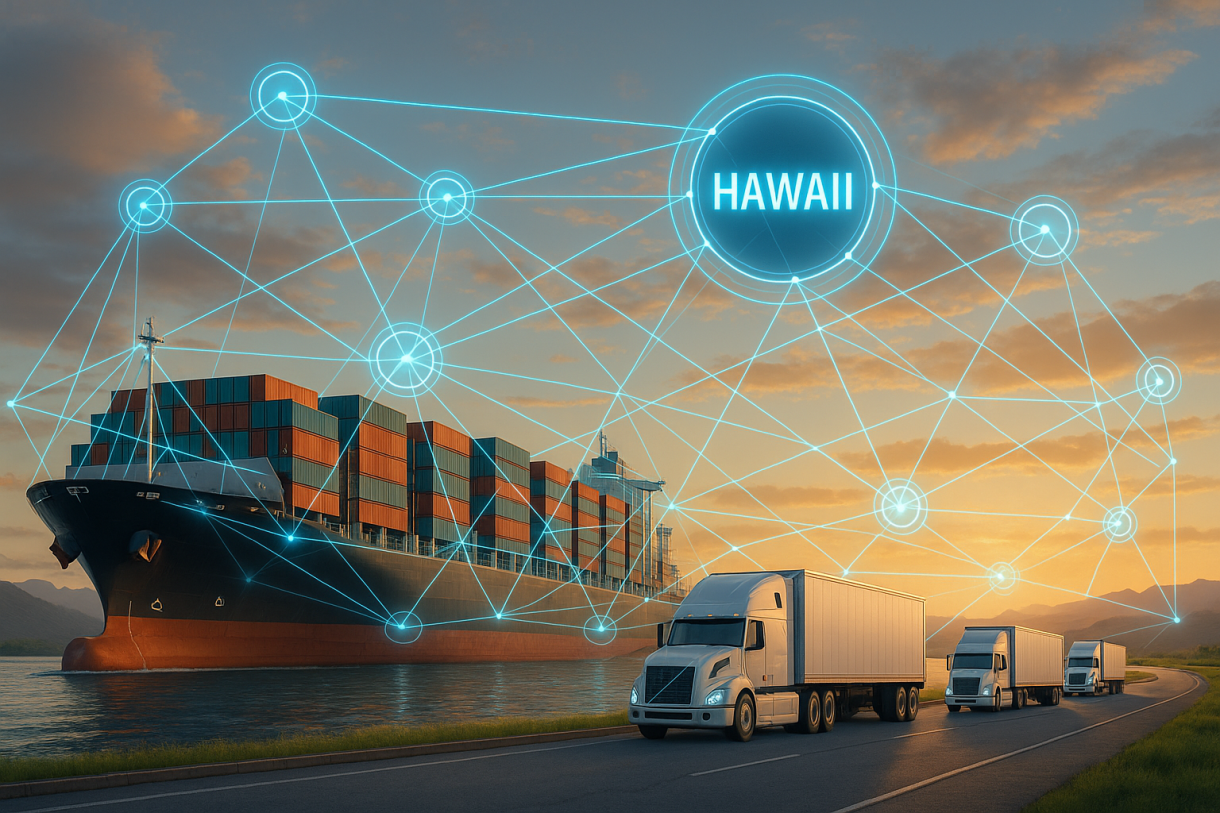
Evolution of Freight Logistics in the Digital Era
The Digital Shift Reshaping Freight Logistics
The logistics industry has long been the invisible engine behind global trade, moving products from manufacturers to markets. But over the last decade, it’s been transformed by data, automation, and digital connectivity. According to Forbes, modern logistics leaders now view digitalization as the single most influential factor shaping competitiveness.
For freight logistics and supply chain management in Hawaii, these changes have redefined how businesses operate—unlocking new levels of efficiency, transparency, and sustainability.
Businesses today face a crucial question: how can they stay ahead of logistics industry trends without losing sight of their local realities? The answer lies in embracing digital transformation not as a buzzword but as a core strategy.
By the end of this guide, you’ll understand:
- How freight logistics is evolving in the digital age.
- Which innovations are shaping the future of Hawaii’s supply chain and logistics management.
- How your business can modernize its logistics operations today.
The Transformation of Freight Logistics in the Digital Era
The logistics landscape has shifted from manual systems to cloud-driven logistics platforms that manage entire supply chains end-to-end. This digital transformation has created measurable advantages for logistics in supply chain operations, including:
- Enhanced visibility: Real-time shipment tracking and data-driven decision-making.
- Operational efficiency: Automated scheduling, reduced paperwork, and smarter routing.
- Sustainability: Greener transport modes and carbon tracking tools.
In Hawaii, where geography demands precision, these innovations are vital. Even small transportation and logistics companies can leverage scalable systems to optimize routes, reduce costs, and improve service reliability.
How Technology Is Driving the Future of Freight Logistics
The global shift toward automation, AI, and predictive analytics is redefining freight logistics worldwide. Reports from McKinsey and Supply Chain Digital confirm that predictive tools and AI-driven analytics are now central to efficiency and competitiveness.
Let’s explore the technologies reshaping Hawaii’s logistics ecosystem.
Automation Tools Streamline Freight Operations
Automation is transforming freight forwarding in Hawaii. From robotic warehousing to AI-driven customs processing, companies are cutting manual errors and saving hours each week.
Digital logistics platforms now automate freight scheduling, invoice generation, and route optimization. This streamlines operations for businesses relying on interisland transport.
Pro Tip: Start with small automation projects—like digitizing paperwork or automating invoice processing—before scaling up to warehouse robotics or AI routing.
Predictive Analytics Optimize Supply Chain Decisions
Predictive analytics allows logistics providers to anticipate demand, manage capacity, and avoid disruption. McKinsey notes that predictive tools can improve logistics performance by up to 30%.
In Hawaii, freight forwarders use predictive models to prepare for seasonal shipping surges, optimizing container scheduling and reducing idle time.
Pro Tip: Combine predictive analytics with IoT-enabled tracking to forecast potential bottlenecks across ports and air terminals.
Transportation Systems Enhance Real-Time Visibility
Transportation Management Systems (TMS) are now standard in logistics management Hawaii operations. These tools centralize route planning, load optimization, and tracking in a single dashboard.
For island-based logistics, TMS software connects air, sea, and road transportation, minimizing downtime and improving customer communication.
Pro Tip: Choose a TMS that integrates with your ERP for seamless coordination across departments.
Explore solutions like daily container drayage, flatbed trucks, and lift gate delivery for efficient interisland freight handling.
Sustainability Initiatives Shape Modern Logistics
Sustainability is one of the top logistics industry trends of 2025. Companies are cutting emissions by optimizing freight loads, using eco-friendly packaging, and investing in electric fleets.
In Hawaii, logistics companies align environmental goals with community values by partnering with low-emission carriers and optimizing shipment consolidation.
Pro Tip: Track your company’s carbon footprint—transparent reporting builds trust and attracts eco-conscious clients.
E-Commerce and Final-Mile Innovations
E-commerce has driven massive growth in final-mile logistics. Hawaii-based companies are adapting with localized fulfillment centers, micro-hubs, and real-time delivery tracking.
Preferred Transport & Distribution’s inside pick delivery and retail deliveries exemplify how technology supports faster turnaround for online orders.
Pro Tip: Analyze e-commerce order data to predict delivery routes, reduce missed deliveries, and enhance customer satisfaction.
Real-World Applications of Digital Freight Transformation
Digital transformation is producing measurable results across Hawaii’s logistics sector:
- Retail: Predictive analytics cut delivery delays by 35% for a Honolulu retailer.
- Construction: Integrated TMS systems reduce material transport costs by 22%.
- Tourism: Hotels streamline inventory imports through automated scheduling.
These examples illustrate how technology improves resilience and reliability in Hawaii freight logistics.
For insights on future trends, see Logistics Management and Transport Topics.
Best Practices for Adopting New Logistics Technologies
Implementing digital transformation successfully requires clear direction. Follow these best practices:
- Set measurable goals: Define key KPIs, like reducing lead time or improving delivery accuracy.
- Invest in team training: Employees are more receptive when they understand the value behind new tools.
- Integrate gradually: Phase adoption to avoid disruption to existing workflows.
- Leverage analytics: Use real-time insights to guide business decisions.
- Stay sustainable: Choose technology partners aligned with green initiatives.
These steps help logistics companies adapt confidently to the fast-changing logistics and supply chain management landscape.
The Future of Hawaii’s Logistics Industry
The evolution of freight logistics represents more than technology—it’s a reimagining of how goods move, data flows, and businesses grow.
Hawaii’s logistics providers stand at the forefront of innovation, merging island-specific expertise with digital-first thinking. Companies that embrace logistics industry trends today will lead tomorrow’s transformation in supply chain and logistics management.
Start small, modernize processes, and scale steadily—your journey toward smarter, more sustainable logistics begins now.
Frequently Asked Questions
1. What are the main logistics industry trends in 2025?
Key trends include automation, AI integration, predictive analytics, and sustainability—all aimed at improving transparency and performance.
2. How is digital transformation impacting logistics companies in Hawaii?
Digital tools like TMS and predictive analytics enhance coordination and tracking across islands, boosting efficiency in both local and international trade.
3. Why is sustainability important in freight logistics?
Sustainability reduces emissions and aligns businesses with Hawaii’s eco-conscious values while improving cost efficiency.
4. What role does predictive analytics play in logistics?
It enables accurate forecasting, optimized routing, and real-time decision-making.
5. How can small logistics companies adapt to these new technologies?
Start with scalable digital systems—like cloud-based logistics platforms—and integrate analytics tools gradually to build a modern, resilient operation.