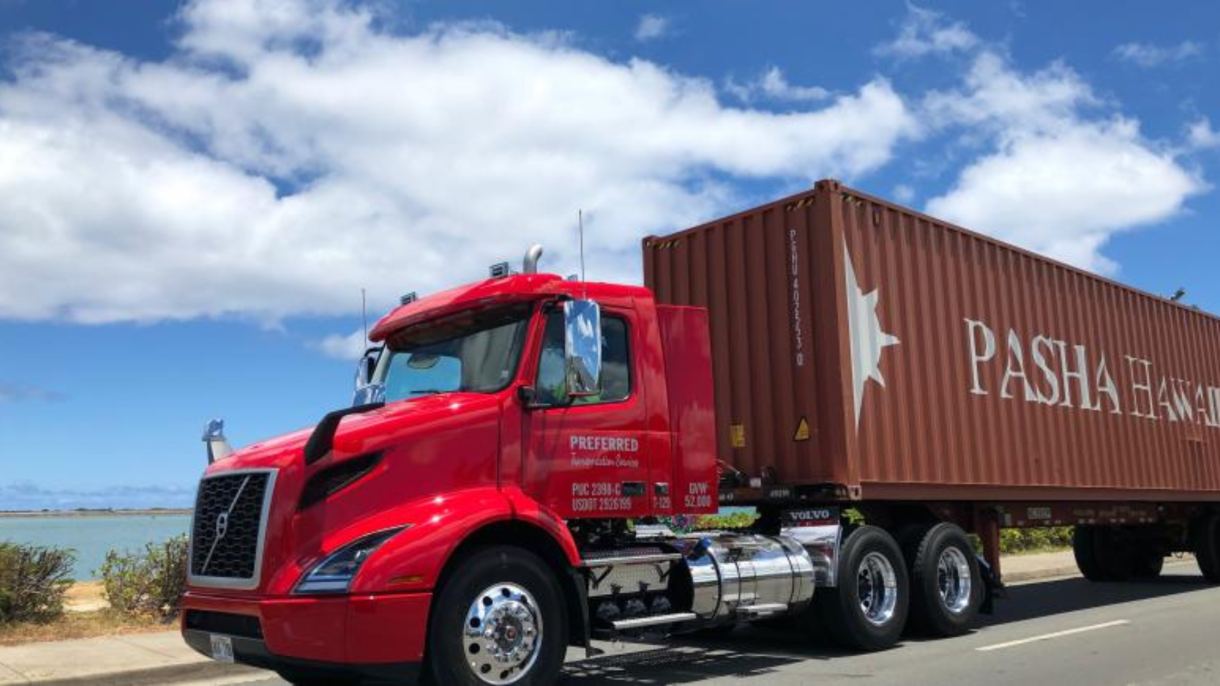
Global Reach, Local Touch: Coordinating International Freight Shipping with NYK Lines
When managing complex international freight shipping, the fear of cargo getting delayed at the port or lost in transit can stall your entire operation. Preferred Transportation Services provides seamless port-to-door integration to ensure your high-stakes ocean cargo transitions smoothly from global carriers to Oahu's roads.
For local businesses and industrial managers, uncoordinated international cargo shipping means compounding port demurrage fees, disrupted production lines, and broken promises to your customers.
Choosing the right international freight shipping companies to handle the final-mile transport determines whether your overseas container becomes a delivered success or a logistical nightmare. In this guide, you will understand how our strategic carrier alliances simplify freight shipping overseas and protect your supply chain on Oahu.
Let's look at how local asset ownership ensures your global shipments land safely.
Demystifying International Freight Shipping for Island Supply Chains
At its core, international freight shipping is the process of transporting large volumes of commodities, raw materials, or merchandise across global borders via ocean vessels or aircraft. This logistical network functions by packing cargo into standardized shipping containers, which are tracked from their foreign origin to a domestic port of entry.
For businesses operating on an island, coordinating this complex movement requires specialized land-based fleet integration to transform maritime freight into locally delivered goods.
In a real-world context, navigating global logistics directly impacts your bottom line, supply chain resilience, and operational stability. If your local drayage carrier lacks formal interchange agreements with major ocean liners like NYK Lines, your containers will sit stranded at the terminal, incurring steep storage fees.
Securing professional daily container drayage ensures that when your inbound international freight arrives at the Port of Honolulu, it is immediately pulled from the dock and transferred safely to its next destination.
Relying on a fragmented transport network risks missed deadlines, but a cohesive strategy for freight shipping overseas yields clear, actionable advantages:
- Eliminates Hidden Port Costs: Rapid, synchronized container extraction prevents compounding demurrage charges at the terminal.
- Maintains Supply Chain Velocity: Seamless handoffs between maritime carriers and our local Kapolei hub keep retail shelves and construction sites supplied on schedule.
- Provides Single-Point Accountability: Utilizing an asset-heavy local fleet ensures you know exactly who is responsible for your cargo from port to final destination.
A common misconception is that all international freight shipping services provide the same standard of land-side execution. In reality, national freight brokers often subcontract final-mile delivery to unvetted third parties who lack the flatbed trucks or specialized credentials required to safely enter rugged construction sites or high-security military installations.
Your Step-by-Step Guide to Coordinating Inbound International Freight Shipping
Successfully managing inbound international freight shipping requires synchronization between global maritime giants and local logistics providers. When ocean containers transit from foreign industrial zones to the Hawaiian Islands, terminal operations must be meticulously pre-arranged to prevent delivery bottlenecks.
Understanding the mechanical sequence of port grounding, deconsolidation, and final-mile trucking allows you to keep high-value assets moving safely across Oahu.
Executing a structured arrival protocol ensures that your heavy cargo, commercial goods, or military supplies transition seamlessly from sea to land. Here is the step-by-step framework for managing inbound international cargo shipping operations effectively.
1. Secure Carrier Documentation and Manifests
Long before an ocean vessel enters Hawaiian waters, you must secure the critical maritime documentation—including the Bill of Lading, commercial invoices, and customs clearance paperwork. When utilizing global networks like NYK Lines, tracking data provides the exact estimated time of arrival at the Port of Honolulu.
Having these documents cleared and organized in advance prevents federal border protection delays and allows your land-side carrier to register for container pick-up appointments immediately upon grounding.
2. Arrange Authorized Port Drayage Extraction
When the container vessel docks, the local terminal operator unloads the ocean containers onto the terminal chassis. To extract this freight without friction, you must partner with an asset-heavy logistics firm that holds established interchange agreements with major maritime lines.
Our specialized break-bulk distribution services provide the immediate physical infrastructure required to clear port terminals rapidly, ensuring your containers are pulled safely from the docks before storage grace periods expire.
3. Deconsolidate Bulk Freight at a Local Facility
Rarely can an entire international ocean container be dropped directly at a commercial retail storefront or a tight construction jobsite. The cargo must move from the terminal to a localized warehousing hub for professional deconsolidation.
During this phase, full container loads are broken down into smaller, loose freight pallets or individual crates. This sorting process allows mixed inventory to be categorized accurately by project phase, destination, or specific handling requirement.
4. Deploy the Right Specialized Fleet Equipment
Once your international cargo is sorted and palletized, final-mile delivery requires a versatile fleet capable of handling diverse weight classifications and dimensions. Industrial equipment, lumber, or pre-cast concrete cannot travel in standard vans; they demand heavy-duty transport solutions.
- For oversized construction materials, utilizing specialized flatbed drop-deck trailers provides the lower center of gravity and loading clearance necessary for secure transport.
- For palletized commercial merchandise destined for facilities lacking loading docks, dispatching trucks with dedicated forklift delivery options guarantees self-sustained, safe offloading directly at the jobsite.
5. Finalize Last-Mile Verification and Access Protocols
The final step in the inbound transit chain is navigating the specific access requirements of the receiving location. Delivering to high-security military installations, tight urban corridors in Honolulu, or remote coastal development areas requires a driver who understands local gate protocols and terrain challenges.
Logistics Pro-Tip: Always confirm the physical access constraints of your delivery drop point—such as low overhead clearances or weight-restricted bridges—before dispatching specialized trucks from the Kapolei hub.
By following this precise, five-step port-to-destination pipeline, you remove structural friction from your international freight shipping strategy, transforming a complex cross-border voyage into a controlled, highly predictable local delivery.
Real-World Applications of Inbound International Freight Shipping
Seeing how port-to-door coordination solves everyday logistical bottlenecks demonstrates the true value of reliable lane management. Here is how local industries actively optimize their supply chains when handling inbound international freight shipping on Oahu.
- Synchronizing Commercial Construction Materials: A prominent developer on Oahu anticipated a massive shipment of structural steel columns arriving via global ocean cargo carriers.
To avoid port demurrage penalties and jobsite delays, they coordinated with our Kapolei-based fleet to execute rapid container drayage straight from the terminal. Utilizing our specialized flatbed trucks, the heavy freight was systematically transported directly to the development zone on schedule, eliminating costly project downtime.
- Balancing Global Supply Influxes for Retail Networks: An island-wide retailer faced an immense influx of seasonal inventory arriving from multiple overseas manufacturing facilities. They required a structured partner capable of managing complex freight shipping overseas and providing temporary staging.
By routing their ocean containers through a dedicated deconsolidation and sorting pipeline, the merchant achieved seamless cross-docking and balanced inventory levels across all retail corridors without a single stockout.
- Time-Sensitive Industrial Tooling Transport: When a local manufacturing plant required urgent precision machinery components from a foreign supplier, they utilized specialized international air freight shipping to minimize transit delays. Our team pre-staged local cartage vehicles at the air cargo terminal, ensuring immediate retrieval and same-day delivery to keep the production line operational.
These operational successes prove that combining global transit lanes with asset-heavy local execution removes the volatility from international freight shipping services, ensuring your cargo arrives exactly where it is needed.
Expert Tips for Managing International Freight Shipping Lanes
Moving from general awareness of global trade to sharp, practical lane management is what protects your cargo from expensive port terminal delays. Implementing these operational strategies helps you navigate complex international freight shipping with absolute control.
- Verify Active Carrier Interchange Status: Before booking any ocean cargo space, ensure your local trucking partner maintains active interchange agreements with the carrier. If your local drayage fleet isn't pre-authorized with lines like NYK Lines or its integrated networks, your containers will sit grounded, accumulating steep storage fees.
- Pre-Stage Your Specialized Offloading Gear: Do not wait for inbound ocean freight to land before scheduling your distribution equipment. If your international cargo shipping manifest includes irregular or heavy manufacturing supplies, secure an asset-based partner that coordinates forklift delivery services concurrently with port extraction to ensure immediate, safe offloading.
- Assess Air vs. Ocean Transit Windows Early: Balance your delivery urgency against your budget by auditing your shipping methods dynamically. While massive shipments rely on traditional ocean lanes, time-critical assembly components facing tight manufacturing windows are much better suited for international air freight shipping to ensure uninterrupted supply chain velocity.
Following these precise, proactive habits minimizes unexpected disruptions at the terminal, keeping your cross-border supply chain organized, stable, and highly cost-effective.
Partnering with an Asset-Based Specialist for International Freight Shipping
Successfully managing international freight shipping requires combining global ocean liner coordination with localized, asset-based fleet execution. You now understand how proactive documentation, authorized port drayage agreements, and specialized transportation protect your inbound cargo from unexpected terminal delays. Armed with these strategies, you can confidently oversee your global supply chain, eliminate costly demurrage penalties, and keep your production lines moving forward.
Taking control of your international freight shipping services right now prevents vulnerable shipments from sitting stranded on the docks during peak seasons. Securing an established, on-island partner ensures your business can handle complex international cargo shipping hurdles with ultimate peace of mind.
When your commercial operations require reliable port extraction and localized transport, choose an asset-backed partner that controls the entire island delivery loop. Contact Preferred Transportation Services today to streamline your port-to-door logistics and explore our dedicated break-bulk distribution services.
Frequently Asked Questions About International Freight Shipping
How do I prevent delays when managing inbound international freight shipping?
International freight shipping requires clearing federal customs and securing delivery appointments before the ship docks. Partnering with a carrier that has direct interchange agreements with major ocean liners ensures that your inbound container is scheduled for extraction the moment it hits the terminal floor. This coordinated, asset-heavy framework eliminates structural port friction and prevents containers from sitting idle on the docks.
What is the difference between ocean and international air freight shipping?
Ocean transport is designed for heavy, high-volume cargo requiring cost-efficient transport across global waters. Conversely, international air freight shipping prioritizes extreme velocity for time-sensitive parts or urgent manufacturing supplies. While air transport significantly minimizes transit times for critical shipments, ocean shipping remains the standard choice for moving oversized building materials and full container loads.
Can specialized local fleets safely transport heavy international cargo?
Yes, an asset-heavy local carrier handles complex freight shipping overseas by matching industrial cargo with specialized equipment. Heavy structural steel or large manufacturing machinery cannot travel in standard vans. Utilizing specialized flatbed trucks ensures that your uncontainerized international shipments are loaded, transported, and offloaded across Oahu with strict adherence to professional safety protocols.