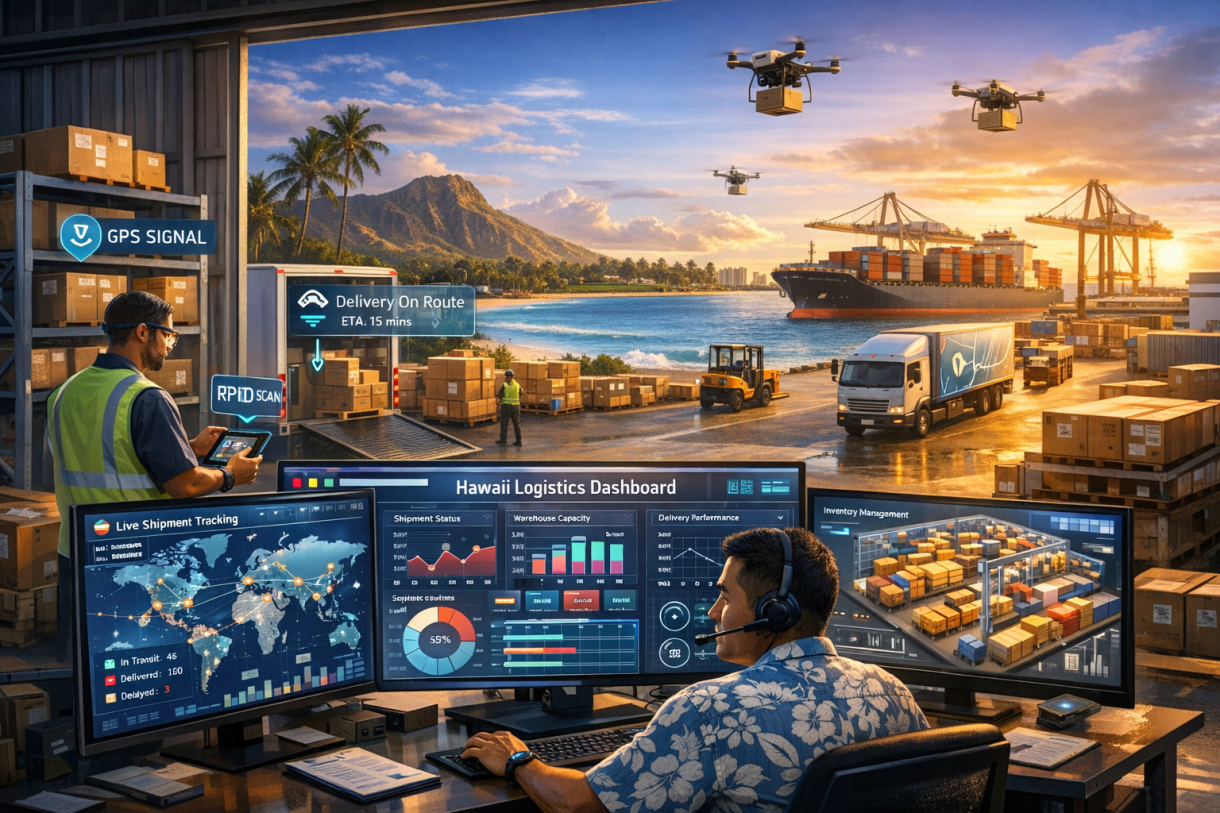
Logistics Digital Transformation: Technologies Reshaping Modern Supply Chains
Why Digital Transformation Is Redefining Logistics Operations
Logistics digital transformation is no longer a future concept. It is actively reshaping how modern supply chains operate, scale, and compete. As customer expectations increase and supply chains grow more complex, logistics companies are turning to technology to improve visibility, efficiency, and reliability. For businesses operating in Hawaii, where geography, port schedules, and inter-island distribution add layers of complexity, digital transformation is especially critical.
Traditional logistics operations often depend on manual processes, disconnected systems, and delayed reporting. These limitations make it difficult to manage disruptions, optimize routes, or provide real-time updates to customers. Digital transformation replaces guesswork with automation, data, and integrated platforms that support faster, more informed decision-making.
From real-time shipment tracking to warehouse automation and predictive analytics, technology now touches every part of the logistics lifecycle. In this guide, we explore what digital transformation in the logistics industry really means, the core technologies driving change, and why logistics providers in Hawaii are embracing modern digital solutions.
What Logistics Digital Transformation Really Means
Logistics digital transformation refers to the integration of digital technologies across transportation, warehousing, inventory management, and supply chain coordination. It is not simply about adopting new software. It involves rethinking workflows, data sharing, and operational models to become more connected, responsive, and scalable.
In a digitally transformed logistics operation, information flows seamlessly between systems, partners, and customers. This connectivity improves speed, accuracy, and adaptability while reducing operational friction.
Key objectives of digital transformation logistics initiatives include:
- Real-time visibility across the supply chain
- Automation of repetitive and manual tasks
- Improved demand forecasting and planning
- Faster response to disruptions and delays
- Clear, proactive customer communication
For Hawaii-based logistics providers, digital transformation also helps address challenges related to distance, ocean freight schedules, port congestion, and inter-island coordination.
Digital Transformation in Transportation and Logistics
The digital transformation in transportation and logistics impacts every stage of freight movement, from pickup and warehousing to final delivery. Transportation networks are becoming smarter, more transparent, and increasingly data-driven.
Digital tools allow logistics teams to track shipments in real time, optimize routes, and coordinate multiple service types efficiently. This level of visibility is especially valuable in Hawaii, where shipments often involve ports, short-haul trucking, and specialized delivery requirements.
Services such as daily container drayage, flatbed trucks, and retail deliveries benefit significantly from digital scheduling, tracking, and reporting tools that reduce delays and improve reliability.
Core Technologies Driving Logistics Digital Transformation
Transportation Management Systems (TMS)
Transportation management systems are central to digital logistics solutions. A TMS platform helps manage route planning, shipment tracking, carrier coordination, and delivery performance. These systems provide real-time updates, optimize routing decisions, and reduce transportation costs.
For logistics operations in Hawaii, TMS platforms improve coordination with ports, carriers, and inter-island transport schedules, helping ensure smoother freight movement.
Warehouse Management Systems (WMS)
Warehouse management systems digitize inventory tracking, picking, packing, and storage processes. Automation reduces errors, improves order accuracy, and increases fulfillment speed.
Smart WMS platforms are particularly valuable in Hawaii, where warehouse space is limited and costly. Efficient use of space supports services such as short-term storage and long-term storage while maintaining accuracy and control.
Real-Time Tracking and Visibility Tools
GPS tracking, IoT sensors, and cloud-based dashboards provide real-time shipment visibility. These tools allow logistics teams to anticipate delays, respond quickly to disruptions, and communicate proactively with customers.
Visibility tools are essential for maintaining reliability across ocean freight, port transfers, and island distribution routes.
Automation and Robotics
Automation reduces manual labor and increases consistency. Technologies such as automated sorting systems, barcode scanning, and robotic picking support scalable growth without proportionally increasing labor costs.
Even partial automation delivers efficiency gains, especially in high-volume operations such as break bulk distribution and multi-stop delivery routes.
Data Analytics and Predictive Insights
Advanced analytics convert operational data into actionable insights. Predictive tools help forecast demand, identify bottlenecks, and optimize capacity planning.
End-to-end data digitization logistics strategies allow companies to monitor performance metrics across the entire supply chain. Data-driven decision-making improves resilience and reduces risk in dynamic logistics environments.
Cloud-Based Integration Platforms
Cloud-based platforms connect suppliers, carriers, warehouses, and customers through shared data environments. These platforms support collaboration, standardize reporting, and ensure all stakeholders operate from the same information.
Cloud integration is the foundation of modern supply chain digitalization, enabling scalability and flexibility without heavy infrastructure investments.
Why Logistics Digital Transformation Matters in Hawaii
Hawaii’s logistics environment presents unique challenges. Ocean freight schedules, port congestion, inter-island distribution, and limited infrastructure require high levels of coordination and accuracy. Manual systems struggle to keep up with this complexity.
Digital transformation helps Hawaii logistics providers:
- Reduce delays caused by miscommunication
- Improve shipment reliability across islands
- Optimize limited warehouse and transport capacity
- Increase transparency for clients
- Adapt quickly to disruptions and demand changes
Without digital systems, scaling logistics operations in Hawaii becomes significantly more difficult and costly.
Real-World Applications of Digital Logistics Technologies
Port and Freight Coordination
Digital platforms synchronize shipping schedules, documentation, and carrier communication. This reduces dwell time at ports and improves turnaround speed.
Warehousing and Fulfillment
Automation and WMS tools support faster order processing and improved inventory accuracy. This is essential for time-sensitive deliveries and high-volume distribution.
Specialized Delivery Services
Digital routing and scheduling support complex delivery needs such as lift gate delivery, inside pick delivery, and military base and residential delivery.
Customer Reporting and Transparency
Dashboards, alerts, and automated reporting keep customers informed at every stage of the shipment lifecycle, improving trust and satisfaction.
These examples demonstrate how digitalization in logistics delivers measurable, real-world value.
Best Practices for Implementing Logistics Digital Transformation
Start With Clear Goals
Technology should address specific operational challenges rather than being adopted for its own sake.
Integrate Systems Gradually
Phased implementation reduces disruption and improves adoption.
Train Teams Thoroughly
Digital tools are only effective when teams understand how to use them.
Use Data for Continuous Improvement
Monitor performance metrics and refine processes regularly.
Partner With Experienced Providers
Local expertise accelerates successful digital adoption.
Companies such as Preferred Hawaii illustrate how combining digital tools with operational experience creates more efficient, transparent, and resilient logistics solutions across the islands. Their approach shows how technology supports growth while maintaining service quality.
Scaling Logistics Operations Through Digital Transformation
Digital transformation plays a critical role in business growth. Scalable platforms, automated workflows, and real-time data allow logistics companies to expand services without sacrificing performance.
Insights on scaling a logistics business successfully highlight how digital systems support expansion, improve consistency, and reduce operational strain.
The Digital Future of Logistics Is Already Here
Logistics digital transformation is reshaping supply chains from the ground up. Technology is no longer optional. It is the foundation for efficiency, scalability, and customer satisfaction. For logistics companies operating in Hawaii, digital transformation is a competitive necessity that enables smarter coordination and long-term resilience.
By embracing transportation systems, warehouse automation, analytics, and cloud platforms, logistics providers can build supply chains that are faster, more transparent, and more reliable. The future of logistics belongs to organizations that invest in digital transformation today.
Frequently Asked Questions About Logistics Digital Transformation
What is logistics digital transformation?
It is the integration of digital technologies to improve logistics efficiency, visibility, and decision-making.
Is digital transformation expensive for logistics companies?
Costs vary, but long-term efficiency, scalability, and reduced errors often outweigh the initial investment.
Can small logistics companies benefit from digital transformation?
Yes. Many logistics technology platforms are scalable and designed for businesses of all sizes.
Why is digital transformation important in Hawaii?
Hawaii’s geography requires higher coordination, accuracy, and real-time visibility across supply chains.
How long does logistics digital transformation take?
It is an ongoing process, typically implemented in phases based on business goals and operational needs.