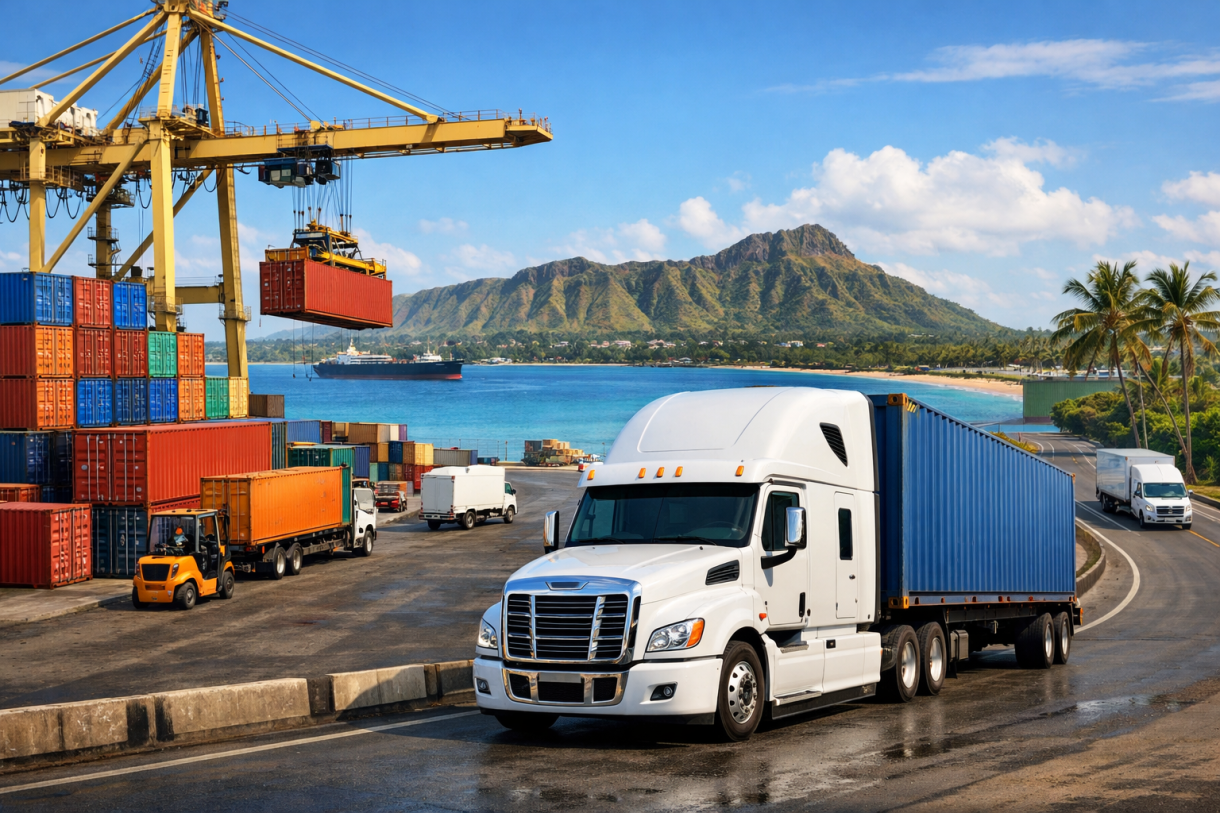
Logistics Franchise Opportunities
Why Logistics Franchise Opportunities Are Growing in Hawaii
If you have considered business ownership but hesitated between building something from scratch and investing in a proven model, you are not alone. Many entrepreneurs want control and long-term upside without the uncertainty of creating systems, branding, and operations from the ground up. That balance is exactly why the logistics franchise model continues to gain traction, especially in high-demand markets like Hawaii.
Logistics is not a trend-driven industry. It is a foundational service that supports every sector of the economy. Retail, construction, healthcare, hospitality, government, and eCommerce all rely on consistent transportation, warehousing, and delivery. In an island-based economy, that dependence becomes even stronger. Nearly everything in Hawaii arrives by ship before moving through local distribution networks.
This constant need makes logistics franchise opportunities especially attractive. Demand does not disappear during economic shifts. Goods still need to be moved, stored, and delivered. That stability, combined with franchising support, creates a compelling path for entrepreneurs who want reliability alongside growth.
In this guide, you will learn how logistics franchises work, why Hawaii is a unique and attractive market, what services are most in demand, and how to evaluate whether a logistics franchise fits your goals. Whether you are new to logistics or an experienced operator, this article will help you make a well-informed decision.
What Is a Logistics Franchise?
A logistics franchise is a business model where an owner operates transportation, delivery, or supply chain services under an established brand. Instead of creating systems independently, franchisees receive access to proven operational frameworks, training, and brand recognition.
Logistics franchises may focus on one or more of the following areas:
- Freight transportation
- Port drayage and container movement
- Local delivery and last-mile services
- Warehousing and storage
- Distribution and break-bulk operations
Unlike many consumer-facing franchises, logistics franchises typically operate business-to-business. This often means fewer customers, higher contract values, and longer-term relationships. For many owners, this translates into more predictable revenue and less reliance on walk-in traffic or seasonal trends.
In Hawaii, where supply chains are tightly interconnected, logistics franchises fill a critical role by connecting ports, warehouses, retailers, and end customers efficiently.
Why Hawaii Is a Strong Market for Logistics Franchises
Hawaii presents a unique environment that amplifies the value of logistics franchising. Geographic isolation, port dependency, and limited land routes create consistent demand for experienced logistics operators.
Port-Driven Supply Chains
Nearly all goods entering Hawaii pass through ports before being distributed locally. This creates strong demand for container drayage, freight handling, and short-haul transportation. Logistics franchises that support port-to-warehouse or port-to-retail movement are positioned at the center of the supply chain.
Constant Demand Across Industries
Tourism, healthcare, construction, military operations, and retail all require steady logistics support. Unlike seasonal industries, logistics demand in Hawaii remains consistent year-round.
Limited Competition Compared to Mainland Markets
While logistics is competitive everywhere, Hawaii’s market is more localized. Franchise operators who understand island-specific logistics challenges can build strong relationships and long-term contracts more easily than in oversaturated mainland regions.
Relationship-Driven Business Environment
Hawaii business culture values trust, reliability, and local presence. A logistics franchise that combines national-level systems with local autonomy can integrate quickly and build a strong reputation.
Types of Logistics Franchise Opportunities
Not all logistics franchises operate the same way. Understanding the different categories helps you choose a model aligned with your experience, budget, and goals.
Transportation and Freight Franchises
These logistics franchises focus on moving goods between ports, warehouses, and customers. Services may include container drayage, flatbed hauling, or refrigerated transport.
In Hawaii, freight-focused franchises often support services like daily container drayage, flatbed trucks, and flatbed drop deck trailers. These services are essential for construction materials, retail inventory, and industrial equipment.
Delivery Franchise Opportunities
Delivery franchises focus on local distribution and last-mile logistics. These businesses handle time-sensitive or scheduled deliveries for retailers, offices, and residential locations.
Examples include inside pick delivery, lift gate delivery, and military base and residential delivery. These services require precision, customer communication, and reliability.
Warehousing Franchise Opportunities
Warehousing franchises focus on storage, inventory management, and distribution support. In island markets, warehousing plays a critical role in smoothing supply chain flow.
Services such as short-term storage, long-term storage, and break bulk distribution help businesses manage inventory without overloading retail or job sites.
Hybrid Logistics Franchises
Some logistics franchises combine transportation, delivery, and warehousing under one model. These hybrid operations often provide the most flexibility and scalability, especially in Hawaii’s compact logistics environment.
Key Factors to Evaluate Before Investing
Choosing a logistics franchise requires more than comparing brand names. The right fit depends on how well the franchise aligns with market demand, operations, and your long-term objectives.
Market Fit and Service Demand
A strong logistics franchise should offer services that match Hawaii’s logistics needs. Port-based freight, local delivery, and warehousing are especially relevant.
Evaluate whether the franchise has experience or proven success in island or port-driven markets. Models designed only for mainland operations may struggle without adaptation.
Operational Complexity
Some logistics franchises are owner-operator models, while others require managing drivers, warehouse staff, and equipment. Be realistic about your management capacity and preferred level of involvement.
Franchises that provide strong operational systems, dispatch software, and standardized workflows can significantly reduce complexity.
Financial Commitment
Investment levels vary widely. Costs may include franchise fees, vehicles, equipment, insurance, facilities, and working capital.
Hawaii’s higher fuel, labor, and real estate costs should be factored into financial projections. A reputable franchisor will provide transparent cost estimates and realistic revenue expectations.
Scalability and Growth Potential
Look for logistics franchises that allow service expansion over time. Starting with a core offering and adding warehousing, additional routes, or specialized delivery services supports long-term growth.
How Logistics Franchises Operate in Hawaii
Logistics franchises in Hawaii typically operate within short but high-frequency routes. Efficiency, timing, and coordination matter more than long-haul mileage.
A typical workflow may include:
- Container pickup at port
- Transport to warehouse or staging area
- Temporary storage or break-bulk handling
- Scheduled delivery to retail, construction, or commercial sites
Because of Hawaii’s geography, even small inefficiencies can compound quickly. Franchises that emphasize planning, communication, and technology perform best.
Local expertise is a major advantage. Established operators like Preferred Hawaii demonstrate how integrated logistics services can support consistent performance across freight, delivery, and storage in island conditions.
Real-World Applications of Logistics Franchising
Logistics franchise opportunities translate into real operational impact across multiple sectors.
Retail and Construction Support
Retailers and construction companies rely on predictable deliveries. A logistics franchise can manage port pickups, warehouse staging, and scheduled site deliveries. This reduces downtime and inventory bottlenecks, often improving project timelines by weeks.
Healthcare and Hospitality Logistics
Hospitals, clinics, and hotels require time-sensitive deliveries. Logistics franchises with structured processes and trained teams often secure long-term contracts due to reliability and compliance.
Government and Military Deliveries
Hawaii has a strong military presence. Logistics franchises that support regulated deliveries and secure handling often benefit from stable, recurring contracts and strong reputational growth.
Common Mistakes to Avoid
Even with a proven model, mistakes can limit success.
Underestimating operating costs is a frequent issue. Conservative budgeting is essential.
Ignoring local relationships can slow growth. Logistics is built on trust and communication.
Choosing a franchise without island-specific experience can create operational friction.
Avoiding these pitfalls improves both profitability and sustainability.
Is a Logistics Franchise Right for You?
A logistics franchise is not a passive investment. It requires operational oversight, problem-solving, and relationship management. However, for entrepreneurs who value structure, demand stability, and long-term relevance, it can be a powerful business model.
In Hawaii, logistics franchising offers unique advantages due to constant demand and limited alternatives. By choosing a franchise that aligns with local needs and provides strong operational support, owners can build resilient, scalable businesses.
Learning from experienced logistics operators and understanding how services integrate across transportation, delivery, and warehousing can make the difference between short-term entry and long-term success.
Frequently Asked Questions About Logistics Franchises
Is a logistics franchise profitable in Hawaii?
Yes. Hawaii’s dependence on imported goods creates consistent demand. Profitability depends on cost control, efficiency, and service mix.
How much does a logistics franchise cost?
Costs vary widely. Investment may include franchise fees, vehicles, insurance, and facilities. Hawaii-based operations should budget for higher operating expenses.
Do I need logistics experience?
Not always. Many logistics franchises provide training and systems. Strong management skills and willingness to learn are often more important.
What services do logistics franchises typically offer?
Common services include freight transportation, delivery, warehousing, and distribution. Some specialize, while others offer integrated solutions.
Why is Hawaii a strong market for logistics franchises?
Geographic isolation, port dependency, and steady commercial demand make logistics essential. This creates reliable opportunities for well-structured logistics franchises.
A logistics franchise offers more than business ownership. It offers a role at the center of commerce. In Hawaii, that role is not only valuable, it is essential.