Pasha Hawaii Logistics: Seamless Pasha Container Transitions for Government Contractors
Managing Pasha Hawaii logistics requires a precision-timed handoff to ensure your government or commercial freight doesn't sit idle at the Port of Honolulu. For contractors and project managers, the fear isn't just a missed delivery; it’s the cascading cost of port storage fees, idle construction crews, and the potential for federal contract penalties due to supply chain delays.
When high-value cargo or mission-critical equipment arrives via Pasha, the "final mile" on Oahu is often the most complex, requiring a partner who understands both port protocols and secure base access.
In this guide, you will learn how to bridge the gap between maritime arrival and site delivery, ensuring your containers move efficiently from the pier to their final destination. You will understand the critical steps of container drayage, how to coordinate specialized equipment for heavy loads, and how to maintain total visibility over your shipment.
By the end of this article, you’ll be equipped to make smarter logistics decisions that protect your timeline and your bottom line. Here is how to master your port-to-door transitions on Oahu.
Essential Coordination for Pasha Hawaii Logistics at Pier 51
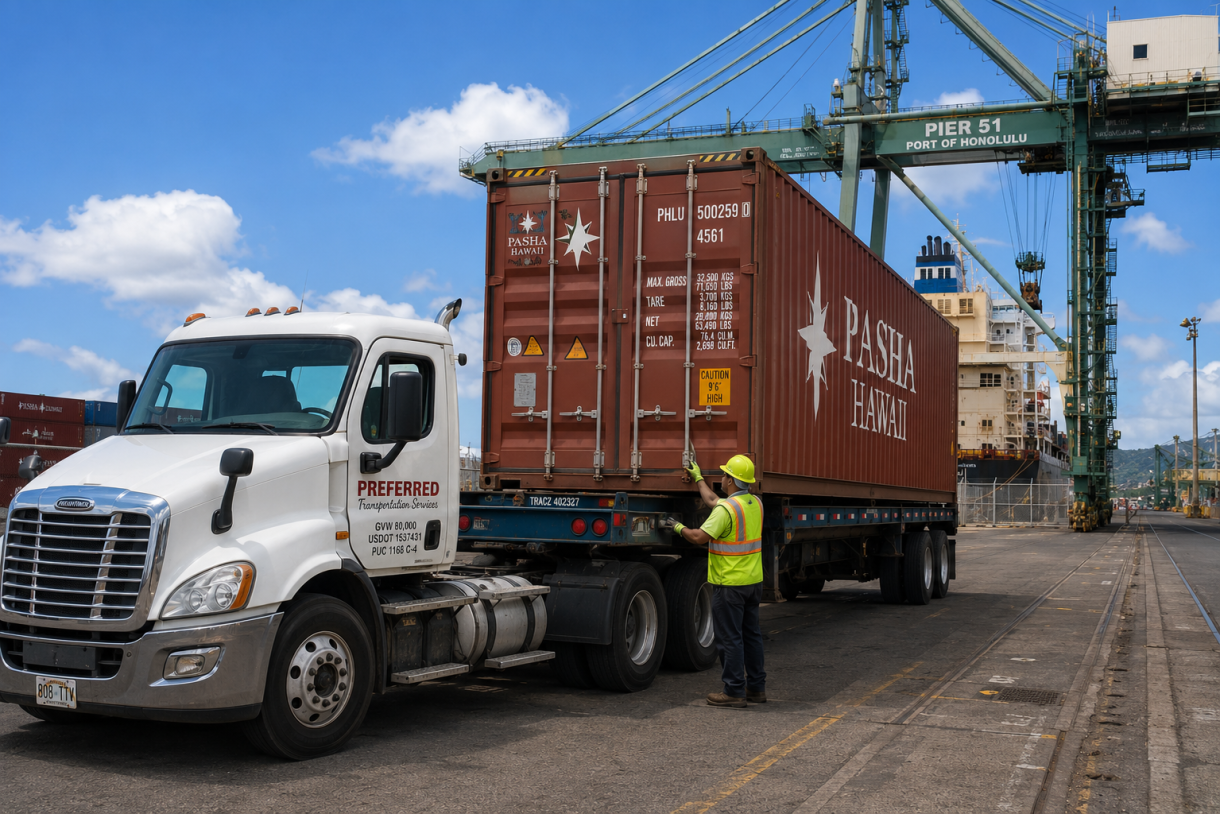
Pasha Hawaii logistics refers to the specialized chain of port-to-door activities required to move freight from Pasha’s Sand Island terminal at Pier 51 to its final destination on Oahu. This process begins with vessel discharge and moves quickly into container drayage, where specialized trucks pull the cargo from the terminal during specific gate hours.
For government contractors, this transition is the most critical link in the supply chain; it is where maritime ocean transport meets the reality of local road weight limits, security access protocols, and time-sensitive site requirements.
For project managers and logistics coordinators, mastering this handoff is vital because the Port of Honolulu operates on strict "last free day" (LFD) schedules. Failing to coordinate your daily container drayage means your shipment will incur costly demurrage fees that can erode project margins in a matter of days.
Furthermore, because Pasha serves as a primary carrier for oversized equipment and government supplies, ensuring your local partner has the credentials for military base and residential delivery is non-negotiable for site access.
By prioritizing a proactive port transition, you secure several key operational benefits:
- Demurrage Avoidance: Swift removal of containers from Pier 51 before daily storage penalties begin.
- Specialized Handling: Seamlessly transition from container shipping to flatbed and drop-deck trailers for oversized construction or military cargo.
- Real-Time Visibility: Integrating local drayage with Pasha’s internal tracking to provide a single, unified view of your freight’s journey.
A common misconception is that the "shipping" process ends once the ship docks. In reality, the logistics work truly begins at the pier, where local expertise determines whether your cargo reaches the site on time or remains stuck behind port gates.
How to Streamline Your Pasha Hawaii Logistics and Port Transitions
Successfully managing Pasha Hawaii logistics requires a deep understanding of the unique handoff points between ocean transit and island-wide delivery. Because Pier 51 is a high-volume terminal, your strategy must focus on minimizing "dwell time"—the duration a container sits at the port.
By following a structured port-to-door workflow, you can ensure that your daily container drayage remains fluid, cost-effective, and fully compliant with federal and state regulations.
Step 1: Monitor Pasha Container Tracking and Pre-Advise Dispatch
The logistics chain begins before the vessel even docks at Sand Island. Utilizing pasha container tracking is essential for identifying the Estimated Time of Arrival (ETA) and the specific availability date.
As soon as the container is "grounded" and cleared by Customs, you must provide your local carrier with the delivery order. Pre-advising our Kapolei-based dispatch team allows us to secure a chassis and schedule a driver to meet the gate opening, ensuring your freight is among the first to leave the terminal.
Step 2: Navigate Port Clearance and Security Protocols
Once the ship is discharged, the terminal operator requires specific documentation and fee payments (such as wharfage or terminal handling charges) before releasing the load. For government contractors, this stage often involves additional scrutiny.
Using an Oahu-based partner with established interchange agreements ensures that your paperwork is processed without friction. This is also the time to verify that your driver has the TWIC (Transportation Worker Identification Credential) required for entry into the restricted zones of the Port of Honolulu.
Step 3: Execute the Final Mile and Site Offloading
After the container is pulled from the pier, the focus shifts to the final destination. On Oahu, the "last mile" can be challenging due to narrow corridors or the lack of professional equipment at the receiving site.
- If you have a loading dock: We perform a standard drayage drop or "live load/unload."
- If you are delivering to a construction site or residential zone: You may require lift-gate delivery or a mobile forklift to safely transition palletized goods from the container to the ground.
- For oversized cargo: If your pasha shipping includes flat-racks or open-top containers, we utilize flatbed trucks to handle the specialized dimensions of the freight.
Step 4: Manage Empty Container Returns
Logistics doesn't end when the cargo is unloaded. To avoid "per diem" or detention fees from the carrier, the empty container must be returned to the Pasha terminal within the allotted time frame. We coordinate the "empty return" immediately after the offload is complete, closing the loop on the shipment and ensuring no surprise invoices hit your project budget.
Step 5: Utilize Short-Term Staging if Needed
Sometimes, a project site isn't ready to receive a container exactly when the ship arrives. Instead of leaving it at the port and incurring high demurrage costs, it is often more economical to pull the container and move it to our secure facility for short-term storage. This provides a flexible buffer for your supply chain, allowing you to stage materials in Kapolei and deliver them exactly when your crew is ready.
By following this step-by-step approach, you transform a potentially chaotic port arrival into a controlled, professional operation. This level of precision is exactly what is required to maintain the stability of Oahu’s supply chain and keep your government contracts on track.
Pasha Hawaii Logistics in Action: Real-World Oahu Success
Understanding the mechanics of port transitions is helpful, but seeing how these strategies solve actual logistical bottlenecks illustrates the true value of local expertise. These scenarios reflect common challenges faced by those managing Pasha Hawaii shipping on the island.
- The Federal Construction Site: A contractor was awaiting a 40-foot container of specialized electrical components at Pier 51. Because the project site at Schofield Barracks had limited space for a full container, we utilized our break-bulk distribution services to sort and deliver the materials in smaller, manageable loads.
This action prevented the contractor from paying daily container detention fees while ensuring the installation crew had exactly what they needed each morning.
- The Relocating Family: A military family moving to Oahu utilized Pasha vehicle shipping to transport their SUV from Pasha San Diego. Upon arrival at the terminal, we coordinated the pickup and used our specialized trailers to deliver the vehicle directly to their on-base housing.
This eliminated the stress of the family having to navigate port security and terminal traffic themselves immediately after their flight.
- The Retail Distributor: A local business used Pasha transport for a seasonal inventory restock but lacked a forklift to unload the heavy pallets. We provided a truck equipped with lift-gate delivery to offload the goods safely at their storefront, keeping their grand opening on schedule.
These practical applications demonstrate that whether you are moving industrial machinery or a personal vehicle, a coordinated local handoff ensures your cargo moves safely and on time.
Expert Insights for Navigating Pasha Hawaii Logistics
Applying these professional best practices is the difference between a smooth port transition and a logistical bottleneck that delays your entire project. These insights focus on the practical "how" of managing Pasha Hawaii logistics to protect your cargo and your bottom line.
- Synchronize Deliveries with Terminal Gate Hours: The Pasha terminal at Pier 51 has specific operating windows—typically opening at 6:00 AM on weekdays with shorter hours on Saturdays.
Timing your pickup to coincide with the "first gate" ensures your driver avoids the mid-day congestion that often builds up at Sand Island Parkway. Arriving early also provides a buffer if there are any unforeseen document discrepancies that need resolution at the terminal office.
- Audit Your Chassis Availability: A common delay in Pasha shipping isn't the truck, but the availability of the right chassis (the trailer the container sits on). Before the vessel docks, we verify our inventory of 20-foot and 40-foot chassis to ensure immediate pickup upon grounded status.
If you are moving heavy machinery, coordinating a heavy-duty or tri-axle chassis in advance is essential to stay compliant with Oahu’s road weight limits.
- Leverage Short-Term Staging for Project Buffers: Project sites aren't always ready for a container the moment it clears the pier. To avoid expensive port demurrage, consider pulling the container and moving it to our Kapolei facility for short-term storage.
This strategic "buffer" allows you to stage materials securely and schedule the final site delivery exactly when your installation crew is on-site and ready to work.
- Verify Vehicle Prep for Outbound Shipments: If your logistics plan includes shipping vehicle from hawaii to mainland, ensure the fuel level is between 1/8 and 1/4 tank and the exterior is thoroughly cleaned. Pasha’s "clean cargo" policy at the port is strictly enforced to meet USDA inspection requirements; failing this check can result in your vehicle being turned away at the gate, missing its scheduled sailing.
By implementing these expert-level adjustments, you ensure that every link in your supply chain remains strong, from the first mile to the final destination.
Master Your Port-to-Door Strategy with Pasha Hawaii Logistics
Efficiently managing Pasha Hawaii logistics requires a proactive approach that begins long before your container touches the pier at Sand Island. You now have the roadmap to synchronize your terminal pickups, navigate port security, and utilize specialized equipment to move your cargo without the burden of demurrage fees or project delays.
By mastering the handoff between ocean transit and local road transport, you ensure that your government contracts and commercial projects remain on schedule and within budget.
Taking control of your supply chain now prevents the logistical bottlenecks that often lead to cascading costs and missed deadlines. With a verified plan for your port transitions, you can operate with the confidence that your "move what matters" philosophy is backed by local expertise. If you are ready to streamline your next shipment from Pier 51, explore our comprehensive solutions for daily container drayage.
Common Questions Regarding Pasha Hawaii Logistics and Transitions
How do I manage the process of shipping a vehicle to Hawaii with Pasha?
The process for shipping a vehicle to Hawaii begins with booking through Pasha Hawaii shipping and delivering your car to their mainland terminal, such as Pasha San Diego.
Once the vessel arrives at the Port of Honolulu, we coordinate the pickup at the pier to avoid terminal congestion. Our team can then facilitate the final delivery to your residence or base housing using our specialized trailers, ensuring your vehicle arrives safely without you having to navigate the port.
Can I get help transporting a vehicle to Hawaii if I’m a government contractor?
Yes, we specialize in transporting a vehicle to Hawaii for government contractors and military personnel who require more than just port-to-port service. While Pasha handles the ocean transit, we provide the essential "final mile" support.
This includes picking up the vehicle from Sand Island and providing military base and residential delivery to high-security installations. This integrated approach ensures your POV or fleet vehicle is ready for use immediately upon your arrival on Oahu.
What is the best way to handle car shipping to Hawaii for a fleet?
For businesses or government agencies managing bulk car shipping to Hawaii, the key is a coordinated discharge and drayage plan. After your vehicles are cleared through Pasha transport, we can pull multiple units simultaneously to our Kapolei facility for staging or immediate distribution.
By handling the terminal paperwork and inspection protocols on your behalf, we reduce the risk of storage fees and ensure your fleet is deployed across Oahu with professional efficiency and care.
How does pasha container tracking help with my local delivery schedule?
Effective use of pasha container tracking allows us to monitor your shipment’s status in real-time, from vessel departure to "grounded" status at Pier 51. By knowing exactly when your container is cleared for pickup, we can synchronize our drivers and chassis availability to meet the gate opening.
This proactive coordination is the most effective way to avoid port demurrage fees and ensure your construction or retail materials are delivered to the site exactly when they are needed.