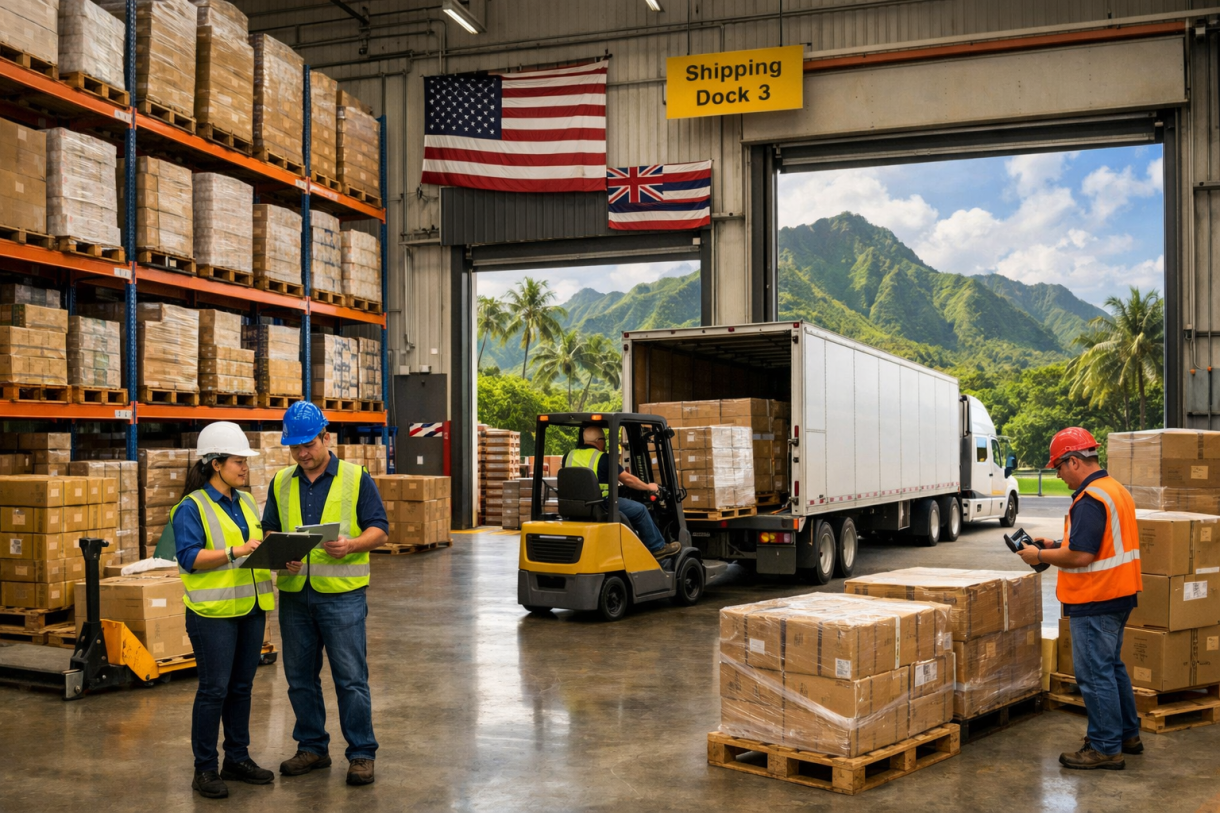
Third Party Logistics (3PL): How It Works and Why It Matters for Hawaii Businesses
Hawaii’s supply chain depends heavily on efficient transportation, warehousing, and distribution. Because most goods are imported, businesses must carefully coordinate every step from port arrival to final delivery.
This is where third party logistics becomes essential.
Third party logistics refers to outsourcing logistics operations to a specialized provider, often called a 3PL. Instead of managing warehousing, transportation, and fulfillment in-house, businesses rely on experienced partners to handle these tasks.
For Hawaii companies, third-party logistics services help:
- Streamline shipping and distribution
- Reduce operational costs
- Improve inventory accuracy
- Scale operations efficiently
- Simplify complex logistics coordination
Understanding how 3PL in logistics works can help businesses improve performance while focusing on growth.
What Does 3PL Stand for in Logistics
A common question is: what does 3PL stand for in logistics
3PL stands for third party logistics, meaning a company outsources part or all of its supply chain operations to a third-party provider.
These providers act as intermediaries between suppliers, businesses, and customers, managing key logistics functions.
How Third Party Logistics Works
A typical 3PL process flow includes several key steps.
Step 1: Receiving Inventory
When goods arrive, a 3PL provider receives and processes shipments.
This includes:
- Inspecting goods
- Logging inventory into systems
- Organizing storage
In Hawaii, services like daily container drayage help move goods efficiently from ports to warehouses.
Step 2: Warehousing and Storage
A major part of 3PL warehousing and distribution is providing flexible storage.
Businesses can use:
This eliminates the need to invest in expensive warehouse space.
Step 3: Order Fulfillment
Third party fulfillment includes:
- Picking items from inventory
- Packing orders
- Preparing shipments
Accurate fulfillment improves customer satisfaction and reduces returns.
Step 4: Transportation and Delivery
3PL providers coordinate transportation using various methods.
Examples include:
They also manage routing and scheduling to ensure timely delivery.
Step 5: Distribution and Specialized Services
Advanced logistics services include:
For bulk shipments, businesses can use break bulk distribution.
Step 6: Equipment and Handling Support
Efficient handling is critical in logistics operations.
Services like forklift delivery and flatbed drop deck trailers support heavy or oversized shipments.
Examples of Third Party Logistics in Action
Understanding examples of third party logistics helps clarify how it works.
Retail Distributor
A retailer imports goods through Honolulu Harbor and uses a 3PL provider for storage and distribution to stores across Hawaii.
E-Commerce Business
An online brand uses third party fulfillment to store inventory and ship orders directly to customers.
Construction Supplier
A supplier relies on a 3PL provider to manage bulk materials and coordinate deliveries to job sites.
Benefits of Third Party Logistics
Partnering with 3pl providers united states small business fulfillment services offers several advantages.
Cost Savings
Businesses avoid investing in warehouses, trucks, and labor.
Scalability
3PL services allow businesses to scale up or down based on demand.
Expertise
Providers understand logistics operations, compliance, and best practices.
Improved Efficiency
Optimized workflows reduce delays and errors.
Focus on Core Business
Companies can focus on sales, marketing, and product development.
Third Party Logistics vs In-House Logistics
Understanding the difference helps businesses make better decisions.
In-House Logistics
- Full control over operations
- Higher capital investment
- Requires internal expertise
Third Party Logistics
- Lower upfront costs
- Access to professional expertise
- Flexible and scalable
For many Hawaii businesses, outsourcing logistics improves efficiency and reduces complexity.
Common Challenges of Using 3PL
While beneficial, there are considerations to keep in mind.
Less Direct Control
Businesses rely on external providers for operations.
Integration Requirements
Systems must integrate with the 3PL provider’s technology.
Communication Needs
Clear communication is essential for smooth operations.
Is Third Party Logistics Right for Your Business
A 3PL partnership may be ideal if your business faces:
- Limited warehouse space
- Rising labor costs
- Complex shipping requirements
- Growth that exceeds current capacity
If these challenges sound familiar, third party logistics services can provide a strategic solution.
Why Third Party Logistics Is Essential in Hawaii
Hawaii’s logistics environment requires precision and coordination.
Third party logistics helps businesses:
- Manage import-dependent supply chains
- Optimize storage and transportation
- Reduce operational risks
- Improve delivery reliability
In a market where efficiency is critical, 3PL providers play a key role in maintaining smooth operations.
Conclusion: Strengthen Your Supply Chain with 3PL
Understanding third party logistics is essential for businesses looking to improve efficiency and reduce costs.
Key takeaways:
- 3PL providers handle warehousing, transportation, and fulfillment
- Outsourcing logistics reduces costs and complexity
- Flexible solutions support business growth
- Efficient logistics improves customer satisfaction
- Hawaii businesses benefit from specialized local expertise
By leveraging 3pl in logistics, companies can build stronger, more resilient supply chains.
Frequently Asked Questions
What is third party logistics?
Third party logistics refers to outsourcing logistics operations such as warehousing, transportation, and fulfillment to a specialized provider.
What does 3PL stand for in logistics?
3PL stands for third party logistics.
What services do 3PL providers offer?
They offer warehousing, transportation coordination, inventory management, and order fulfillment.
Is 3PL suitable for small businesses?
Yes. Many small businesses use 3PL services to scale operations without large investments.
How does third party logistics reduce costs?
It reduces capital expenses, improves efficiency, and optimizes resource utilization.