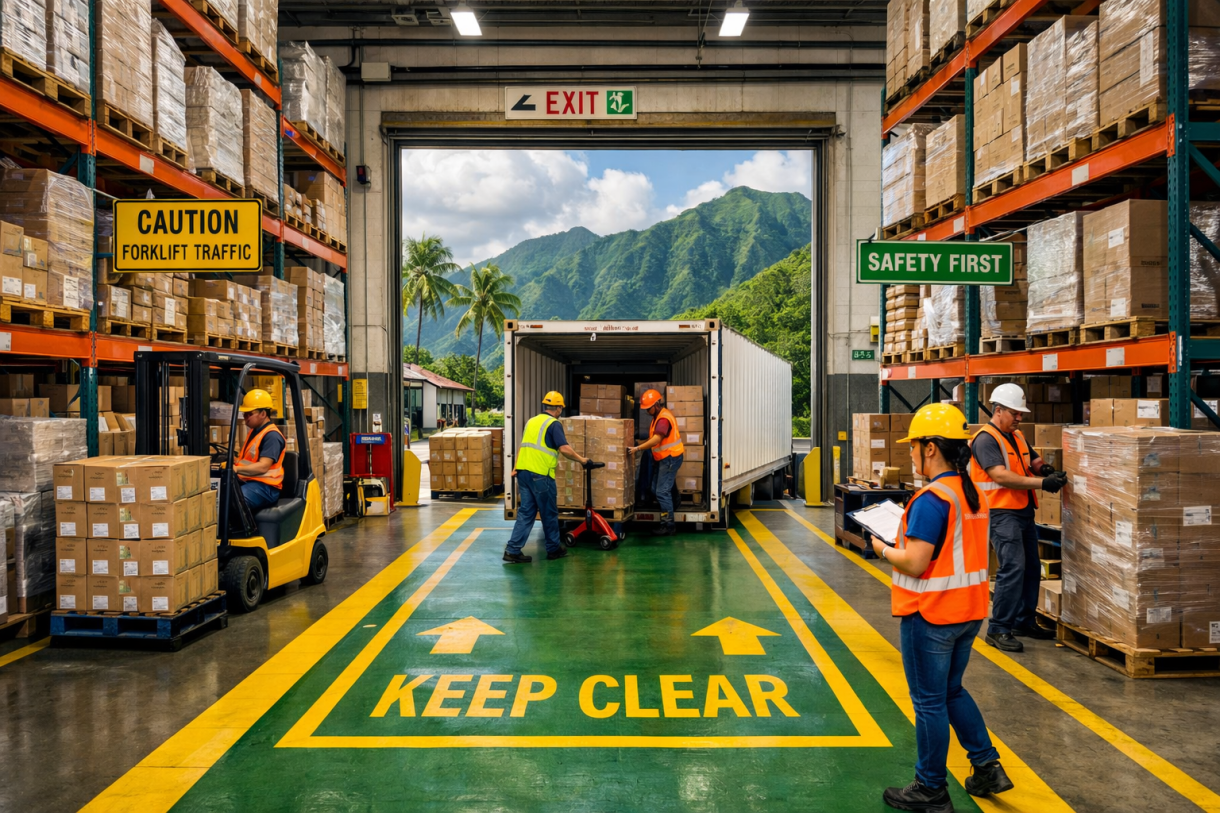
Warehouse Safety: OSHA Guidelines, Training, and Best Practices
Why Warehouse Safety Matters in Logistics Operations
Warehouses play a vital role in the logistics and supply chain industry. From storing inventory to coordinating transportation and deliveries, warehouse facilities support the movement of goods across industries such as retail, construction, manufacturing, and food distribution. However, these environments also present significant risks if proper warehouse safety procedures are not followed.
Warehouse facilities often involve:
- Heavy equipment and forklifts
- High shelving and pallet racking
- Loading docks and shipping operations
- Continuous movement of goods and workers
Without proper safety planning, these elements can create serious warehouse hazards that put employees and operations at risk.
Implementing strong warehouse safety best practices helps businesses:
- Protect workers from injury
- Maintain regulatory compliance
- Reduce operational downtime
- Prevent equipment damage
- Improve overall efficiency
Understanding and r distribapplying effective warehouse safety procedures is essential for any business operating storage oution facilities.
OSHA Warehouse Safety Regulations
Most warehouse safety regulations in the United States are established by the Occupational Safety and Health Administration (OSHA).
OSHA warehouse safety guidelines help employers reduce workplace injuries and maintain safe working conditions.
Key OSHA safety requirements typically include:
- Proper forklift operation training
- Safe material handling practices
- Fall protection procedures
- Fire prevention systems
- Hazard communication training
Warehouse operators must also follow OSHA guidelines related to emergency exits, electrical safety, and workplace ergonomics.
Maintaining warehouse compliance with OSHA regulations helps businesses avoid penalties while protecting workers.
Warehouse Safety Training for Employees
One of the most important aspects of workplace safety is warehouse safety training.
Training ensures employees understand the risks associated with warehouse work and know how to operate equipment safely.
Common training programs include:
Forklift Operator Training
Forklifts are widely used in warehouse environments, but improper operation can lead to serious accidents.
Employees who operate forklifts must receive proper training and certification before using the equipment.
Warehouses that coordinate shipping and transportation often rely on equipment used in services such as forklift delivery to move heavy materials safely.
Hazard Communication Training
Employees must understand how to identify and handle hazardous materials stored in the warehouse.
Training programs teach workers how to read safety labels, handle chemicals safely, and follow emergency procedures.
Proper Lifting Techniques
Manual material handling is a common cause of workplace injuries.
Training employees in proper lifting techniques reduces the risk of back injuries and muscle strain.
Emergency Response Training
Warehouse workers must know how to respond to emergencies such as fires, equipment malfunctions, or chemical spills.
Training programs help employees evacuate safely and respond appropriately during emergencies.
Common Warehouse Hazards
Identifying potential risks is a key part of any warehouse risk assessment.
Some of the most common warehouse hazards include:
Forklift Accidents
Forklifts are essential tools in warehouse operations but can cause accidents if operated improperly.
Maintaining safe traffic patterns and trained operators helps prevent these incidents.
Falling Objects
Improper stacking or overloaded shelving can cause products to fall from high racks.
Following OSHA warehouse racking regulations helps ensure shelving systems remain stable and safe.
Slips, Trips, and Falls
Spilled liquids, uneven floors, and cluttered aisles can create slip hazards.
Maintaining clean and organized workspaces helps reduce these risks.
Loading Dock Accidents
Loading docks are one of the most dangerous areas in a warehouse.
These areas often involve trucks backing in, heavy equipment moving goods, and workers operating near dock edges.
Logistics services such as daily container drayage and lift gate delivery increase activity around loading docks, making safety protocols essential.
Warehouse Safety Procedures for Daily Operations
Implementing clear warehouse safety procedures helps reduce workplace accidents.
Effective safety procedures typically include:
Equipment Inspection
All warehouse equipment should be inspected regularly.
Forklifts, pallet jacks, and conveyors should be checked for mechanical issues before use.
Proper Storage Practices
Inventory should be stored according to weight limits and stacking guidelines.
Overloading racks can cause structural failure.
Clear Walkways and Aisles
Workers should always maintain clear aisles to prevent accidents and allow safe equipment movement.
Personal Protective Equipment
Employees may be required to wear protective equipment such as:
- Hard hats
- Safety vests
- Gloves
- Steel-toe boots
Protective equipment reduces injury risks during daily operations.
Warehouse Safety Best Practices
Following established warehouse safety best practices helps organizations maintain safe working environments.
Conduct Regular Safety Audits
Routine inspections help identify hazards before they lead to accidents.
A formal warehouse risk assessment should evaluate equipment, storage systems, and workplace conditions.
Maintain Equipment and Infrastructure
Warehouses should maintain loading docks, shelving systems, and equipment regularly.
Transportation services such as flatbed trucks and flatbed drop deck trailers require safe loading procedures to prevent accidents.
Improve Lighting and Visibility
Proper lighting helps workers navigate the warehouse safely and identify hazards quickly.
Implement Traffic Management Plans
Clear traffic routes for forklifts and pedestrians help prevent collisions.
Warehouses handling deliveries such as inside pick delivery should establish designated loading zones.
Safe Storage and Distribution Practices
Warehouse operations are closely connected to logistics and transportation.
Safe storage and delivery coordination help maintain efficient supply chains.
Businesses often rely on services such as:
- dry and refrigerated box trucks
- retail deliveries
- military base and residential delivery
- break bulk distribution
These transportation systems must work alongside warehouse safety procedures to ensure smooth operations.
Benefits of Strong Warehouse Safety Programs
Investing in workplace safety provides several advantages.
Reduced Workplace Injuries
Proper training and safety procedures help prevent accidents.
Increased Operational Efficiency
Safe workplaces reduce downtime caused by injuries or equipment damage.
Regulatory Compliance
Following OSHA warehouse safety regulations protects businesses from penalties and legal issues.
Improved Employee Morale
Employees are more productive when they feel safe at work.
Protection of Inventory and Equipment
Safe storage practices reduce product damage and equipment failures.
Building a Culture of Warehouse Safety
Effective warehouse safety programs require more than policies and procedures. Organizations must create a culture where safety is a daily priority.
Employees should be encouraged to:
- Report hazards immediately
- Follow safety guidelines consistently
- Participate in safety training programs
- Communicate concerns with supervisors
When safety becomes part of everyday operations, warehouses can maintain both productivity and worker protection.
Frequently Asked Questions About Warehouse Safety
What is warehouse safety?
Warehouse safety refers to the policies, procedures, and training programs designed to protect workers and prevent accidents in warehouse environments.
What are common warehouse hazards?
Common hazards include forklift accidents, falling objects, slips and falls, and loading dock incidents.
What are OSHA warehouse safety regulations?
OSHA regulations establish standards for forklift operation, material handling, workplace safety training, and hazard communication.
Why is warehouse safety training important?
Training ensures employees understand workplace risks and know how to operate equipment safely.
How can warehouses improve safety compliance?
Businesses can improve compliance by conducting regular safety audits, maintaining equipment, providing employee training, and following OSHA guidelines.