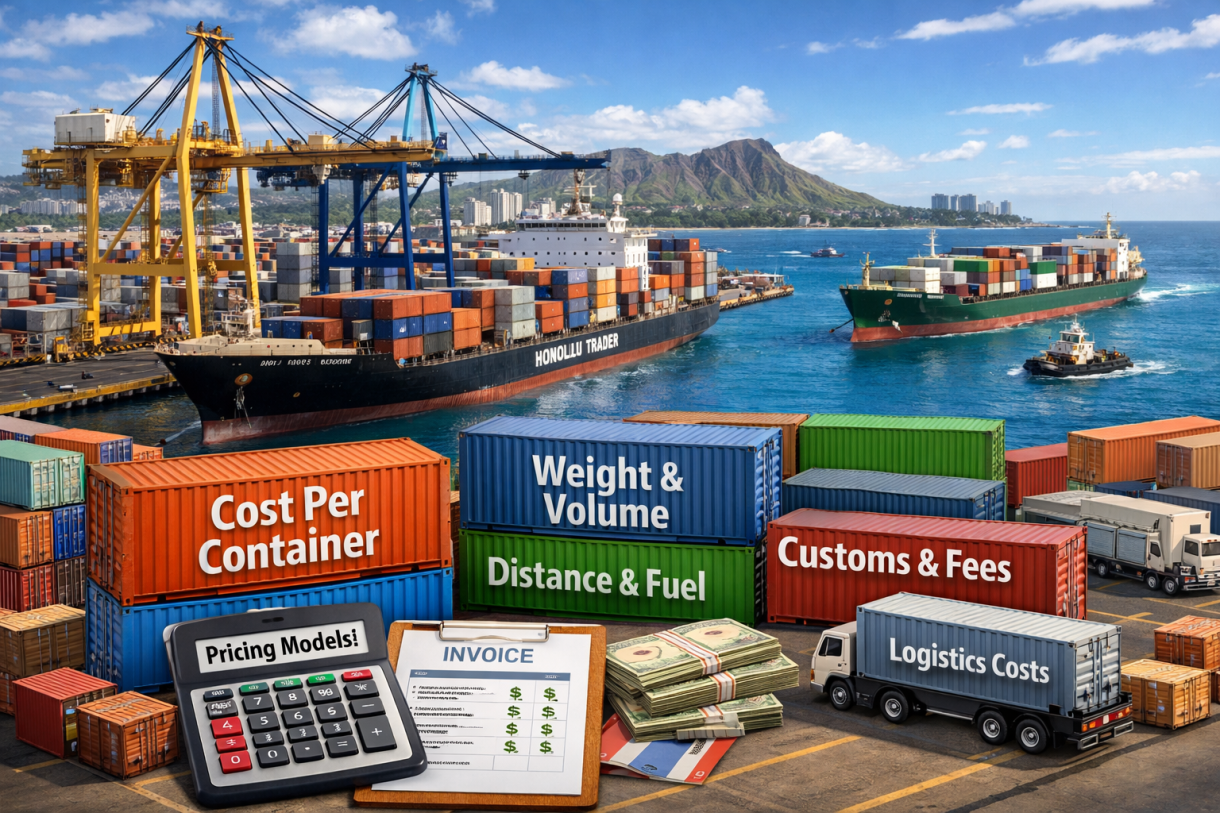
Freight Forwarding Costs and Pricing Models: A Complete Guide for Hawaii Shippers
Freight forwarding costs are one of the most important and most misunderstood aspects of shipping goods to or within Hawaii. Many businesses and individuals are surprised when the final invoice is higher than expected, usually because freight forwarder pricing involves far more than a single transportation rate. Unlike parcel shipping, freight forwarding includes coordination, handling, documentation, and local delivery services that all contribute to the total cost.
Hawaii’s geography adds additional complexity. Because most goods arrive by ocean or air, freight and forwarding charges must account for port handling, inter-island logistics, fuel surcharges, and specialized delivery requirements. Without understanding how pricing works, shippers may overpay or select services that do not match their actual needs.
This guide explains how freight forwarding costs are calculated in Hawaii, how different pricing models work, and what drives costs higher or lower. By the end, you will be able to evaluate quotes with confidence and choose cost-effective freight solutions.
Understanding Freight Forwarding Costs in Hawaii
Freight forwarding costs represent the total price paid to move cargo from origin to destination using a freight forwarder as the logistics coordinator. These costs typically include transportation, coordination, documentation, and last-mile delivery.
Freight forwarding usually involves:
- Multiple transportation legs such as truck, ocean, and air
- Coordination between carriers, ports, and terminals
- Handling, storage, and compliance documentation
- Final delivery to warehouses, retail locations, or job sites
Because Hawaii relies heavily on ports and inter-island distribution, understanding the freight forwarder cost structure is essential for accurate budgeting.
What Determines Freight Forwarding Costs?
Freight forwarding costs are built from predictable variables rather than arbitrary pricing. Knowing these factors allows shippers to compare quotes accurately.
Key cost drivers include:
- Mode of transportation, such as ocean freight or air freight
- Shipment size and weight, including actual and dimensional weight
- Volume measured in pallets, containers, or cubic meters
- Origin and destination, including mainland to Hawaii or inter-island routes
- Cargo type, such as standard, oversized, hazardous, or temperature-sensitive goods
- Fuel surcharges tied to market conditions
- Seasonal demand that can increase rates during peak shipping periods
In Hawaii, additional services such as port drayage, storage, or specialized delivery often play a major role in overall freight forwarding charges.
Common Freight Forwarding Pricing Models Explained
Freight forwarders use structured pricing models depending on shipment size, complexity, and transport mode. Understanding these models answers a common question: how much do freight forwarders charge, and why?
Flat-Rate Freight Forwarder Pricing
Flat-rate pricing provides a single, fixed transportation cost. This model works best for standardized shipments with predictable dimensions and simple port-to-door delivery.
Pros
- Easy budgeting
- Fewer billing surprises
Cons
- Limited flexibility
- Rates may include padded costs
Flat rates are commonly used for recurring shipments with consistent cargo profiles.
Cost-Plus Freight Forwarder Pricing
Under a cost-plus model, the forwarder passes through carrier costs and adds a service fee.
Pros
- Greater transparency
- Suitable for complex shipments
Cons
- Final costs may fluctuate
- Requires clear documentation
This model is often used for oversized, project-based, or highly customized shipments.
Per-Unit Pricing
Per-unit pricing calculates freight forwarder price based on measurable units such as per pallet, per container, or per cubic meter. This model is widely used for ocean freight shipments with consistent volumes.
Weight-Based Freight Forwarding Charges
Weight-based pricing compares actual weight and dimensional weight, then charges based on whichever is higher. This model is most common in air freight and can increase costs for bulky but lightweight cargo.
Ocean Freight Forwarding Costs for Hawaii Shipments
Ocean freight is the most common and cost-effective shipping method to Hawaii, but it includes more than just the ocean rate.
Full Container Load (FCL) Pricing
FCL pricing applies when a shipper uses an entire container.
Advantages
- Lower cost per unit for large volumes
- Reduced handling and damage risk
- Faster transit than shared containers
FCL is ideal for businesses shipping large or frequent loads to Hawaii.
Less Than Container Load (LCL) Pricing
LCL pricing allows multiple shippers to share container space.
Advantages
- Lower upfront cost for smaller shipments
- No need to fill a container
Trade-offs
- Volume-based pricing
- Longer transit times
- Additional handling
Port, Terminal, and Drayage Fees
Ocean freight costs in Hawaii often include terminal handling charges, port fees, container unloading, and drayage from port to warehouse. Services such as daily container drayage are a critical part of the total freight forwarding cost and are frequently underestimated.
Air Freight Forwarding Costs for Hawaii
Air freight offers speed and reliability but comes at a premium. It is typically used for urgent, high-value, or time-sensitive shipments.
Chargeable Weight Calculation
Air freight pricing is based on chargeable weight, which compares actual weight to volumetric weight. This ensures efficient use of aircraft space but can significantly raise costs for bulky cargo.
Fuel and Security Surcharges
Air freight includes fuel surcharges and security screening fees that fluctuate based on market conditions and regulations.
When Air Freight Makes Sense
Although more expensive, air freight can reduce inventory holding costs, prevent delays, and protect revenue when timing is critical.
Additional Freight Forwarder Fees You Should Expect
Beyond base transportation rates, several accessorial charges commonly appear on freight invoices.
Documentation and Handling Fees
Freight forwarding requires paperwork such as bills of lading, manifests, and compliance documents. Errors can lead to reprocessing fees and delays.
Customs and Clearance Fees
Depending on cargo type, customs services may include inspections, compliance checks, and clearance fees. These charges may be bundled or listed separately.
Storage and Demurrage Charges
Delays at ports or delivery locations can result in storage or demurrage fees. Using short-term storage or long-term storage helps manage these risks when delivery timing is uncertain.
Delivery and Specialized Handling Costs in Hawaii
Local delivery often represents a significant portion of total freight forwarding costs, especially for non-standard shipments.
Common delivery services include:
- Forklift delivery for heavy or palletized freight
- Lift gate delivery for locations without docks
- Inside pick and delivery for offices, warehouses, and retail spaces
- Military base and residential delivery requiring access coordination
- Retail deliveries for stores and distribution centers
Oversized or heavy cargo may require:
These services increase cost but ensure safe and compliant handling.
Practical Use Cases for Hawaii Shippers
A Honolulu-based retailer reduced freight forwarding costs by switching from LCL to FCL shipments, lowering per-unit costs and improving reliability.
A medical supplier used air freight for urgent equipment. Although air freight was more expensive, faster delivery prevented operational downtime.
A construction company shipping oversized materials found that specialized delivery and handling became the largest cost driver, exceeding transportation costs.
These examples show that the lowest upfront rate is not always the most cost-effective option.
Best Practices to Control Freight Forwarding Costs
Effective cost control requires planning and transparency.
Best practices include:
- Requesting detailed cost breakdowns
- Optimizing packaging to reduce volume and dimensional weight
- Consolidating shipments when possible
- Booking early to avoid peak-season surcharges
- Working with Hawaii-based logistics providers
Local expertise reduces delays, errors, and unexpected fees.
Understanding the Full Freight Forwarding Process
Many pricing surprises occur when shippers do not fully understand the logistics workflow. Reviewing the complete freight forwarding process from booking to final delivery helps set expectations and reduce miscommunication.
Final Thoughts on Freight Forwarding Costs in Hawaii
Freight forwarding costs in Hawaii depend on more than distance alone. Pricing models, shipment size, cargo type, port handling, and delivery requirements all influence the final invoice.
By understanding freight forwarder pricing and planning strategically, businesses and individuals can manage costs while maintaining reliable delivery timelines. Knowledge and preparation remain the most effective tools for controlling logistics expenses.
Frequently Asked Questions About Freight Forwarding Costs
What affects freight forwarding costs the most?
Shipment size, weight, transport mode, and delivery requirements are the biggest factors. Port and local delivery fees are especially important in Hawaii.
Is ocean freight cheaper than air freight to Hawaii?
Yes. Ocean freight is generally more affordable. Air freight is best for urgent or high-value shipments.
How can I reduce freight forwarding costs?
Consolidate shipments, optimize packaging, book early, and request transparent cost breakdowns.
Are freight forwarder prices negotiable?
Often yes. Consistent volume and flexible timelines can lead to better pricing.
Do freight forwarding costs include customs fees?
Sometimes. Always confirm whether customs and clearance fees are included or billed separately.