What Is a Freight Terminal? How Honolulu Harbor's Cargo Terminals Work, From Ship to Your Door
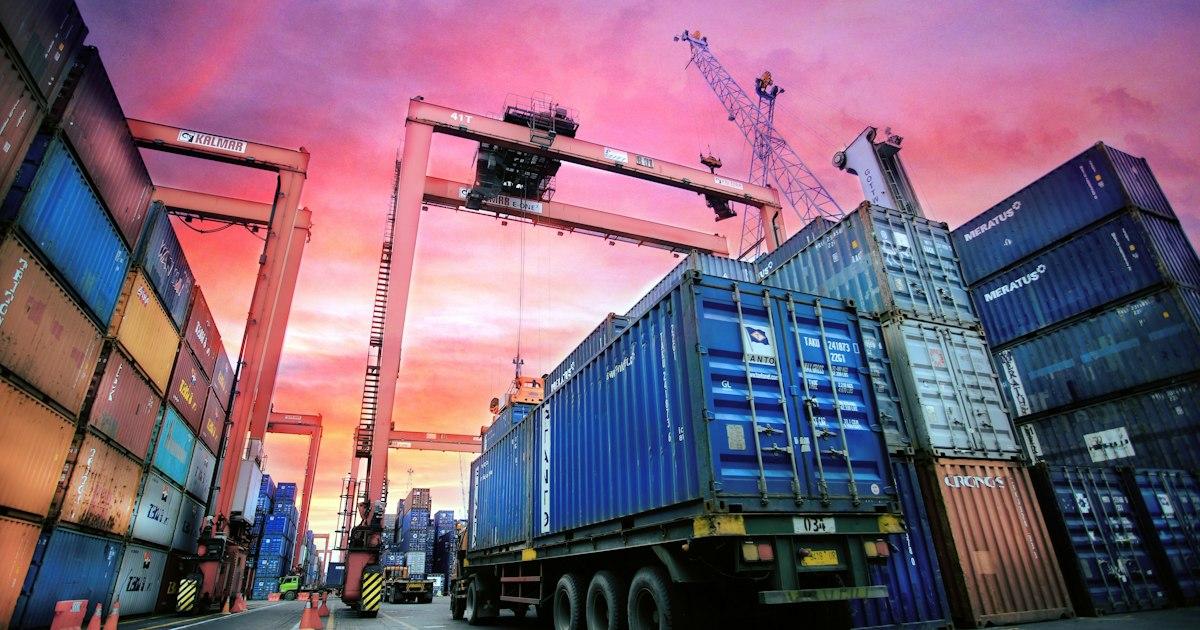
A freight terminal is a facility where cargo is received, sorted, briefly held and transferred between ships, barges, planes and trucks. Unlike a warehouse, it's built to keep freight moving. On Oahu, most freight terminals are container yards at Honolulu Harbor. Every container that arrives there leaves the terminal by truck to reach your warehouse, store or job site.
We're Preferred Transportation Services, a Honolulu trucking and warehouse company. Our drivers pull containers out of Honolulu Harbor's terminal yards every weekday, so this guide covers the general definition and how terminals actually work here.
What is a freight terminal?
A freight terminal is the handoff point in a shipment. Cargo arrives on one kind of transport, gets checked, sorted or staged, and leaves on another. A terminal may hold freight for hours or days, but storage isn't its job. Moving freight to the next leg is.
Most freight terminals do some combination of these:
- Receiving: taking in containers, trailers or loose freight and checking them against shipping documents.
- Transfer: moving cargo between modes, such as ship to truck or barge to truck.
- Sorting and cross-docking: splitting and combining shipments by destination.
- Short-term staging: holding freight until it's released, picked up or loaded.
- Gate control: checking drivers, equipment and paperwork in and out.
Types of freight terminals
| Terminal type | What happens there | On Oahu |
|---|---|---|
| Seaport container terminal | Containers are lifted on and off ships, stored in the yard and handed to trucks | Ocean carrier terminals at Honolulu Harbor |
| Interisland barge terminal | Containers and freight are loaded on barges between islands | Young Brothers at Honolulu Harbor |
| Air cargo terminal | Freight is handed between aircraft and trucks | Cargo facilities at Daniel K. Inouye International Airport (HNL) |
| Truck (LTL) terminal | Less-than-truckload carriers sort and cross-dock pallets from many shippers onto delivery routes | Freight forwarders' and consolidators' Honolulu facilities |
| Rail intermodal terminal | Containers move between trains and trucks | None. Oahu has no freight rail network, so containers leave the harbor by truck. |
Freight terminal vs warehouse
The two get mixed up because both are large buildings or yards full of freight, but they do different jobs:
| Freight terminal | Warehouse | |
|---|---|---|
| Main job | Transfer cargo to the next leg | Store goods until they're needed |
| Who runs it | A carrier or terminal operator | The cargo owner or a logistics provider |
| How long freight stays | Usually as short as possible. Long stays can bring storage charges. | As long as needed |
| Who controls access | The terminal, through its gate rules | The warehouse operator |
| What it charges | Handling and storage set by the carrier or terminal | Storage and handling set by the warehouse |
In practice, freight often moves terminal to warehouse to customer. A container is picked up at the harbor terminal, unloaded at a warehouse, then delivered in smaller loads. For more on storage-focused buildings, see our guide to distribution centers vs warehouses.
Port vs terminal
A port is the whole harbor area run by a port authority. A terminal is one operator's facility inside it, with its own yard, gates and rules. Honolulu Harbor is the port. The carriers' container yards at its piers are the terminals.
Honolulu Harbor cargo terminals
Honolulu Harbor is part of Hawaii's commercial harbor system, run by the Hawaii Department of Transportation Harbors Division. HDOT says more than 80 percent of all goods consumed in Hawaii are imported, and about 99 percent of those imports enter the state through its ten commercial harbors. These are the main cargo terminals shippers deal with at Honolulu Harbor:
| Terminal | Location | What it handles |
|---|---|---|
| Matson Honolulu | 1411 Sand Island Pkwy, Sand Island | Ocean container freight between the mainland and Hawaii |
| Pasha Hawaii Honolulu Terminal | Pier 51, 1601 Sand Island Pkwy | Ocean container freight between the mainland and Hawaii |
| Young Brothers | Pier 40, 1331 N. Nimitz Hwy | Interisland barge freight to and from the neighbor islands |
| Kapalama Container Terminal (KCT) | Piers 41, 42 and 43 | A new 84-acre cargo yard with 1,800 linear feet of berth |
What Kapalama Container Terminal changes
KCT is the centerpiece of the state's Harbors Modernization Plan. In its 2017 announcement, HDOT said Pasha would consolidate its operations at the new terminal and Matson would expand into Pasha's former site at Pier 51A on Sand Island. KCT borders the interisland cargo yard, and the project site says that lets about 50,000 truckloads a year move directly between the two facilities instead of on the highway. As operations move, check each carrier's terminal page for the current pickup location and gate hours before you book a truck.
How freight moves from terminal to door on Oahu
Here's a typical import container, from the ship to your dock:
- The ship arrives and the container is discharged. The carrier lifts it off the vessel and stacks it in the terminal yard.
- The container is released. Before a trucker can pick it up, the carrier has to release it: freight is paid and any holds are cleared. Imports from outside the U.S. may also need customs clearance.
- A pickup is booked. The trucking company needs the carrier, container and bill of lading numbers, the gross weight, the delivery address and the receiving hours.
- The driver clears the terminal gate. U.S. port terminals are secure facilities, and drivers need a Transportation Worker Identification Credential (TWIC) for unescorted access to secure areas.
- The container is hauled to your site on the carrier's chassis, the trailer frame that container lines supply for this.
- It's unloaded, by your crew or at a warehouse that unloads and stages it for you.
- The empty goes back to the terminal. Returning it on time matters, because carriers charge for containers and chassis kept past the free time allowed.
That truck move from the terminal yard to your door and back with the empty is called drayage. It's what our container drayage service in Honolulu does every weekday from the Matson, Pasha Hawaii and Young Brothers yards.
What to have ready for a terminal pickup
- Carrier name, container number and bill of lading number
- Release status and any holds
- Gross weight and contents, especially for heavy or hazardous cargo
- Delivery address, receiving hours and site contact
- Whether the site has a dock, or whether the container needs unloading elsewhere
- The last free day, so the container and chassis go back before charges start
Common terminal charges to ask about
Charges vary by carrier and terminal, and each carrier publishes its own tariff, so ask your carrier for current rates. These are the ones shippers run into most:
- Terminal handling charges: what the terminal charges to lift and move containers through its yard.
- Storage or demurrage: charged when a container sits in the terminal past its free time.
- Per diem or detention: charged when a container or chassis is kept outside the terminal past its free time.
The fastest way to avoid most of them is to have the release and delivery appointment lined up before the container lands. If your site isn't ready, pull the container on time and unload it into short-term storage instead of paying the terminal to hold it.
Unloading, sorting and delivery after the terminal
Many containers hold freight for more than one store, customer or job site. After pickup, we can unload the container at our Honolulu warehouse and split it by destination through break-bulk and distribution. Then we deliver it on 14 to 26 ft box trucks with lift gates, flatbeds, or reefer box trucks that hold ambient down to -10°F. If you're planning the whole route from the mainland, start with our guide to mainland to Hawaii freight shipping.
Frequently asked questions
What is a freight terminal?
A freight terminal is a facility where cargo is received, sorted, briefly held and transferred between ships, barges, planes and trucks. Its job is to move freight to the next leg, not to store it.
What's the difference between a freight terminal and a warehouse?
A terminal transfers cargo between legs of a trip and is run by a carrier or terminal operator. A warehouse stores goods until they're needed and is run by the cargo owner or a logistics provider.
What are the main cargo terminals at Honolulu Harbor?
Matson's terminal on Sand Island, Pasha Hawaii's Honolulu terminal at Pier 51, and Young Brothers' interisland terminal at Pier 40. The new Kapalama Container Terminal at Piers 41 to 43 is part of the state's Harbors Modernization Plan.
How does freight get from a Honolulu terminal to my business?
Once the carrier releases the container, a trucking company with TWIC-carrying drivers picks it up at the terminal gate, hauls it on the carrier's chassis to your site or a warehouse, and returns the empty.
Can I pick up a container from the terminal myself?
Containers are picked up by trucking companies whose drivers and equipment meet the terminal's rules, including TWIC credentials. Most shippers book a drayage company to make the move.
What hours are Honolulu Harbor terminals open?
Each terminal sets its own gate hours, and they change. Check the carrier's terminal page before booking. We dispatch Monday to Friday, 8:00 a.m. to 4:30 p.m.
Get a container moved from the terminal
Send the carrier, container and bill of lading numbers, plus where it needs to go. Call (808) 509-8160, email freight@preferredhawaii.com or request a free quote. We're licensed by the Hawaii Public Utilities Commission (PUC #2398-C) and registered with the U.S. Department of Transportation (USDOT #2926199).