Logistics vs Supply Chain Management: What's the Difference?
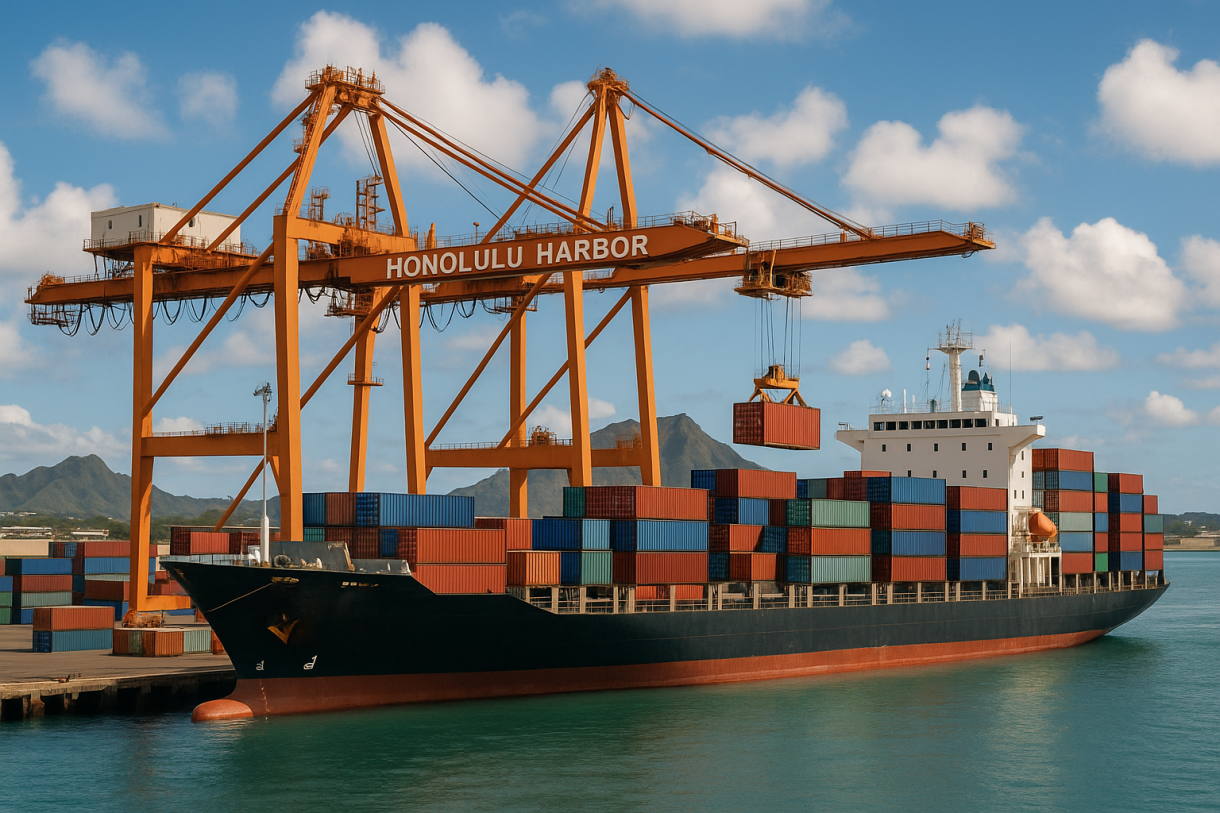
People use "logistics" and "supply chain" as if they mean the same thing, but they don't. One is a part of the other. If you run freight on Oahu, knowing which is which helps you decide what to fix when shipments run late, shelves run empty or costs creep up. Here's the plain-language difference, a side-by-side table, and how both play out between Honolulu Harbor and your loading dock.
What Is the Difference Between Logistics and Supply Chain Management?
Logistics is the part of supply chain management that moves and stores goods: transportation, warehousing, delivery and returns. Supply chain management is the bigger system around it, covering sourcing, purchasing, production, inventory planning and coordination with suppliers and customers. In short, logistics executes the physical flow; supply chain management plans the whole flow.
The Council of Supply Chain Management Professionals (CSCMP), the main professional body in the field, puts it the same way: logistics management is "that part of supply chain management" that plans, implements and controls the flow and storage of goods, services and related information from origin to consumption (CSCMP).
Logistics vs Supply Chain Management: Side-by-Side Comparison
| Logistics | Supply chain management (SCM) | |
|---|---|---|
| Scope | Moving and storing goods between two or more points | The whole network, from raw materials and suppliers to the end customer |
| Main question | How do we get this shipment where it needs to go, on time and intact? | What should we buy, make, stock and sell, and with which partners? |
| Typical activities | Transportation, drayage, warehousing, inventory handling, order delivery, returns | Sourcing and procurement, production planning, demand forecasting, inventory policy, supplier and customer coordination, plus logistics |
| Time horizon | Day to day and week to week | Months to years |
| Who handles it | Dispatchers, drivers, warehouse teams, freight forwarders, trucking and logistics companies | Supply chain managers, buyers, planners and operations leaders |
| Measures of success | On-time delivery, damage-free freight, cost per move, dock and transit times | Product availability, total cost, working capital tied up in inventory, resilience to disruption |
| Relationship | One part of supply chain management | Includes logistics and coordinates it with every other function |
What Is Logistics? (Definition)
Logistics is the movement and storage of goods. In supply chain management, logistics covers the forward flow of products toward the customer and the reverse flow of returns, plus the information that tracks them. CSCMP lists typical logistics activities as inbound and outbound transportation, fleet management, warehousing, materials handling, order fulfillment, logistics network design, inventory management, supply and demand planning, and managing third-party logistics providers (CSCMP).
On Oahu, logistics is the work you can see on the road and at the dock:
- Port drayage: pulling containers from Honolulu Harbor terminals to warehouses and job sites. See our daily container drayage and Port of Honolulu drayage services.
- Ocean freight handoffs: coordinating cargo moving between the mainland and Hawaii. See ocean freight services.
- Storage and break-bulk: unloading, sorting and holding freight until it's needed, with warehouse storage in Honolulu and break-bulk distribution.
- Delivery: the right truck for the load, from flatbed trucks and forklift delivery to lift gate delivery and refrigerated and frozen deliveries.
- Returns: picking up damaged, unsold or recalled goods and bringing them back.
What Is Supply Chain Management? (Definition)
Supply chain management is the planning and management of every activity involved in getting a product to a customer. CSCMP defines it as covering sourcing and procurement, conversion (making or assembling the product) and all logistics management activities, plus coordination with channel partners such as suppliers, intermediaries, third-party service providers and customers. In its words, supply chain management "integrates supply and demand management within and across companies" (CSCMP).
Supply chain management decisions include:
- Which suppliers to buy from, and on what terms
- How much inventory to hold, and where
- How to forecast demand and plan purchases around it
- Which carriers, freight forwarders and logistics partners to use
- How to handle disruption, from a delayed vessel to a supplier shortage
The term itself is relatively new. Logistician Keith Oliver is credited with coining "supply chain management" in the early 1980s, while logistics has roots in military supply going back centuries (Oracle NetSuite).
What Is Logistics and Supply Chain Management?
When people say "logistics and supply chain management" together, they usually mean the whole field of moving products from supplier to customer: the planning (supply chain) and the execution (logistics). Many companies have one team that does both. Others plan the supply chain in-house and hire a trucking or logistics company to run the physical moves. Either way, the two have to share information. A supply chain plan is only as good as the logistics that carries it out, and logistics can only move what the plan buys and schedules.
How Logistics and Supply Chain Management Work Together
Think of supply chain management as the plan and logistics as the delivery of that plan:
- Plan: the supply chain team forecasts demand and sets inventory targets.
- Source: buyers place orders with mainland or overseas suppliers.
- Ship: ocean freight brings the goods to Hawaii. Our guide to container shipping to Hawaii and our comparison of LCL vs FCL shipping cover that leg.
- Clear and receive: cargo clears the port and, for foreign imports, customs clearance in Hawaii.
- Move and store: drayage pulls the container, then freight is stored or broken down for distribution.
- Deliver: trucks deliver to stores, job sites, offices, bases and homes.
- Review: delivery times, damage and costs feed back into the next plan.
Steps 1, 2 and 7 are supply chain management. Steps 3 through 6 are logistics.
Why the Difference Matters for Hawaii Businesses
In Hawaii the gap between the two is easy to feel. According to the Hawaii Department of Transportation, about 80% of all goods consumed in Hawaii are imported, and nearly 99% of those goods pass through the state's commercial harbors (Hawaii DOT). That puts ocean freight and port logistics at the center of almost every local supply chain.
It also changes how you troubleshoot:
- Empty shelves or stockouts? Often a supply chain problem: forecasts, order timing or safety stock didn't account for ocean transit and port time.
- Freight sitting at the harbor or missed delivery windows? Usually a logistics problem: drayage capacity, appointment timing, the wrong equipment, or no storage space to receive it.
- Costs creeping up? It can be either: buying in the wrong order sizes (supply chain) or paying for extra handling and failed deliveries (logistics).
Supply Chain Logistics on Oahu: Examples
Retail and ecommerce
A store plans its holiday inventory months ahead (supply chain). The containers arrive at Honolulu Harbor, get pulled, broken down and delivered to stores in Honolulu and Kapolei (logistics). See our retail deliveries and retail and ecommerce pages.
Construction and job sites
A contractor picks suppliers and sets the material schedule around project phases (supply chain). Steel, lumber and equipment then need flatbeds, forklifts and timed drop-offs at the site (logistics).
Food and beverage
A distributor decides how much frozen and chilled product to import and hold (supply chain). Refrigerated containers and box trucks keep it at temperature from the port to restaurants and stores (logistics).
Military and government contractors
A contractor plans orders around a contract schedule (supply chain). Deliveries to Joint Base Pearl Harbor-Hickam, Schofield Barracks or Marine Corps Base Hawaii need drivers who know base access rules (logistics). See military base and residential delivery.
Logistics vs Supply Chain Careers
The difference shows up in jobs too. Logistics roles such as dispatcher, driver, warehouse lead or freight coordinator run the daily moves. Supply chain roles such as buyer, planner, analyst or supply chain manager make the longer-range decisions about suppliers, inventory and networks. Many people start in logistics and move into supply chain planning, because knowing how freight really moves makes for better plans.
How Preferred Transportation Services Fits In
Preferred Transportation Services is a locally owned Honolulu trucking and logistics company handling the logistics side of the supply chain on Oahu. We run daily container drayage from the Port of Honolulu under interchange agreements with Matson, Pasha Hawaii, Aloha Marine Lines, NYK Lines and Young Brothers. We also offer flatbed and drop-deck trailers, dry and refrigerated or frozen box trucks, forklift and lift gate delivery, and short- and long-term storage. We operate under USDOT 2926199 and Hawaii PUC certificate 2398-C. Learn more about our work as a logistics company in Hawaii, or read our guide to Hawaii's logistics supply chain.
Frequently Asked Questions
What is the main difference between logistics and supply chain management?
Scope. Logistics covers the movement and storage of goods: transportation, warehousing, delivery and returns. Supply chain management covers everything from sourcing and purchasing to production, inventory planning and customer delivery, and it includes logistics as one of its parts.
Is logistics part of supply chain management?
Yes. The Council of Supply Chain Management Professionals (CSCMP) defines logistics management as the part of supply chain management that plans, implements and controls the flow and storage of goods, services and related information from origin to consumption.
What is supply chain logistics?
Supply chain logistics is the physical side of the supply chain: getting goods from suppliers to warehouses, from warehouses to customers, and back again for returns. It includes freight transportation, drayage, storage, inventory handling and final-mile delivery.
Which comes first, supply chain planning or logistics?
Planning usually comes first. Supply chain decisions such as which supplier to buy from, how much inventory to hold and where to stock it set the volume and timing that logistics then has to move. Logistics feeds information back, such as transit times and delivery costs, that shapes the next plan.
What does freight have to do with supply chain management?
Freight is how a supply chain physically moves. In Hawaii almost everything arrives by ocean freight and then moves by truck from the harbor to warehouses, stores, job sites and homes, so freight timing and capacity directly affect inventory and customer service.
Is SCM the same as logistics management?
No. SCM (supply chain management) is the broader discipline. Logistics management is one function inside it, alongside procurement, production planning and demand planning.
Get a Freight Quote on Oahu
Need containers pulled from the harbor, freight stored, or deliveries made across Honolulu, Kapolei and the rest of Oahu? We're open Monday to Friday, 8:00 AM to 4:30 PM. For a free, no-obligation quote, call (808) 509-8160, email freight@preferredhawaii.com or contact us online.