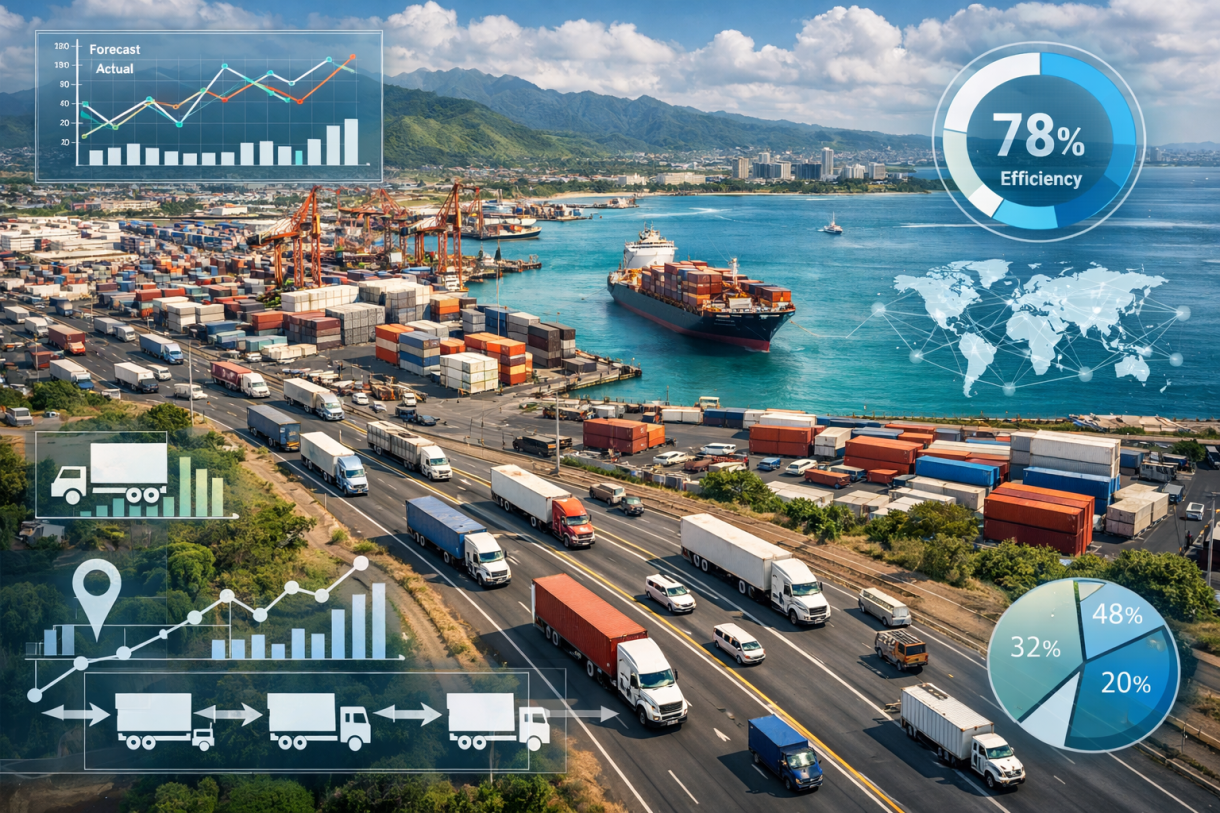
Predictive Analytics in Freight Logistics
Forecasting Freight Success: How Predictive Logistics Powers Smarter Shipping in Hawaii
Freight logistics has always depended on timing, coordination, and trust. In Hawaii, even small disruptions such as port congestion, traffic delays, or weather shifts can ripple across the entire supply chain. When shipments arrive late or costs spike unexpectedly, the consequences are immediate. This is where predictive logistics changes how freight planning works.
Instead of reacting to problems after they occur, predictive logistics uses data patterns, historical trends, and real-time signals to anticipate what is likely to happen next. For businesses operating in Hawaii’s island-based economy, this approach is especially valuable. Limited routes, port dependency, and narrow delivery windows make forecasting in logistics not just helpful, but essential.
In this guide, we explore how predictive analytics is transforming freight logistics in Hawaii. You will learn how predictive logistics works, why it matters, and how logistics providers use it to reduce risk, control costs, and improve delivery reliability across the islands.
What Predictive Logistics Means for Freight Operations
Predictive logistics refers to the use of predictive analytics, machine learning, and logistics data analytics to forecast future events across transportation and supply chain operations. Rather than relying only on past experience or manual planning, teams use data to predict shipment volumes, transit delays, cost changes, and operational risks.
Predictive analytics in freight logistics draws from multiple data sources, including historical shipment records, port activity, traffic patterns, fuel pricing, weather data, and demand signals. These inputs are analyzed to produce forecasts that guide decisions earlier in the planning cycle.
This shift matters because it transforms logistics from reactive problem-solving into proactive strategy. Instead of scrambling to reroute shipments or absorb unplanned costs, teams can plan schedules, capacity, and resources with confidence.
Key benefits of predictive logistics include:
- Improved delivery reliability and schedule accuracy
- Better cost control through early risk detection
- More efficient use of labor, vehicles, and equipment
- Fewer disruptions from congestion or delays
In Hawaii, where freight movement depends heavily on ports and precise local coordination, predictive logistics strengthens the entire supply chain.
How Predictive Analytics Transforms Freight Planning
Predictive analytics becomes most powerful when applied directly to everyday freight planning decisions.
Anticipating Demand and Shipment Volume
Predictive demand forecasting is one of the strongest advantages of predictive logistics. By analyzing historical shipment data alongside seasonal and economic trends, businesses can anticipate future freight volumes more accurately.
In Hawaii, where retail, construction, and hospitality demand fluctuates throughout the year, predictive supply chain analytics help logistics providers plan staffing, equipment, and warehouse capacity ahead of time. This reduces port bottlenecks during peak periods and prevents over-allocation during slower cycles.
Combining local economic indicators with historical freight data significantly improves forecast accuracy for island-based supply chains.
Optimizing Routes and Delivery Schedules
Predictive analytics in transportation evaluates more than distance. It factors in traffic congestion patterns, delivery windows, port schedules, and historical delays to recommend the most reliable routes and timeframes.
For local cartage and final-mile delivery across Oahu, predictive logistics identifies optimal delivery windows that avoid peak congestion. Over time, this reduces fuel use, driver idle time, and missed appointments.
These efficiencies are especially valuable in Hawaii, where road networks and port access points are limited and small delays compound quickly.
Reducing Risk and Operational Disruptions
Disruptions are inevitable, but predictive logistics helps minimize their impact. By analyzing weather forecasts, port congestion trends, and equipment performance data, predictive systems flag potential risks before they escalate.
For example, if data indicates rising port congestion during a specific window, logistics providers can adjust schedules, allocate additional equipment, or reroute deliveries proactively. This prevents last-minute changes that often lead to higher costs and customer dissatisfaction.
Predictive risk management turns uncertainty into manageable variables.
Improving Cost Control and Profitability
Freight costs are influenced by fuel prices, labor availability, equipment utilization, and delays. Predictive analytics in supply chain management connects these variables to forecast cost changes before they affect margins.
With predictive logistics, businesses can adjust pricing strategies, optimize resource allocation, and plan budgets with greater accuracy. Over time, this creates more predictable margins and stronger financial stability.
Real-World Applications of Predictive Logistics in Hawaii
Port-to-Warehouse Freight Coordination
Logistics providers use predictive analytics to forecast container arrivals and port congestion. By adjusting schedules for daily container drayage in advance, they reduce wait times and improve warehouse receiving efficiency. This often cuts idle time while improving on-time performance.
Local Cartage and Final-Mile Delivery
Predictive logistics analyzes traffic trends and delivery density to plan efficient routes for retail deliveries, inside pick delivery, and military base and residential delivery. Businesses using these insights see improved delivery consistency and lower per-stop costs.
Inventory Staging and Distribution
Predictive analytics helps forecast inbound freight volumes so warehouses can stage inventory efficiently. Combined with short-term storage and long-term storage, this approach reduces congestion and improves outbound turnaround times.
Predictive Logistics and Specialized Freight
Specialized freight benefits significantly from transportation logistics analytics. Heavy and oversized loads moved with flatbed trucks or flatbed drop deck trailers require precise timing and route planning. Predictive analytics supports safer, more reliable execution.
Temperature-sensitive freight handled by dry and refrigerated box trucks also benefits from predictive monitoring that helps prevent delays and spoilage.
For mixed or non-containerized cargo, break bulk distribution becomes more efficient when volume forecasts and delivery schedules are aligned in advance.
Best Practices for Implementing Predictive Logistics
To maximize value from predictive logistics, businesses should apply it strategically.
Start with high-quality data. Predictive analytics depends on clean, consistent, and relevant data sources.
Blend local and global insights. In Hawaii, local port and traffic data must be combined with broader supply chain trends.
Use predictions to guide action. Forecasts only matter when they influence scheduling, staffing, and routing decisions.
Balance analytics with experience. Predictive logistics enhances human judgment rather than replacing it.
Avoiding over-automation while empowering teams with insights leads to better outcomes.
The Future of Predictive Logistics in Hawaii
Predictive logistics is no longer experimental. It is becoming a practical necessity as freight volumes increase and supply chains grow more complex. In Hawaii, where geography magnifies the cost of delays, predictive analytics provides a clear operational advantage.
As logistics providers continue adopting digital tools, predictive insights will increasingly support collaboration across the supply chain. Resources like logistics digital transformation highlight how analytics, automation, and visibility work together to improve resilience.
For businesses partnering with experienced providers like Preferred Hawaii, predictive logistics strengthens planning, improves reliability, and supports long-term growth across Hawaii’s freight network.
Frequently Asked Questions About Predictive Logistics
What is predictive logistics in simple terms?
Predictive logistics uses data and analytics to forecast future shipping conditions so businesses can plan freight operations proactively.
How does predictive analytics help freight in Hawaii?
It anticipates port congestion, traffic delays, and demand shifts, which are critical in an island-based logistics environment.
Is predictive logistics expensive to implement?
Costs vary, but many providers already use systems capable of supporting predictive insights. Long-term savings often outweigh initial investment.
Can small businesses benefit from predictive analytics?
Yes. Even basic forecasting tools can improve delivery reliability and cost control.
Does predictive logistics replace human decision-making?
No. It supports better decisions by providing visibility and foresight, not automation alone.