The Role of Logistics in Global Trade
How Global Logistics Shapes Modern Trade
Every product you buy, from electronics to coffee, travels a complex path before reaching your hands. Behind that journey lies a silent force: global logistics. It’s the intricate system that connects manufacturers, shippers, customs, and retailers worldwide.
For Hawaii, an island state uniquely dependent on imports, logistics is more than a support system: it’s a lifeline. The state’s geographic isolation means efficient global logistics services determine everything from economic stability to product availability.
In this article, we’ll explore how global logistics drives international trade, why Hawaii’s position matters, and how businesses can strengthen their supply chains with smarter logistics management.
Understanding Global Logistics and Its Economic Impact
Global logistics is the backbone of international trade, managing the movement of goods across borders by air, sea, and land. It encompasses everything from freight forwarding and customs clearance to transportation management systems and trade compliance.
Why Global Logistics Matters for International Growth
A strong network global logistics system ensures that:
- Products move efficiently between suppliers, manufacturers, and customers.
- Trade routes remain cost-effective and predictable.
- Delays and disruptions are minimized through coordination and planning.
In Hawaii, the economic stakes are even higher. With over 80% of goods imported, delays in global logistics and fulfillment can quickly ripple through the local economy. By optimizing freight forwarding services and investing in sustainable global logistics, Hawaii businesses can secure consistent inventory flow and maintain competitiveness.
Common challenges like port congestion or customs delays can disrupt entire trade routes, but strategic logistics partnerships—like those outlined in logistics and supply chain insights for Hawaii—help companies avoid costly setbacks.
The Core Components of Global Logistics Operations
This section highlights the main elements that make up efficient international logistics and how they connect global trade systems.
Managing Freight Across Global Shipping Channels
Freight forwarding is the foundation of global trade operations, ensuring cargo moves efficiently between nations. Freight forwarders negotiate shipping rates, consolidate cargo, and handle documentation across air freight and ocean freight logistics.
Reliable forwarding reduces transit times, cuts costs, and ensures compliance with international regulations, a major advantage for Hawaii-based importers. Local services such as flatbed trucks and forklift delivery further support interisland and inland movement of heavy cargo.
Streamlining Customs and Trade Compliance Systems
Customs clearance can either accelerate trade or slow it to a crawl. Efficient customs management depends on accurate documentation, proactive duty planning, and alignment with international trade laws.
By partnering with experts in global logistics services and compliance, companies can minimize delays and avoid penalties related to international shipping.
Coordinating Multimodal Transportation Networks
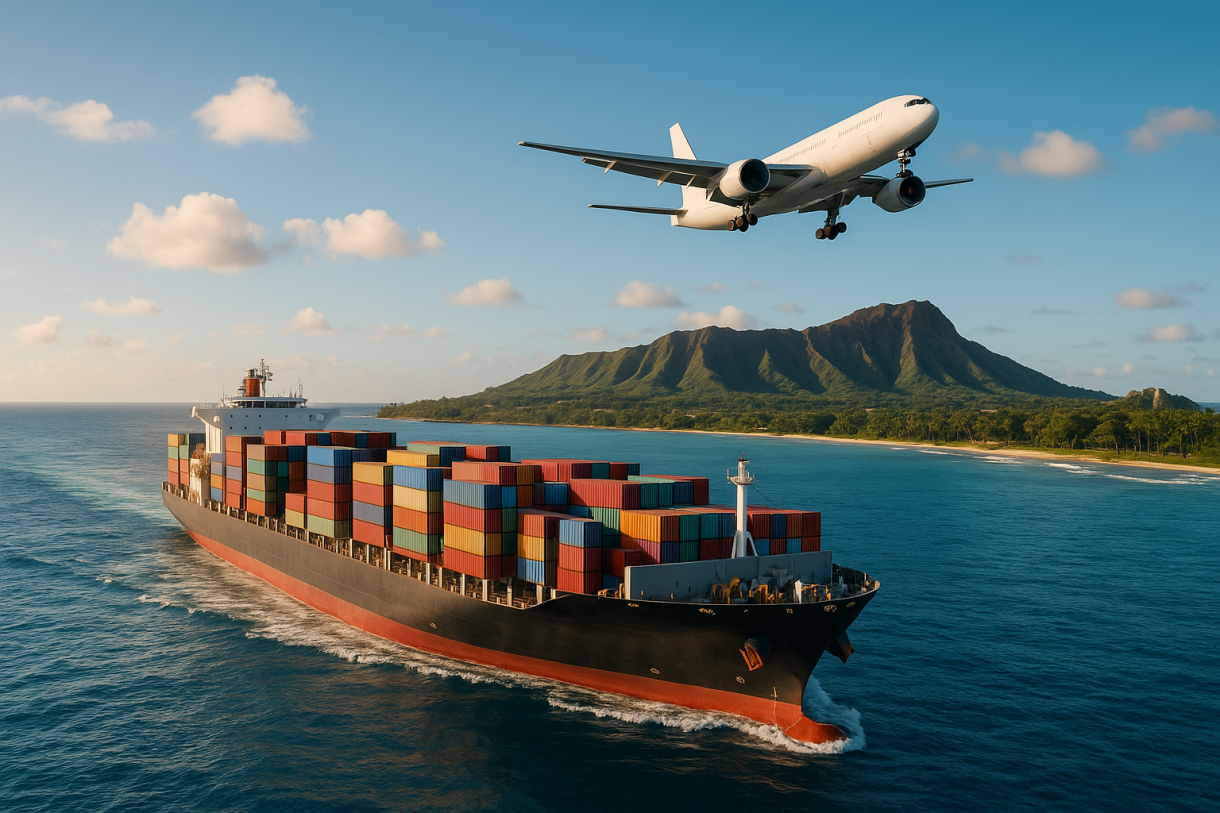
Global logistics relies on seamless multimodal systems integrating ships, planes, and trucks into one synchronized network. In Hawaii, air and ocean freight connect the islands to the mainland U.S. and the Asia-Pacific.
Modern global logistics track platform tools allow companies to monitor shipments in real time, analyze performance, and reduce costs with data-driven routing decisions. Services like daily container drayage and flatbed drop deck trailers make these networks more efficient and responsive.
Integrating Technology and Supply Chain Management
Digital transformation has revolutionized logistics. Cloud systems, AI, and IoT now enable global logistics tracking and predictive analytics. For Hawaii’s supply chain, these tools reduce guesswork, improve accuracy, and enhance customer satisfaction.
Automation also supports sustainability by optimizing delivery routes and minimizing fuel consumption. Many companies use scan global logistics platforms for tracking and analytics to improve global logistics visibility and control.
Building Sustainability into Global Logistics Strategies
Sustainability is now integral to modern global logistics and fulfillment. From cleaner fuels to recyclable packaging, logistics companies are reducing emissions and improving operational efficiency.
Hawaii’s leadership in renewable energy aligns perfectly with these goals, positioning it as a Pacific leader in sustainable global logistics practices.
Hawaii’s Strategic Role in Global Logistics
Hawaii’s geographic position in the Pacific gives it a unique advantage: it serves as a vital bridge between East and West. This makes global logistics in Hawaii a critical component of international trade efficiency.
Two real-world applications highlight this impact:
- Pacific Trade Gateway: A Honolulu importer cut delivery times by 35% after integrating air and ocean freight through a centralized logistics network.
- Local Export Efficiency: A Hawaiian coffee exporter improved profit margins by 20% through optimized customs and freight coordination.
By leveraging local services such as inside pick delivery, lift gate delivery, and dry refrigerated box trucks, businesses can strengthen their connections to global trade routes.
Best Practices for Improving Global Logistics Efficiency
To navigate the complexities of global logistics, businesses should focus on these best practices:
- Optimize Routing and Scheduling: Use TMS and network global logistics software to plan efficient routes and minimize idle time.
- Prioritize Compliance Documentation: Keep customs paperwork accurate to prevent costly delays.
- Adopt Digital Tracking Systems: Real-time visibility through global logistics tracking platforms builds customer trust.
- Strengthen Supplier Partnerships: Consistent communication with suppliers enhances flexibility during supply chain disruptions.
- Commit to Sustainable Logistics: Implement eco-friendly practices like consolidated shipping and efficient global logistics properties stock management.
These strategies help businesses cut costs, improve efficiency, and enhance resilience in today’s interconnected trade environment.
Building a Resilient Future Through Global Logistics
Global logistics is the backbone of modern trade, connecting producers, consumers, countries, and communities. For Hawaii, it represents opportunity and innovation, ensuring steady economic growth through reliable logistics solutions.
By adopting technology-driven tools like scan global logistics, investing in sustainability, and partnering with expert freight providers, businesses can transform global challenges into competitive advantages.
Explore Hawaii’s logistics capabilities, including short-term storage, long-term storage, and break-bulk distribution, to keep your supply chain strong and efficient.
For more industry insights, visit Forbes, Supply Chain Digital, Logistics Management, Trade.gov, and Inbound Logistics.
FAQs About Global Logistics in Hawaii
Q1: What does global logistics include?
Global logistics covers freight transportation, warehousing, customs clearance, and inventory management—essential to moving goods internationally.
Q2: How does Hawaii’s location impact global logistics?
Hawaii’s strategic Pacific position makes it a critical hub connecting U.S. and Asian markets through efficient ocean and air freight.
Q3: Why is customs clearance important in global trade?
Proper customs management ensures goods comply with international laws, preventing delays and costly fines.
Q4: What are the benefits of sustainable logistics?
Sustainable logistics reduces fuel use, lowers emissions, and strengthens brand reputation through environmentally responsible practices.
Q5: How can technology improve global logistics?
Tools like global logistics track platform systems provide real-time data, predictive insights, and end-to-end visibility, enabling faster decisions and minimizing disruptions.