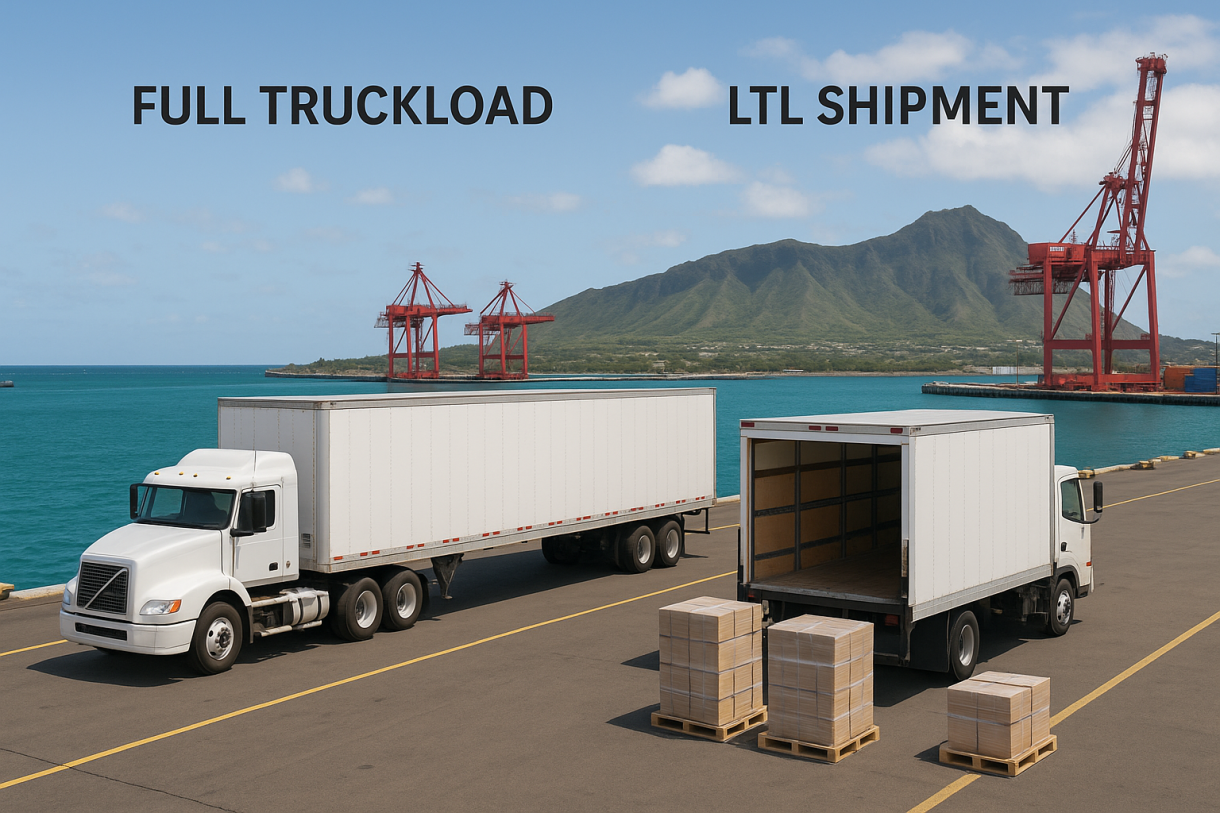
Understanding FTL vs LTL Shipping for Hawaii Freight
Choosing between full truckload and less than truckload shipping can feel overwhelming, especially when managing freight across an island chain. For Hawaii-based businesses, understanding ftl vs ltl shipping ensures better cost control, reduced risk, and smoother delivery timelines. Whether you are transporting palletized goods, commercial inventory, or recurring shipments, selecting the right method protects your cargo and supports efficient logistics and supply chain management.
In Hawaii, the challenges are even more complex. Limited sailing schedules, inter-island transfers, and specialized freight trucking requirements can intensify the differences between these two methods. Selecting the wrong option may lead to unnecessary costs, delays, or damaged freight. You also need to consider freight carriers, freight forwarding services, freight companies, and the availability of full-service transportation logistics solutions when evaluating the best fit.
This guide explains what FTL and LTL mean, how they apply to Hawaii’s freight landscape, and how to choose the right method for your shipping volume and delivery timelines.
What FTL vs LTL Shipping Really Means
Full truckload shipping means your cargo occupies the entire truck or container, while less than truckload shipping combines multiple shipments in one shared trailer. This difference impacts cost, transit time, and handling frequency. With Hawaii’s port-driven logistics ecosystem, these factors directly influence reliability, freight spend, and customer satisfaction.
Choosing the right method offers several benefits: clearer communication with your partners, better timeline predictability, fewer surprises, reduced cargo handling, and improved protection during inter-island movements. Many shippers assume LTL is always cheaper, but this is not always true. For example, businesses using ltl freight to hawaii may save money on small loads, but companies with larger or recurring freight often find that FTL provides better overall value, especially once vessel schedules and handling risks are considered.
To navigate these choices effectively, it is important to understand how these methods differ in cost structure, timing, and risk exposure.
How to Choose Between FTL and LTL Shipping
Selecting the right method requires evaluating shipment density, volume, timing, budget, and handling sensitivity. Because Hawaii freight moves through ports and across multiple transportation modes, these considerations play an even bigger role.
Understanding Key Shipping Factors
Shipment size and density are major factors in choosing between FTL and LTL. LTL uses dimensional weight and classifications to determine rates, while FTL provides a flat charge for full truck usage. If your shipments regularly fill most of a trailer or container, the direct movement of FTL may be more cost-effective and predictable.
Delivery timelines matter as well. LTL typically involves multiple stops, sorting, and transfers, which naturally extend transit times. For Hawaii-bound freight that must align with vessel cutoffs or inter-island schedules, FTL can provide more dependable planning and reduce costly delays. This is also valuable when freight connects with services like daily container drayage, forklift delivery, and inside pick delivery.
Handling risk should also be considered. LTL shipments are loaded and unloaded several times, which increases exposure to damage. For fragile, valuable, or oversized freight, FTL is usually safer. This is especially true when using equipment such as flatbed drop deck trailers, flatbed trucks, or dry refrigerated box trucks, all of which support more secure handling.
Budgeting decisions must factor in total landed costs. LTL seems cheaper for small loads, but Hawaii moves involve port fees, container transfers, and potential storage fees if freight misses a sailing. FTL provides more control and fewer unexpected expenses. This is equally important for operations involving retail deliveries, military base and residential delivery, and islandwide freight coordination.
Operational flexibility is another consideration. LTL carriers operate on set schedules and may have capacity limits. FTL provides more control over pickup times and helps ensure freight meets vessel deadlines. For shippers relying on specialized equipment or services such as lift gate delivery or temperature-controlled transportation, FTL often offers more reliable timing.
Where FTL and LTL Shipping Work Best in Hawaii
Understanding the differences is helpful, but seeing how they apply to real-world situations is even more valuable. These examples illustrate where each method is most effective for Hawaii freight.
Use Case 1: Retail Inventory Replenishment
A Honolulu retailer shipping 10 to 12 pallets per week benefits from FTL because it ensures consistent vessel scheduling and reduces handling. This approach helps prevent stockouts and shortens total transit times. Businesses using services like break-bulk distribution often prefer FTL because it minimizes missed inventory cycles.
Use Case 2: Small-Batch Manufacturer Shipping to Maui
A small manufacturer sending two to three pallets monthly saves significantly with LTL because the shared capacity keeps costs down. This method is ideal for low-volume inter-island shipments and works well with established freight services hawaii providers. When paired with resources like the insights at Preferred Hawaii’s Types of Freight Shipping Explained, businesses can choose the best option more confidently.
Use Case 3: Construction Materials for Big Island Projects
Construction freight is frequently large, heavy, or irregular, making FTL the safest and most efficient method. The direct movement ensures materials arrive on time for project schedules. Projects requiring heavy-duty transport often rely on solutions such as flatbed trucking for secure transit.
Best Practices When Choosing FTL or LTL Shipping
Understanding how to choose between FTL and LTL is important, but following best practices ensures your decision supports long-term logistics success.
Optimize Packaging and Palletizing
Properly wrapped, labeled, and secured freight reduces the risk of damage, especially for LTL shipments. Good palletizing also helps carriers manage freight efficiently and reduces exposure to handling issues. This becomes even more important when working with specialized services such as forklift delivery.
Compare Total Landed Costs, Not Only Rates
Evaluating freight options requires reviewing full costs, including port fees, extra handling, transfer costs, and timing risks. Total landed cost analysis ensures the chosen method aligns with your operational priorities. Many businesses use strategic transportation insights from sources like Forbes to evaluate true shipping costs more effectively.
Plan Ahead for Vessel Schedules
Hawaii logistics depend heavily on fixed sailing dates. Missing a cutoff can delay freight by multiple days. FTL offers better control over timing, while LTL requires more proactive planning to avoid last-minute storage needs, potentially involving short-term storage or long-term storage arrangements.
Match Freight Type to the Right Method
The type of freight often determines the method. Fragile, urgent, or bulky freight is best suited for FTL, while lighter, non-urgent, or small-volume shipments work well with LTL. Understanding your freight characteristics ensures optimized cost and handling performance.
Final Thoughts on FTL vs LTL Shipping
The decision between full truckload and less than truckload shipping becomes clearer when you evaluate shipment volume, timeline requirements, freight sensitivity, and Hawaii-specific logistics factors. FTL prioritizes speed, control, and reduced handling, while LTL emphasizes affordability and flexibility for smaller loads.
Businesses can improve efficiency by reviewing shipping patterns and determining where consolidation or smaller-volume movements make the most sense. For organizations shipping regularly to or from Hawaii, partnering with experienced freight trucking experts and local specialists ensures better planning and fewer disruptions.
FAQs About FTL vs LTL Shipping in Hawaii
1. Is FTL or LTL cheaper for Hawaii freight?
LTL is often cheaper for small shipments because you only pay for the space you use. However, for larger or time-sensitive shipments, FTL may offer better value by reducing delays, additional port costs, and excessive handling.
2. How do I know if my shipment qualifies for FTL?
If your freight fills most of a trailer, weighs several thousand pounds, or includes oversized freight, FTL is ideal. It is also recommended when you need greater timing control or want to reduce exposure to handling-related damage.
3. Can LTL shipments still be reliable for inter-island Hawaii freight?
Yes, LTL works well for smaller shipments that are not urgent. It requires more planning because shared loads depend on consolidation schedules. Many businesses choose LTL for consistent, low-volume shipments across islands.
4. What type of freight is best suited for FTL shipping in Hawaii?
FTL is best for bulky, fragile, or time-sensitive shipments. Construction materials, commercial inventory, and high-value freight benefit from minimal handling and direct routing, which helps align with weekly sailing schedules.
5. Does FTL move faster than LTL for Hawaii deliveries?
Generally, yes. FTL travels directly from pickup to port without multiple stopovers or cross-dock transfers. This improves transit times and provides more predictable delivery windows, especially when coordinating with fixed vessel schedules.