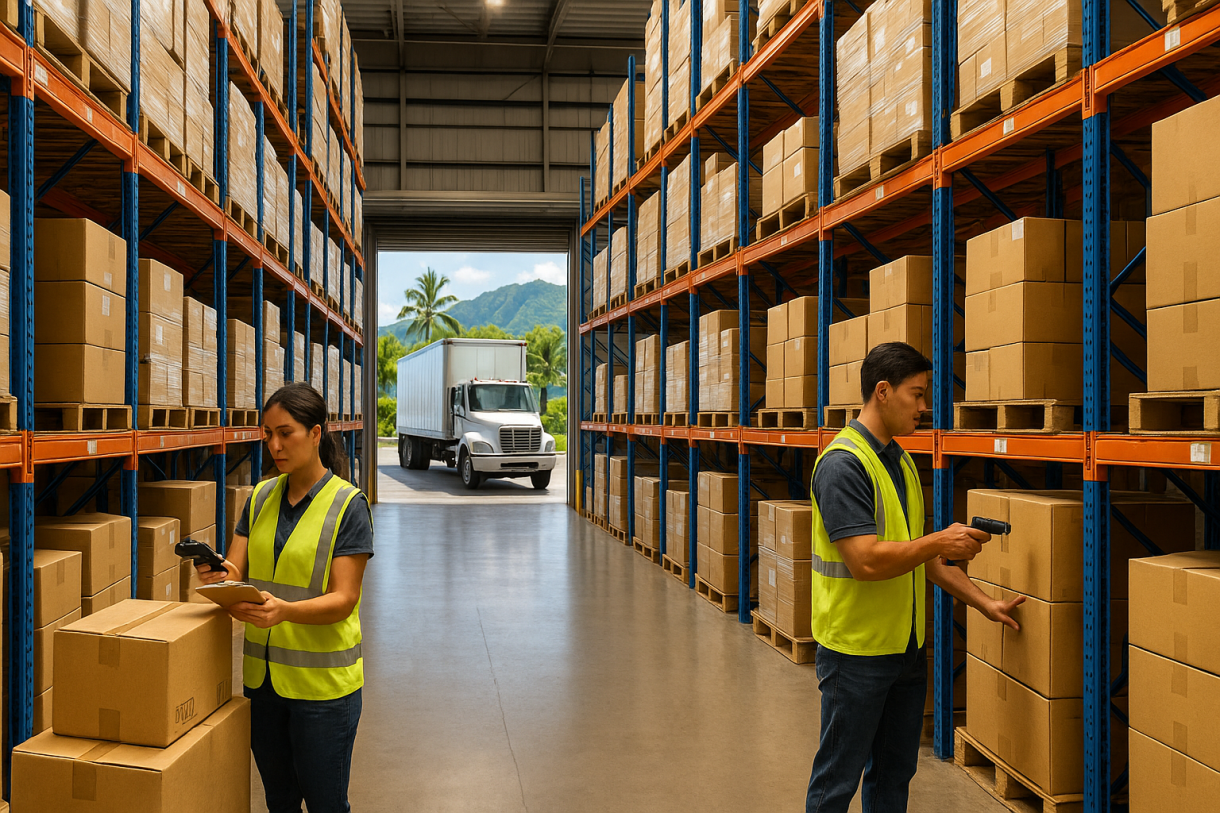
Why Logistics Efficiency Is Crucial for Hawaii Businesses
Every business depends on the smooth movement of products, information, and services, yet many leaders only notice logistics when something goes wrong. Maybe a shipment shows up late or inventory disappears into some mysterious black hole, or transportation costs quietly creep up month after month. These challenges feel even more frustrating for Hawaii-based companies that already deal with geographic limitations. While logistics can appear complicated, improving logistics efficiency isn’t just for large corporations, it’s an incredibly practical way for companies of all sizes to save money, improve customer satisfaction, and reduce operational strain.
When logistics efficiency becomes a priority, businesses quickly experience benefits like:
- clearer workflows and fewer delays
- better cost control across the entire supply chain and logistics
This article breaks down why logistics efficiency matters, how it impacts daily operations, and what Hawaii businesses can do to strengthen logistics and supply chain management. By the end, you’ll have a simple roadmap for making smarter logistics decisions that support growth and stability.
Why Logistics Efficiency Is Essential for Modern Operations
Logistics efficiency reflects how effectively your business manages the flow of goods from suppliers to customers. When logistics in supply chain operations run smoothly, businesses reduce waste, save on freight logistics costs, and deliver a more reliable customer experience. For organizations in Hawaii, where shipping timelines, port activity, and inter-island transportation require precise coordination, the value of efficient operations becomes even more significant.
Improving logistics efficiency matters because it:
- reduces confusion and miscommunication across departments
- improves accountability and transparency throughout the supply chain
- enables faster, more accurate decision-making
Many companies underestimate how damaging inefficient logistics can be. Small delays multiply quickly, manual communication creates errors, and ambiguous processes lead to unnecessary expenses. Understanding these challenges makes it easier to adopt targeted strategies that improve daily logistics services and operations.
How to Build an Efficient Logistics Framework in Hawaii
This section covers the core actions Hawaii businesses can take to improve logistics efficiency and overcome the state’s geographic challenges. These steps support logistics management in Hawaii and encourage long-term operational stability.
How to Improve Logistics Processes
A strong logistics process begins with clear visibility across your entire supply chain and logistics network. Mapping the full journey of goods, from supplier order placement to customer delivery, helps identify slowdowns or weak points. Using digital tools to track shipments, automate tasks, and monitor inventory eliminates guesswork and allows your team to make decisions based on real-time information.
To support these processes, businesses often rely on equipment and services such as daily container drayage, forklift delivery, and tools that assist with goods movement throughout Hawaii logistics for businesses.
Pro Tip: Start small by digitizing one section of your workflow first, then expand as the team becomes more comfortable.
How to Strengthen Logistics Operations
Strengthening daily operations improves reliability, particularly important for Hawaii’s long shipping windows. Standardizing tasks, such as receiving freight, updating inventory, and preparing outgoing shipments, reduces errors and keeps teams aligned. Reviewing transportation routes and carrier performance can uncover opportunities for faster or more cost-effective options.
Hawaii companies often rely on specialized equipment, including flatbed drop deck trailers, flatbed trucks, and dry refrigerated box trucks, to support dependable logistics transportation services.
Pro Tip: Review logistics SOPs quarterly to ensure they keep pace with changing business goals.
How to Optimize Logistics Performance
Performance optimization ties together your tools, processes, and data. By tracking KPIs such as delivery accuracy, warehouse turnaround time, and freight cost per unit, businesses gain insights that highlight opportunities for improvement. These metrics also inspire more strategic decision-making and better long-term planning.
Companies often strengthen forecasting and demand planning, especially when Hawaii’s longer transit times require earlier purchase cycles. Some also use services like short term storage, long term storage, and break bulk distribution to keep inventory positioned more efficiently.
Pro Tip: Use rolling forecasts for Hawaii shipments since delays in transit require proactive planning.
Practical Ways Hawaii Businesses Apply Logistics Efficiency
Understanding how logistics efficiency plays out in real life helps clarify its value. Hawaii businesses stand to benefit significantly from optimized logistics and supply chain management due to geographic distance and heavy reliance on inbound freight.
Retailers that depend on overseas inventory often improve demand forecasting and shipment tracking to reduce the number of stockouts. These improvements prevent the need for expensive express shipments and support better customer satisfaction. Articles on Forbes frequently highlight how improved visibility leads to cost savings.
Construction and manufacturing companies that refine shipping schedules and carrier coordination often reduce fuel surcharges and accelerate project timelines. Better coordination helps eliminate scheduling conflicts and minimizes wasted labor hours.
Another example involves inter-island distribution networks. Businesses that streamline warehouse operations or strengthen Honolulu warehousing logistics often see significant improvements in delivery speed and inventory turnover. Some organizations even refine last mile operations using solutions like retail deliveries, lift gate delivery, and military-base and residential delivery.
Research shared on Supply Chain Xchange also reinforces how predictable scheduling and strong supplier relationships support long-term logistics improvements.
Best Practices and Common Mistakes to Avoid
Improving logistics efficiency becomes easier when you understand what works and what pitfalls to avoid. These insights help companies prevent costly missteps and maintain consistent operations over time.
Create Standardized Workflows
Standardized workflows reduce errors and keep everyone aligned. Documenting each step of your logistics process, from purchase orders to customer delivery, helps ensure consistent execution. Even minor workflow improvements can increase reliability and reduce training time for new employees.
Use Data to Guide Decisions
Relying on data instead of intuition allows businesses to identify patterns, cost fluctuations, and inventory trends. Tracking KPIs provides valuable insight into freight logistics performance and overall cost structure. This data-driven approach encourages steady optimization over time.
Strengthen Supplier and Carrier Relationships
Strong communication with suppliers and carriers helps reduce delays, improve predictability, and prevent misunderstandings. Regular check-ins, performance reviews, and shared forecasts make collaboration smoother. These relationships support more dependable logistics transportation services.
Avoid Manual Communication Bottlenecks
Relying on emails and phone calls for important logistics updates often leads to delays or mistakes. Using centralized digital systems helps maintain clarity and accountability across your supply chain. This approach also supports faster coordination with services like inside pick delivery, which require precise timing and planning.
Final Takeaways
Logistics efficiency plays a vital role in helping businesses save money, improve customer satisfaction, and operate more clearly, especially in regions like Hawaii where geographic challenges impact nearly every stage of the supply chain. Focusing on visibility, standardized processes, and performance tracking helps organizations create more resilient and cost-effective logistics systems.
With the right strategy, even small improvements can produce major long-term results. For companies ready to refine their operations, exploring reliable logistics services and solutions is a smart next step. Many Hawaii businesses also find value in learning from industry shifts, like those discussed in this resource on the evolution of freight logistics in the digital era.
Frequently Asked Questions About Logistics Efficiency
Is logistics efficiency important for small businesses?
Yes. Efficient logistics helps small businesses reduce costs, eliminate errors, and improve customer service. Streamlined workflows and increased visibility enable smaller organizations to compete more effectively and scale sustainably.
How can Hawaii businesses reduce shipping delays?
Planning earlier, choosing reliable carriers, and refining warehouse schedules all help reduce delays. Many businesses also rely on real-time tracking platforms for better shipment visibility.
What metrics should I track to measure logistics efficiency?
Key KPIs include order accuracy, shipping cost per unit, warehouse turnaround time, on-time delivery rates, and overall inventory accuracy.
Can improving logistics efficiency lower operational costs?
Absolutely. Efficient logistics reduces waste, minimizes freight expenses, and optimizes labor usage. Many organizations see substantial savings after adjusting transportation routes or better aligning warehouse processes.
What tools help improve logistics efficiency?
Inventory management software, shipment tracking systems, and forecasting tools all strengthen logistics performance. These solutions support visibility across logistics management in Hawaii and beyond.